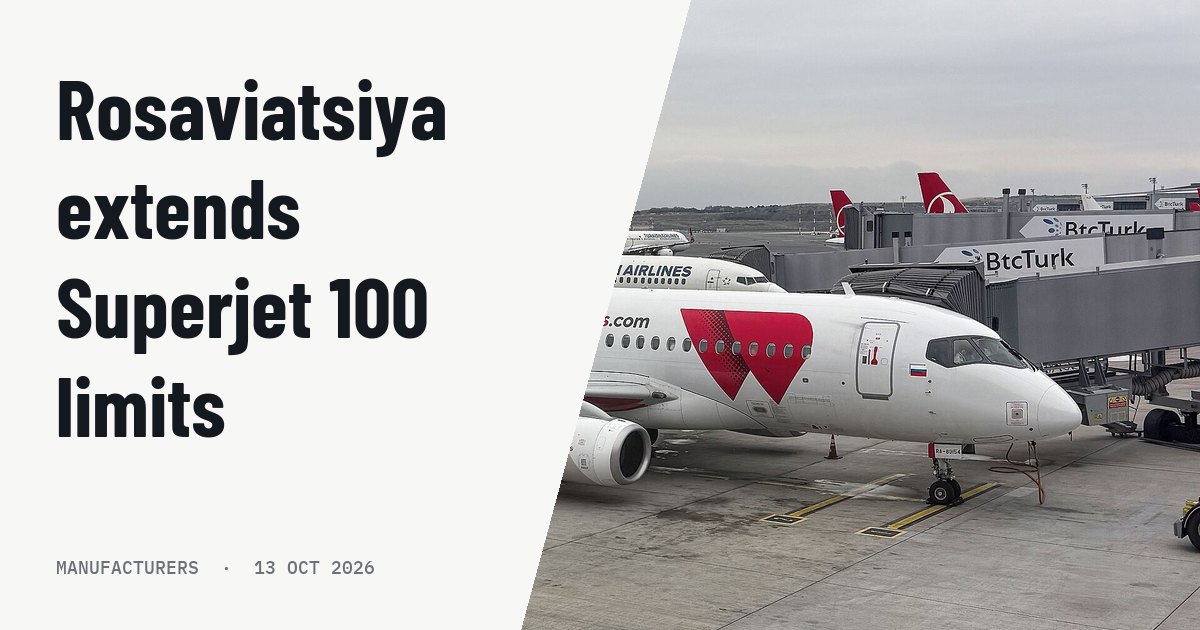
In October 2026, the Russian civil aviation authority, Rosaviatsiya, approved extended operating limits for active Yakovlev Superjet 100 regional aircraft. The amended certification applies to RRJ-95B-100 and RRJ-95LR-100 models equipped with PowerJet SaM146 engines.
The regulatory update raises the maximum structural airframe life from 15 to 20 years. In parallel, operational time limits expand from 25,000 to 40,000 flight hours, while the allowable flight cycles increase from 15,000 to 20,000 takeoffs and landings. The approval relies on stress analyses, material calculations, and operating fleet data submitted by Yakovlev and research institutes. According to the manufacturer, these new thresholds cover roughly 40 percent of the structural design service life, with additional certification steps under development in Moscow.
Currently, around 154 units of the Superjet 100 remain in active passenger service across Russia. This regulatory adjustment responds directly to international sanctions affecting commercial operations, as spare parts for the SaM146 engines developed jointly with Safran are cut off, and serial output of the import-substituted SJ-100 powered by domestic PD-8 engines faces procedural delays. Operators must maintain flight schedules by sustaining existing airframes, which requires shortened inspection intervals and rigorous maintenance regimes without Western supplier backing.
Why it matters for your training
This operational extension illustrates how regulatory authorities adjust airframe and powerplant limits under parts isolation, demanding stricter maintenance discipline from operators.