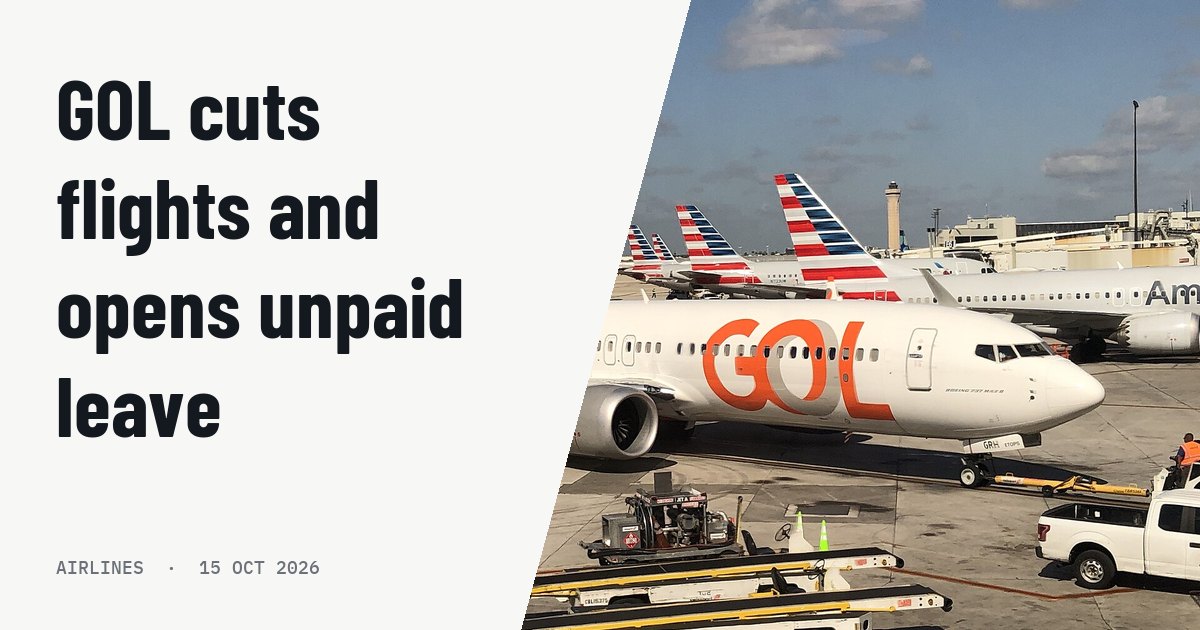
Brazilian airline GOL is adjusting its operations through broad network reductions and temporary personnel measures. The carrier has introduced a voluntary unpaid leave program preserving employment ties, along with part-time work alternatives during November and December. These adjustments follow a doubling of jet fuel prices, which now account for nearly 40% of operating expenditures.
The network restructuring impacts domestic connections between state capitals and regional airports, as well as medium-to-long-haul services flown by the Boeing 737 MAX 8 fleet. Planned suspensions from February 2027 include operations linking Brasília, Fortaleza, and Belém to Florida points such as Miami and Orlando, alongside regional international links to Montevideo, Asunción, and Punta Cana.
In contrast, GOL maintains its widebody long-haul strategy. The carrier deploys Airbus A330-200 aircraft wet-leased from Wamos Air, including services between Rio de Janeiro and New York. That specific route pauses from 22 October before resuming in March 2027, with GOL introducing Airbus A330-900 equipment from 28 March next year, following its exit from US bankruptcy restructuring in June 2025.
Why it matters for your training
Fleet deployment adjustments and voluntary staffing schemes directly signal changing pilot roster stability and type-specific operational hours at major regional operators.