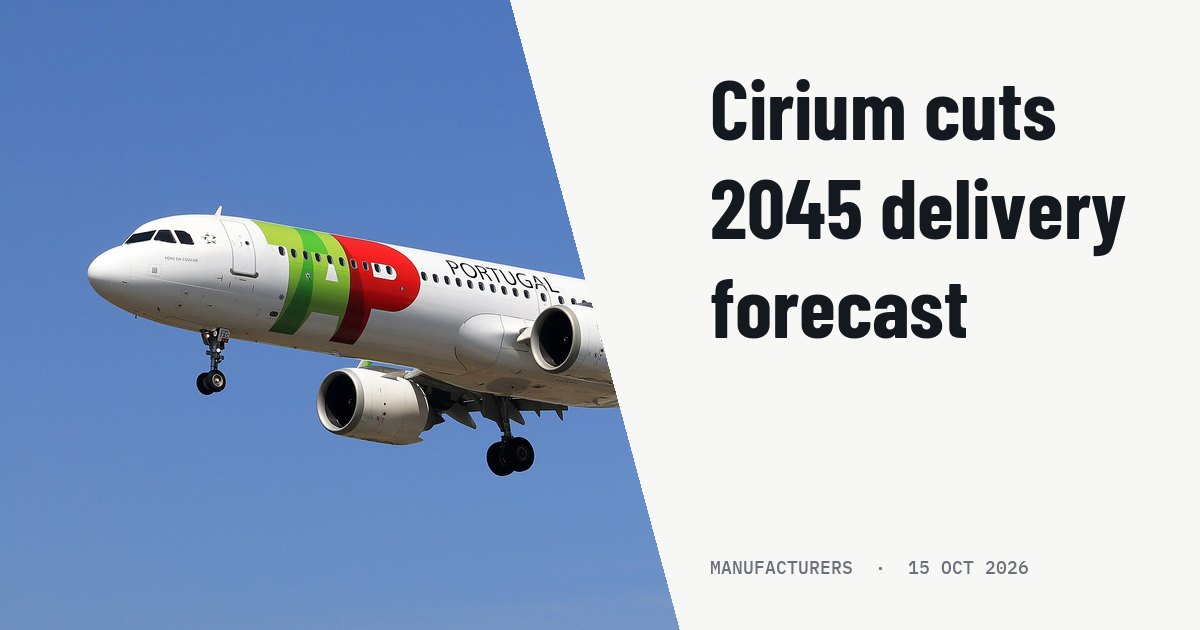
In its market outlook released in October 2026, aviation data firm Cirium forecasts approximately 43,000 passenger and cargo aircraft deliveries for the twenty-year span from 2026 to 2045. This volume represents about 3.2 trillion US dollars at 2026 pricing, down from an earlier estimate of 46,500 units valued at 3.4 trillion US dollars.
Production bottlenecks at engine and airframe manufacturers, extended certification schedules, and elevated operational costs continue to depress supply despite robust demand. Analysts anticipate this supply-demand gap will endure throughout the current decade.
Key highlights from the projection:
- The worldwide passenger fleet is expected to surpass 50,000 aircraft by 2045, expanding at an average yearly rate of 3.2 percent.
- About 48 percent of that passenger fleet will operate within China, India, and the broader Asia-Pacific area.
- Single-aisle airframes will account for 76 percent of the modelled inventory, led by the Airbus A321neo at 16 percent.
- Modelled fleet distribution allocates 47 percent to Airbus, 39 percent to Boeing, and 5 percent to COMAC.
In the cargo domain, persistent e-commerce growth bolsters dedicated freighter requirements. Because alternative fuels such as sustainable aviation fuel remain scarce and costly, gas turbine engines remain the industry standard, making airframe renewal the primary method to curb fuel burn.
Why it matters for your training
Slower delivery rates directly impact fleet planning, type rating capacity, and flight crew hiring projections across airlines.