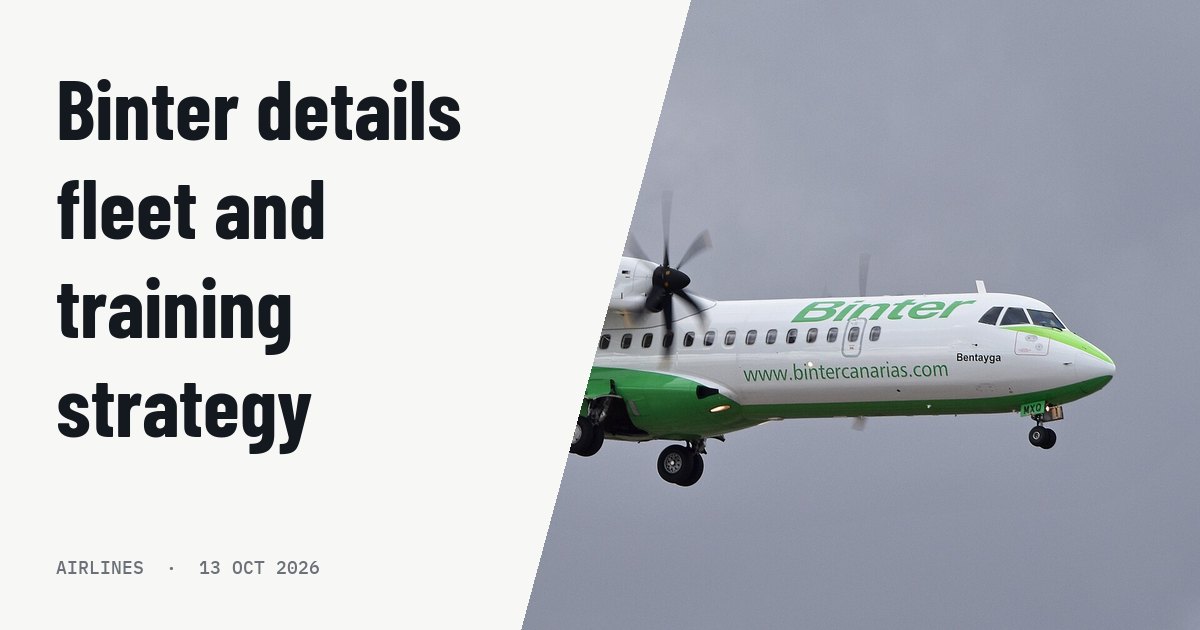
Binter operates an average of 240 inter-island flights daily, serving every airport across the Canary Islands archipelago. In an interview, Chief Executive David Manzanas confirmed that the carrier continues to balance its public service obligation with steady regional expansion across mainland Spain, Portugal, and West Africa, where it currently connects seven destinations.
The carrier's operations rely on a modern fleet consisting of ATR 72-600 turboprops for short-haul inter-island sectors and Embraer E195-E2 regional jets for longer routes. Manzanas ruled out long-haul operations, choosing instead bilateral codeshare agreements with airlines including Iberia, Air Europa, and Azores Airlines to offer connecting itineraries without joining a global alliance.
Facing industry-wide recruitment pressures, the company, which employs over 2,900 staff, invests directly in crew development through its Aeronautical Training Canarias initiative to secure qualified flight deck and maintenance personnel. Despite rising energy costs linked to geopolitical tensions, Binter has recorded no fuel supply disruptions or flight schedule modifications. The airline maintains a differentiated full-service model against low-cost competitors, providing complimentary baggage, catering, and inter-island connections across its network.
Why it matters for your training
Regional operators combining turboprop and jet fleets offer structured career paths for flight crews, especially when supported by dedicated internal training channels.