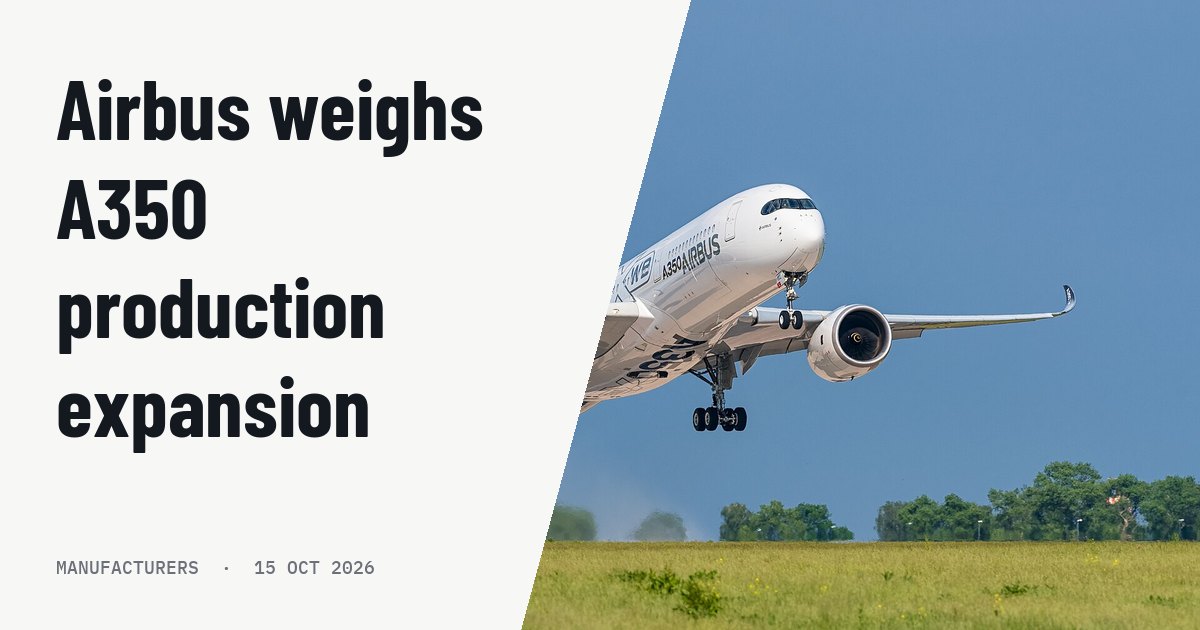
Airbus is preparing to expand final assembly capacity for the A350 widebody program to meet airline demand, according to commercial aircraft chief Lars Wagner.
The existing Toulouse facility can accommodate a maximum output of 12 to 13 aircraft monthly, supporting the manufacturer's goal set in July 2026 to reach 12 deliveries per month by 2028. Increasing rates further will require building an additional final assembly line, requiring board approval for substantial capital expenditure.
In parallel, Airbus is evaluating market demand for two stretched airframes, designated internally as the A350-2000 and the A220-500. Program launch decisions are anticipated at the start of the manufacturer's next five-year planning cycle, though neither aircraft has received formal authorization for development.
The expansion plans emerge amid persistent supply chain disruptions. In May 2026, Airbus notified customers of A350 delivery delays caused by shortages of fuselage and structural components, linked to disruptions at the former Spirit AeroSystems facility in North Carolina. Additionally, delayed engine shipments from Pratt & Whitney continue to constrain the A320neo family ramp-up across 2026 and 2027.
Why it matters for your training
Fleet delivery timelines directly govern airline network expansion and long-haul type-rating demand for flight crews. Evaluating stretched derivatives like the A350-2000 highlights future capacity shifts in long-range operations.