**A Strategic Airport Neutralized**
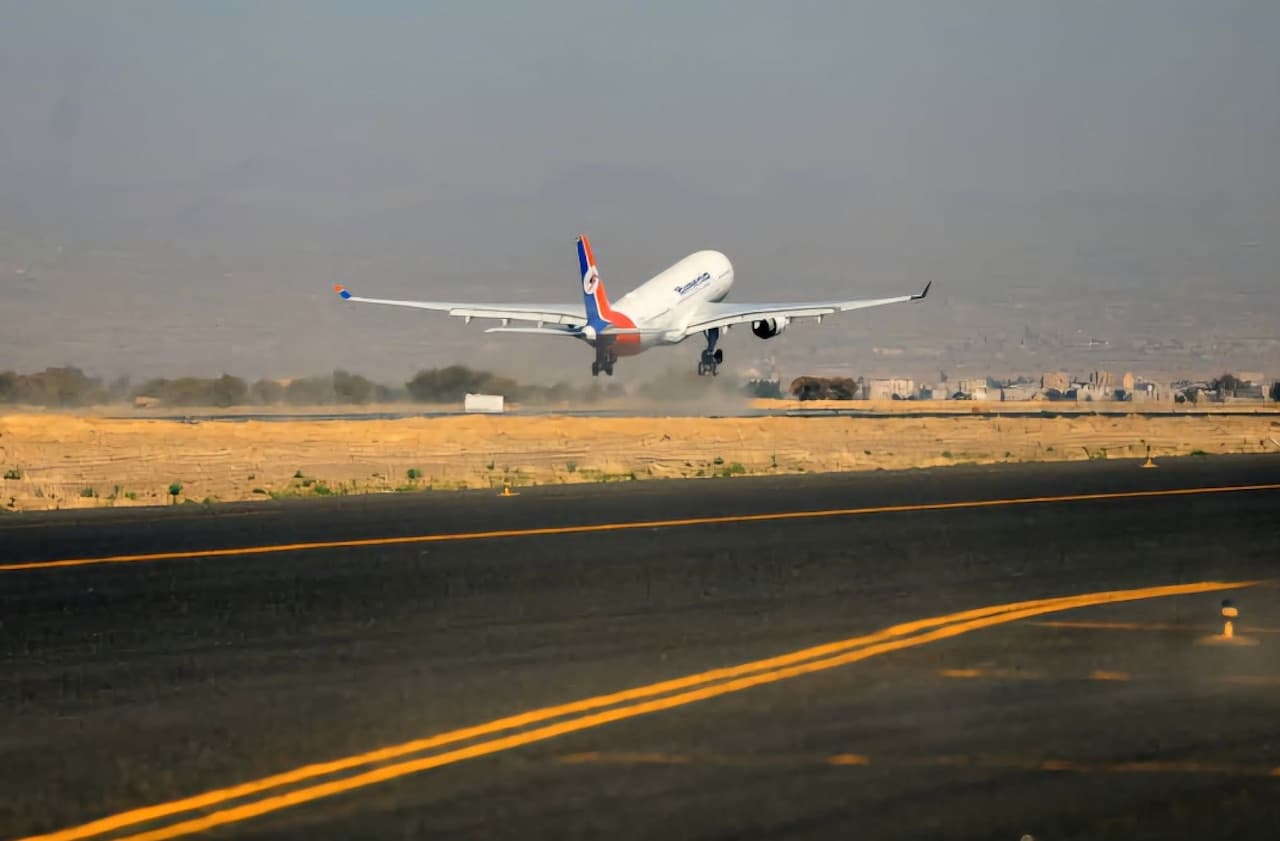
The Yemeni Civil Aviation Authority has issued a NOTAM closing all airports in the country until further notice, effective immediately. This follows a strike on Sanaa International Airport's runway, reportedly by the internationally recognized Yemeni government, to prevent an Iranian aircraft carrying a Houthi delegation from landing. The delegation had traveled to Tehran for the funeral of the late Supreme Leader Ali Khamenei. The closure suspends all commercial and regular air traffic, redirecting authorized movements—such as the targeted Iranian flight—to alternative fields like Hodeida. This action cripples a key hub for humanitarian and diplomatic flights, worsening an already dire situation for aid agencies relying on air access.
**Abha Airport Under Fire**
In retaliation, Houthi forces claimed an attack on Abha International Airport in southern Saudi Arabia using missiles and drones. Houthi military spokesman Yahya Saree warned all airlines against flying over Saudi airspace, a threat that could force carriers to reroute or suspend flights to certain airports. The Saudi-led coalition reported intercepting several ballistic missiles fired from Yemen, with no major damage reported at Abha so far. However, the warning underscores the expanding risk to civil aviation in the region.
**Implications for Air Traffic and Training**
For ATPL and ATC students, this event is a textbook example of how geopolitical conflict directly impacts flight operations. The closure of Sanaa and the threat to Abha demonstrate the critical role of NOTAMs in communicating airspace restrictions. Students must learn to interpret such notices, assess risks, and plan alternative routes. The situation also highlights the importance of conflict zone risk assessment, a key topic in aviation security modules. ATC trainees should understand how to manage airspace closures and coordinate diversions under pressure.
**Broader Regional Context**
The attacks come amid wider Middle East tensions, including strikes on oil tankers off the UAE and bombings in Iran. While no other major civilian airports have reported comparable damage, the Houthi threats could disrupt regional air traffic patterns. Airlines operating in the region must now evaluate the safety of their routes, potentially leading to longer flight times and increased fuel costs. For students, this reinforces the need to stay updated on geopolitical developments and their impact on aviation.