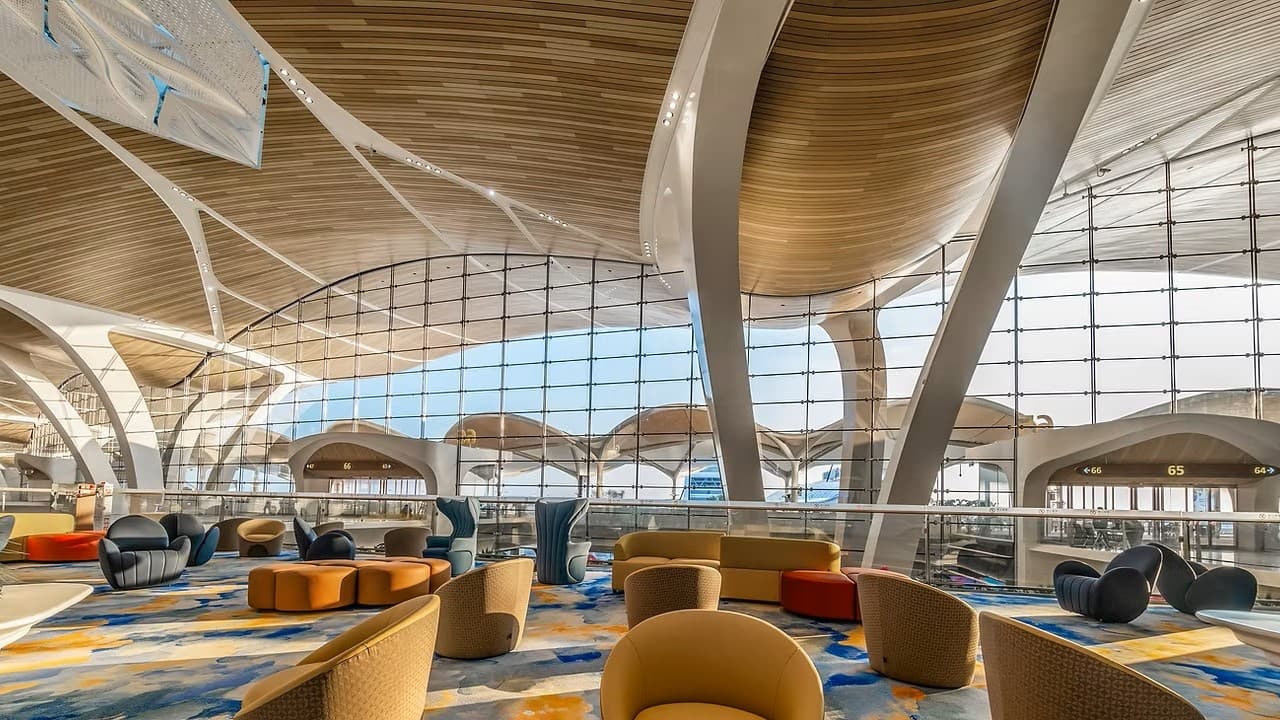
The Versailles Prize has unveiled its 2026 list of the world's most beautiful airports, featuring seven terminals across China, Germany, India, Cambodia, and the United States. This annual award, which in 2025 highlighted six airports including two in France, celebrates architectural excellence that goes beyond mere functionality. For aviation professionals, these awards are more than just aesthetic accolades—they represent a shift in how airports are designed to balance speed, comfort, and environmental sustainability.
For ATPL and ATC students, the significance of these designs lies in their operational impact. Airports like Guangzhou Baiyun's Terminal 3 and Frankfurt's Terminal 3 are not just visually striking; they are engineered to handle increasing passenger volumes while maintaining efficient flow. The Prix Versailles emphasizes that these terminals resolve the apparent contradiction between the need for rapid transit and the desire for a pleasant, unhurried experience. This directly relates to air traffic management, where terminal layout affects taxi times, gate assignments, and overall airport capacity.
The 2026 winners include Guangzhou Baiyun International Airport Terminal 3 (China), Frankfurt Airport Terminal 3 (Germany), Lokapriya Gopinath Bordoloi International Airport Terminal 2 (India), Navi Mumbai International Airport Terminal 1 (India), Techo International Airport in Phnom Penh (Cambodia), Pittsburgh International Airport (USA), and San Diego International Airport Terminal 1 (USA). These projects were selected for their "extraordinary and distinctive" architecture, which creates more harmonious and welcoming spaces. The prize also highlights their role in leaving a "sustainable environmental footprint" and becoming attractive frameworks that reflect economic, cultural, and social dynamics.
For students training to become pilots or air traffic controllers, understanding airport infrastructure is crucial. The layout of terminals, the placement of runways, and the integration of green spaces all influence operational procedures. For example, a well-designed terminal can reduce taxi distances, saving fuel and reducing emissions—a key consideration in modern aviation. Similarly, ATCs must be aware of how terminal design affects visibility and communication with ground vehicles. The 2025 winners, including Marseille-Provence Terminal 1 and Roland Garros Airport arrival terminal in La Réunion, also demonstrate how French airports are setting benchmarks in passenger experience and efficiency.
In conclusion, the Versailles Prize is not just about beauty; it is a recognition of how airports are evolving to meet the demands of 21st-century aviation. For ATPL and ATC students, studying these designs offers insights into the future of airport operations, where aesthetics and functionality go hand in hand. As the industry moves toward more sustainable and passenger-centric models, understanding these trends will be essential for any aviation professional.