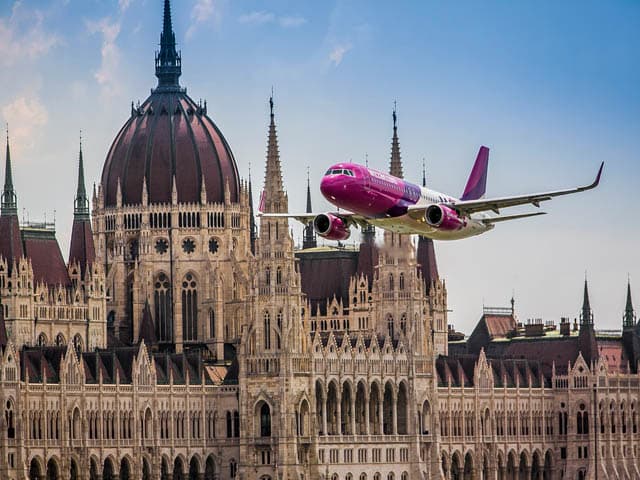
In a recent interview with the Italian daily Corriere della Sera, Wizz Air's CEO, József Váradi, has painted a rather bleak picture for the upcoming winter season, likening it to the impact of COVID-19. He predicts fewer flights and rising ticket prices due to persistent fuel costs. Váradi describes 2026-2027 as a transitional period for the Hungarian low-cost airline, with a hopeful return to better fortunes expected by the end of 2027.
The winter ahead is expected to be particularly challenging, with Váradi noting that weaker airlines may reduce their offerings, leading to increased prices. He emphasizes that the soaring cost of jet fuel will significantly impact the liquidity of the sector. Three key factors will determine the future of European airlines: available liquidity, market risk coverage, and fleet efficiency. Wizz Air claims to be in a strong position in all these areas, boasting over 2 billion euros in liquidity, good short-term fuel coverage, and a young, fuel-efficient fleet consisting primarily of Airbus A320neo aircraft.
Despite these strengths, Váradi acknowledges that the past year has nearly erased the profits achieved due to skyrocketing energy costs and operational disruptions caused by a shortage of available aircraft. He also points to ongoing issues with Pratt & Whitney engines and geopolitical tensions in Ukraine and the Middle East as contributing factors. For the current summer season, Wizz Air has hedged 84% of its fuel costs, but this drops to 73% for the next six months, indicating a potential financial strain as they will have to absorb the costs of the unhedged portion. Váradi does not expect fuel prices to return to pre-war levels soon, citing damage to infrastructure in the Gulf and alternative supply chain costs as reasons for sustained high prices.
In the face of these challenges, Wizz Air is still pursuing aggressive growth, particularly in Italy, where it has seen a remarkable 40% increase in capacity this year, far outpacing the overall European market growth of just 5%. Váradi expresses confidence in the demand for Wizz Air in Italy, stating that the company is investing in this growth. Although he admits that not all initiatives have succeeded, such as the closure of Wizz Air Abu Dhabi, he believes that the majority of their decisions have been sound. Looking ahead, he assures that by the end of 2027, the entire fleet will be operational, marking a significant turnaround for the airline.