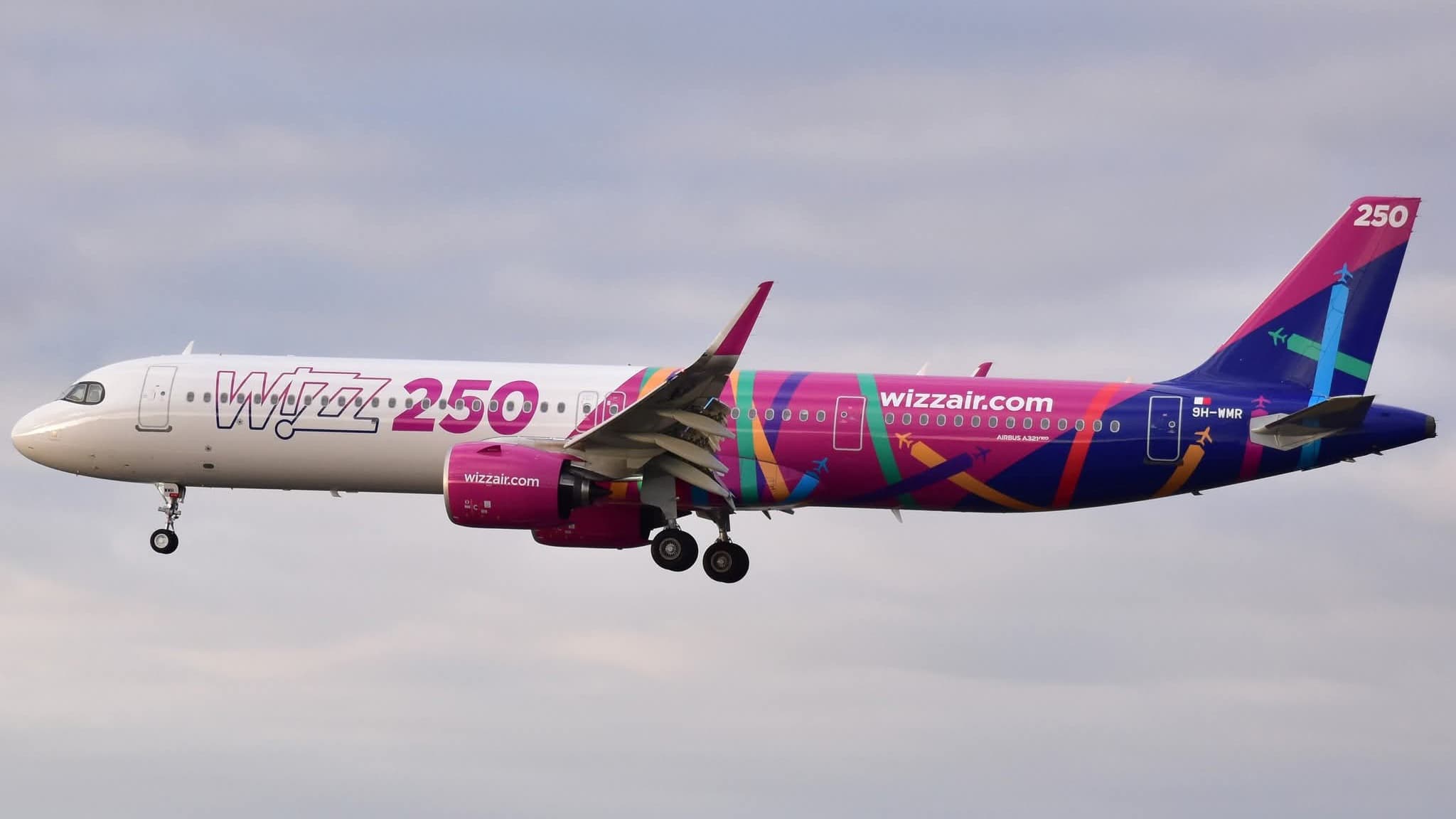
**Wizz Air has announced a landmark agreement with Starlink, SpaceX's satellite internet service, to equip its entire Airbus fleet with high-speed Wi-Fi starting in 2027.** The Hungarian carrier, known for its ultra-low-cost model, claims to be the first European low-cost airline to adopt Starlink's connectivity solution, a move that signals a major shift in the budget aviation sector.
**The deal covers approximately 240 Airbus A320 and A321 family aircraft**, including those operated by subsidiaries in Malta, the United Kingdom, and Abu Dhabi. Wizz Air aims to provide a consistent, high-speed internet experience across all routes, breaking the traditional notion that reliable in-flight connectivity is only for premium passengers. Ian Malin, Chief Commercial Officer of Wizz Air, stated that the company's philosophy of making travel accessible now extends to the digital realm: "Our customers should not have to choose between affordable fares and reliable internet to stay connected to what matters most."
**Starlink's low Earth orbit (LEO) satellite network promises low latency and high bandwidth**, enabling activities like video streaming, video calls, social media, and professional messaging from takeoff to landing. This represents a significant upgrade over traditional Ku or Ka-band systems, which often suffer from limited speed and congestion. For flight crews, the connectivity opens up possibilities for real-time operational updates, weather data, and predictive maintenance, though Wizz Air has not yet detailed these applications.
**The move places Wizz Air in a rapidly evolving connectivity market.** Several US carriers, including United Airlines, Southwest, Alaska Airlines, and American Airlines, have already announced Starlink rollouts. In Europe, IAG (parent of British Airways, Iberia, Vueling) and Lufthansa are exploring or adopting Starlink, while other airlines like Air France, SAS, Qatar Airways, Air New Zealand, and airBaltic have also committed to or are evaluating the service. For Wizz Air, which operates on razor-thin margins, adopting high-speed Wi-Fi reflects the growing passenger expectation for connectivity, even on short-to-medium-haul budget flights.
**Economic details remain unclear.** Wizz Air has not disclosed whether the Starlink service will be free, paid, or tied to loyalty programs. In the US, United offers free Starlink access to MileagePlus members, while Air France and others have opted for full or targeted free access. For an ultra-low-cost carrier, monetization could involve pay-per-use, ad-supported free tiers, or segmentation (e.g., free messaging, paid streaming). The decision will be closely watched by the industry as a test case for budget airline connectivity.
**For ATPL and ATC students, this development highlights the growing integration of satellite communications in aviation.** Understanding LEO satellite systems like Starlink is becoming relevant for flight planning, operational communications, and future air traffic management. The ability to stream real-time data in the cockpit could enhance situational awareness and efficiency, while ATC may need to adapt to increased data exchange between aircraft and ground systems.