**Aeroflot's Ambitious Fleet Plan**
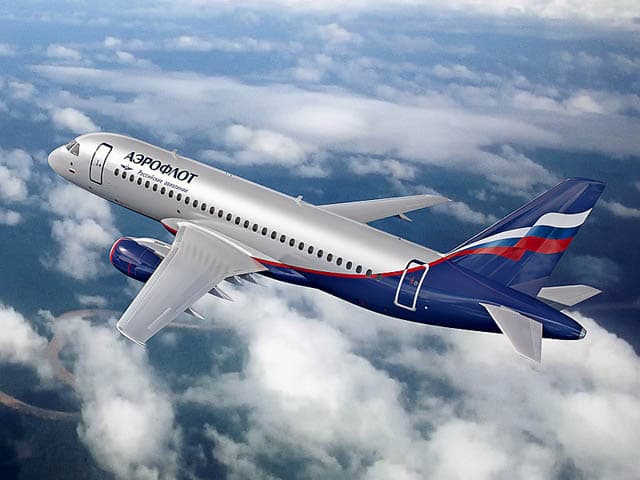
Aeroflot, Russia's flag carrier, has set a strategic target to achieve a 50/50 balance between Russian-built and foreign aircraft in its fleet by 2036. CEO Sergei Aleksandrovsky announced this goal at an economic forum in Moscow, as reported by Interfax. Currently, the airline operates a majority of Boeing and Airbus jets alongside about 60 Sukhoi Superjet 100s. Aeroflot holds a firm order for 18 Yakovlev MC-21s and expects deliveries of 200 MC-21s by 2033, including 108 by 2030, supplemented by "russified" Superjet 100s (SJ-100) and Tupolev Tu-214s.
**Reality Check: A 100% Russian Airliner Remains Distant**
Despite these ambitions, Russian authorities are tempering expectations. Industry and Trade Minister Anton Alikhanov stated that designing a completely new airliner from scratch would take more than 20 years, even if all systems, engines, and aerodynamics had to be developed from zero. He noted that current programs require three to four years just to resolve "teething problems" and cited the failure of Mitsubishi's regional jet program in Japan as a cautionary tale of the market's complexity.
**Chronic Delays and Dependencies**
Russia's civil aircraft programs, touted as alternatives to Airbus and Boeing, have been plagued by delays. The MC-21, launched in 2009, was originally slated for serial production nearly a decade ago. Certification is now expected by the end of 2026, with commercial service shortly after. The Superjet 100, initially designed with many Western components, is undergoing a "localized" version with Russian engines, but deliveries are behind schedule. The Il-114-300 turboprop, revived in 2015, has also seen its certification postponed, though Ilyushin claims flight tests are complete and promises three deliveries this year.
**Reviving Soviet-Era Aircraft**
Unable to purchase or produce enough new aircraft, Russian airlines are increasingly turning to stored Soviet-era planes. State conglomerate Rostec confirmed that between 2026 and 2027, twelve aircraft—including nine Tupolev Tu-204s, one Antonov An-148, and two Ilyushin Il-96s—will be reactivated and delivered to carriers like Red Wings. Ten of these, aged up to 30 years, have already re-entered service. Meanwhile, some airlines are also cannibalizing Boeing 747s retired during the pandemic, using parts sourced through parallel channels.
**Western Aircraft Still Dominate**
Despite these efforts, Russia's commercial fleet remains overwhelmingly foreign. As of autumn 2025, airlines operated 1,088 aircraft out of a total fleet of 1,135, with 67% being of foreign manufacture. These aircraft carry the vast majority of passengers, underscoring Russia's continued dependence on Airbus and Boeing amid sanctions and restricted access to spare parts.
**MyATPS Angle for ATPL/ATC Students**
This story illustrates how geopolitical sanctions can reshape an entire national aviation industry, forcing airlines to rely on older, less efficient aircraft and delaying the introduction of modern types. For ATPL students, it highlights the importance of understanding fleet planning, certification timelines, and the operational challenges of maintaining mixed fleets under sanctions. ATC students can note how airspace restrictions and fleet composition affect traffic flows and contingency planning.