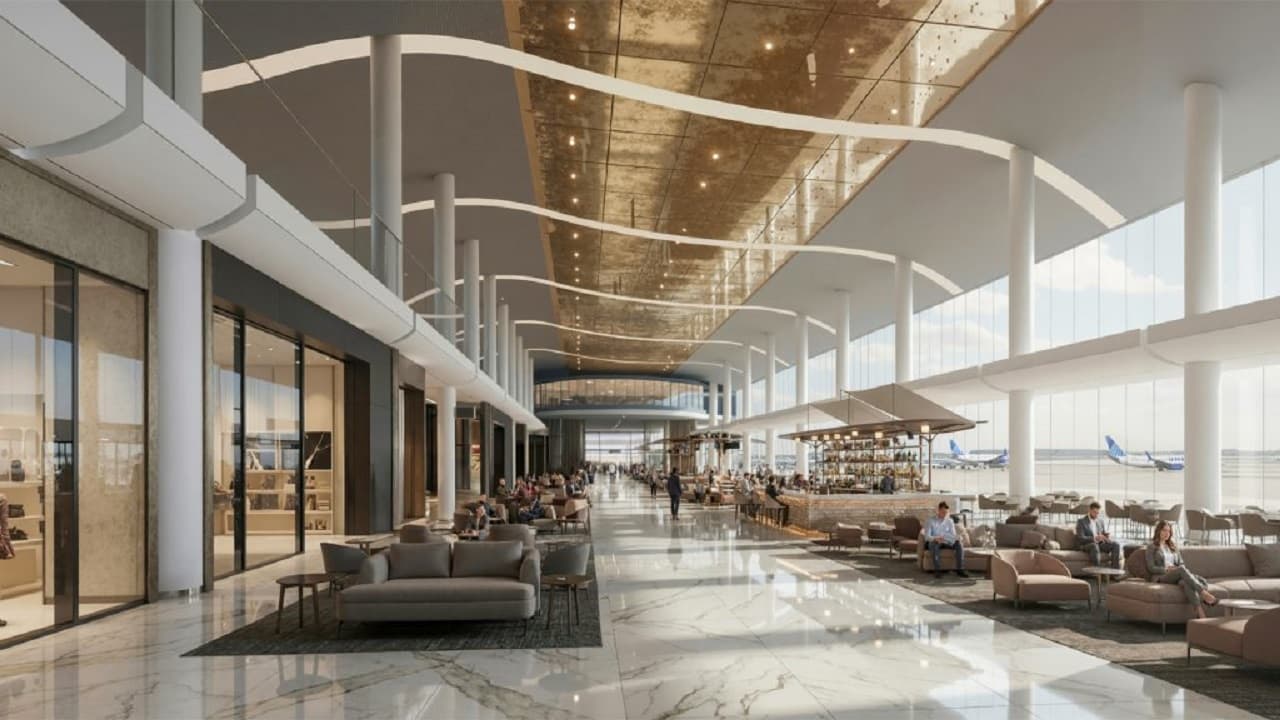
Washington Dulles International Airport, the primary gateway to the U.S. capital, is set for a historic transformation. Announced by President Donald Trump alongside Transportation Secretary Sean Duffy, United Airlines CEO Scott Kirby, and officials from the Metropolitan Washington Airports Authority (MWAA), the $22.5 billion program aims to modernize terminals, streamline passenger flow, and significantly boost capacity. The iconic main terminal, designed by Eero Saarinen, will be preserved, blending heritage with innovation.
For aviation professionals, this project is a case study in large-scale airport redevelopment. The plan includes adding or renovating over 465,000 square meters of airport space, replacing concourses C and D, expanding the main terminal, and introducing new commercial areas and lounges. A key change is the phasing out of the aging 'mobile lounges'—those iconic shuttles that have ferried passengers for decades—in favor of an extended AeroTrain system, a central pedestrian tunnel, and simpler pathways. These upgrades are designed to enhance the passenger experience, a critical focus in modern aviation.
The project also addresses ground infrastructure: a massive multi-level parking facility with approximately 32,000 spaces, improved access to a new U.S. customs facility, and enhanced security, baggage handling, and check-in areas. United Airlines, a major hub carrier at Dulles, emphasizes that the redesign will make the airport more intuitive and comfortable. For students of ATPL and ATC, understanding such operational changes is vital, as they affect runway capacity, ground movement, and terminal logistics.
Financing will come primarily from MWAA, United Airlines, and other carriers through municipal bonds and private partnerships, with no direct federal funds, according to the administration. This marks a significant increase from the earlier $7 billion modernization estimate. Construction will occur in phases, keeping the airport operational, with initial works possibly starting in spring 2027, pending approvals. This phased approach is a common challenge in airport projects, requiring meticulous planning to minimize disruption—a lesson for future aviation managers.
Beyond infrastructure, the project carries political and symbolic weight. The White House views Dulles as a showcase of the U.S. capital, and officials argue the transformation will support future traffic growth and strengthen the airport's international role. As Transportation Secretary Sean Duffy put it, the goal is to build 'a world-class airport' while preserving the historic terminal. For aviation trainees, this underscores the importance of balancing modernization with operational continuity—a theme that will shape airport management for decades.