**Vueling's Shark-Skin Revolution: What It Means for Aviation Training**
Vueling, the Spanish low-cost carrier and part of the IAG group, is accelerating the introduction of a revolutionary biomimetic coating inspired by shark skin on its Airbus A320 fleet. The recent investment by IAG in Australian startup MAKO (formerly MicroTau) aims to fast-track certification and deployment of this technology, which promises to reduce fuel consumption and CO₂ emissions. For ATPL and ATC students, this development offers a tangible example of how cutting-edge aerodynamics and regulatory processes intersect in modern aviation.
**The Technology: Flightfilm and Its Aerodynamic Principles**
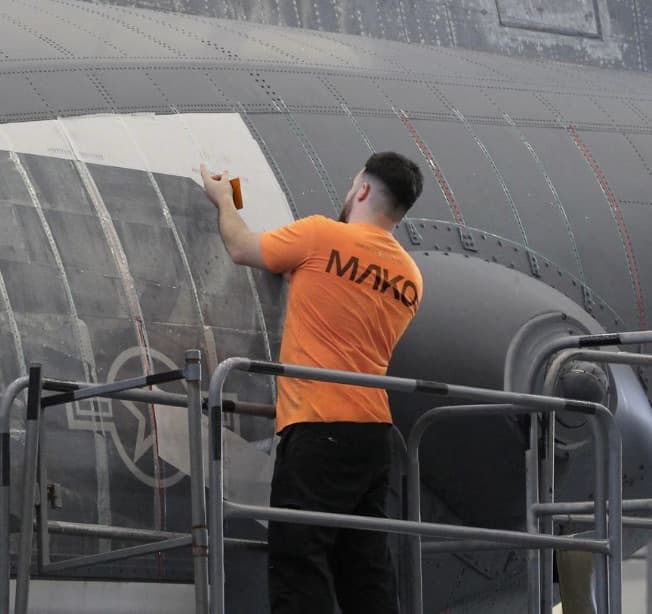
The Flightfilm coating mimics the microscopic texture of shark skin, featuring fine grooves called riblets that reduce surface turbulence. Applied as an adhesive film to the fuselage, it decreases friction drag without structural modifications. MAKO explains that "turbulence near the surface is lifted to the peaks of the microstructures, limiting direct interaction with the wall and reducing friction." This principle is directly relevant to ATPL students studying aerodynamics, as it demonstrates how drag reduction translates into fuel efficiency gains of 1% to 2%, as seen in similar technologies tested by Lufthansa Technik and BASF. For ATC students, understanding such innovations helps contextualize airline operational strategies and environmental goals.
**Certification and Deployment: A Case Study for Regulatory Studies**
IAG participated in a $28 million AUD funding round to support MAKO's certification efforts. The Flightfilm is expected to receive EASA certification for the A320 within the year, along with approvals in the US and Australia. This process involves obtaining a Supplemental Type Certificate (STC), a key concept for ATPL students learning about aircraft modifications and airworthiness. Vueling aims to be the first European airline to operate an aircraft with this coating, pending STC approval. The installation can be done during scheduled maintenance, minimizing aircraft downtime—a practical insight for future operations managers.
**Environmental and Economic Impact: A Lesson in Sustainability**
In an era of volatile fuel prices, which represent the second-largest cost for airlines after personnel, such innovations offer significant savings. For IAG, the technology aligns with its sustainability strategy, potentially reducing emissions across its fleet (British Airways, Iberia, Aer Lingus). ATPL students should note that even a 1% fuel saving on a large fleet translates into substantial economic and environmental benefits. ATC students may consider how such efficiency measures influence flight planning and airspace management.
**Conclusion: A Real-World Laboratory for Future Aviation Professionals**
If certification is confirmed in 2026, Vueling could become a living laboratory for this technology in Europe. For students at MyATPS, this story underscores the importance of staying informed about technological advancements that shape the industry. Whether you're studying aerodynamics, regulations, or sustainability, the shark-skin coating is a prime example of how biomimicry and innovation drive aviation forward.