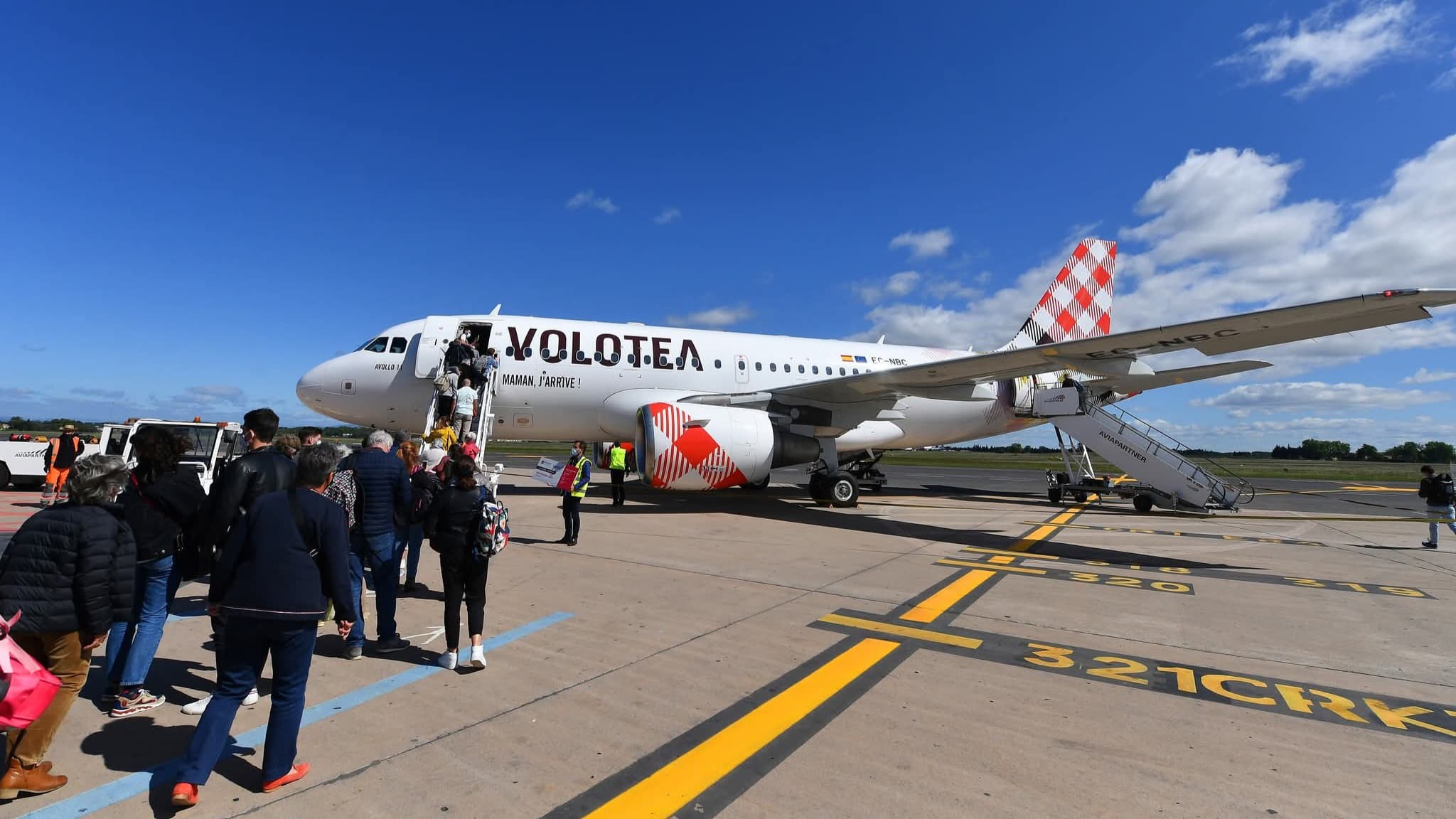
**Volotea's Controversial Fuel Surcharge**
Spanish low-cost carrier Volotea has sparked a heated debate by applying a fuel surcharge to tickets that were already paid for. The airline justifies the move by citing the sharp rise in kerosene prices since the start of the Middle East conflict, which has significantly increased its operating costs. According to Volotea, this sudden cost escalation threatens the economic viability of certain routes, forcing it to temporarily adjust the price paid by passengers. The airline insists that this is not about increasing margins arbitrarily but about "sharing the effort" with customers to maintain its flight schedule and avoid cancellations or frequency reductions.
**How the Surcharge Works**
Concretely, Volotea applies a "variable fuel surcharge" requested from some passengers several weeks after booking, based on changes in oil prices. This additional amount is added to the already-paid ticket via a message asking affected customers to pay the extra fee. The low-cost carrier explains that this mechanism is only activated when the fuel price exceeds an internally defined threshold and is limited in time. It emphasizes that the measure is targeted and does not apply uniformly to all tickets or routes.
**Legal Justifications and EU Response**
Volotea's France director, Gilles Gosselin, presents the measure as a crisis management tool, claiming it is temporary and therefore legal. He asserts that the airline remains within the contract concluded with the passenger and acts transparently by explaining the nature and reason for the surcharge. He adds that customers retain the option to refuse and seek alternative solutions. Volotea also claims to have taken legal precautions, stating that three independent law firms specializing in air transport and consumer law confirmed the legality of the device.
However, the European Commission is not convinced. Spokesperson Anna-Kaisa Itkonen stated that adding a fuel surcharge after booking "cannot be justified," even during periods of high energy price volatility. In France, Transport Minister Philippe Tabarot has requested an investigation, warning that the practice could set a "future precedent." EU Transport Commissioner Apostolos Tzitzikostas clarified that cancellations motivated by fuel price increases do not constitute "extraordinary circumstances." He drew a clear distinction: a physical shortage of kerosene is an extraordinary circumstance, but a price increase is a normal economic risk inherent to aviation.
**Industry Context and Precedents**
This controversy is not entirely new. In 2025, French low-cost carrier Transavia asked some customers to pay a surcharge on already-purchased tickets to pass on the increase in the solidarity tax on airline tickets (TSBA). The debate highlights the tension between airlines' need to manage costs and passengers' rights to a fixed price after booking. Competitor Vueling has explicitly guaranteed that the price confirmed at booking is final and that no surcharges will be applied retroactively, aiming to differentiate itself from Volotea.
**What This Means for ATPL and ATC Students**
For ATPL and ATC students, this case illustrates the complex interplay between airline economics, consumer protection regulations, and operational realities. Understanding the legal framework governing ticket pricing and passenger rights is crucial for future aviation professionals. It also underscores the importance of transparent communication and compliance with EU regulations, which can impact airline operations and customer relations. This real-world example reinforces the need for pilots and controllers to be aware of the broader commercial and regulatory environment in which they operate.