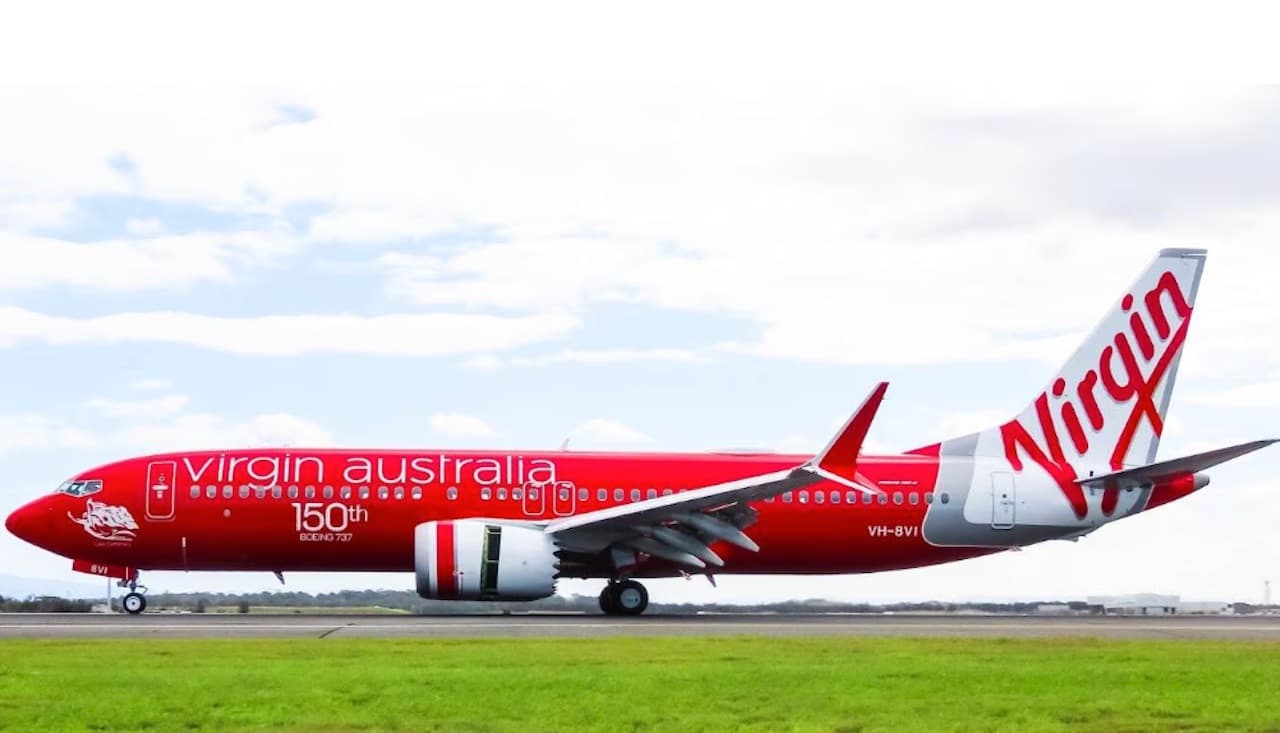
Virgin Australia has taken delivery of its 150th Boeing 737, a MAX 8 painted in a striking retro red livery that pays homage to its low-cost predecessor, Virgin Blue. The aircraft, registered VH-8VI and named 'Lake Centenary' after an Australian lake, is not just a visual statement—it also carries the names of more than 8,000 employees on its overhead bins, a gesture of recognition for the staff who helped the airline recover from administration in 2020.
The MAX 8 is part of a broader fleet renewal program that includes 12 Boeing 737-8s delivered in 2026, alongside four Embraer E190-E2s for regional operations. Virgin Australia highlights that the 737-8 burns about 19% less fuel and is 50% quieter than the older 737-800s it replaces, making it a key lever for reducing carbon emissions and noise pollution. This aligns with the airline's strategy to combine new, efficient aircraft with sustainable aviation fuels (SAF) to meet environmental targets.
For ATPL and ATC students, this news underscores the real-world impact of fleet modernization on operational planning. The shift to MAX 8s means changes in performance parameters—such as takeoff distances, climb rates, and fuel planning—that pilots must master. ATCs will see quieter aircraft and potentially altered noise abatement procedures. The integration of E190-E2s into regional networks also highlights the diversity of aircraft types that future aviation professionals will encounter, from narrow-body jets to regional turbofans.
The 'Lake Centenary' made its first commercial flight between Brisbane and Melbourne (flight VA308), a major domestic route. This milestone illustrates how airlines balance heritage with innovation, a theme relevant to students studying airline business models and fleet strategies. The employee tribute aspect also serves as a reminder of the human element in aviation—something that ATPL candidates, who will soon lead crews, should appreciate.
In summary, Virgin Australia's 150th 737 is more than a celebratory paint job; it is a case study in fleet renewal, environmental commitment, and employee engagement. For those training to fly or control aircraft, understanding such developments helps contextualize the technical and operational decisions that shape modern aviation.