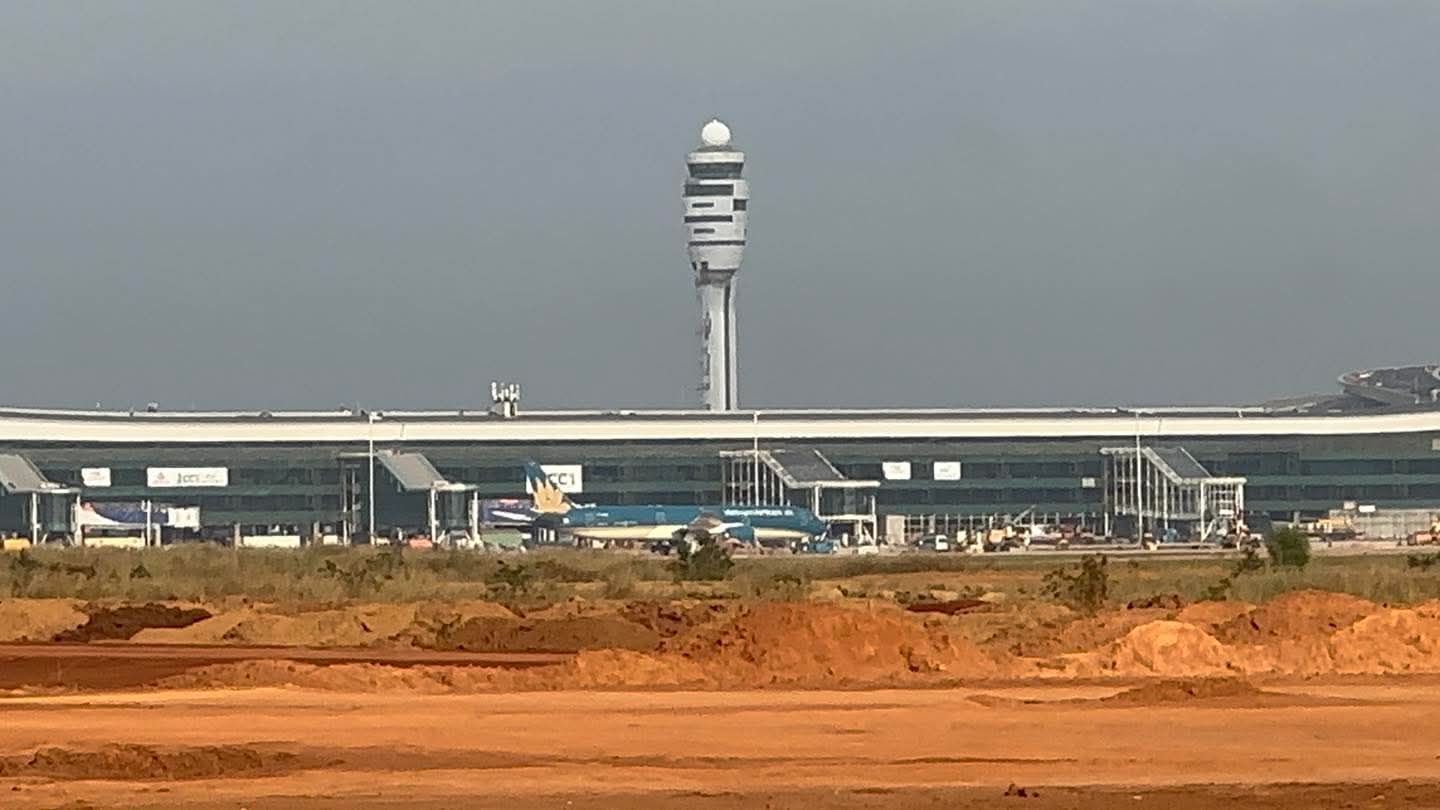
**Vietnam's Ambitious Airport Project**
Vietnam has taken the extraordinary step of deploying 2,000 soldiers from the People's Army to help complete the Long Thanh International Airport, a massive infrastructure project designed to become the country's primary aviation hub in the south. Located about 40 kilometers east of Ho Chi Minh City, the airport spans 5,000 hectares and is intended to replace the overcrowded Tan Son Nhat Airport, which currently handles far more traffic than its design capacity. The government's decision to involve the military underscores the strategic importance of this project, which is already behind schedule by one year, with a new target for commercial operations set for late 2026.
**Scale and Phases of Development**
The Long Thanh project is being developed in three phases, with the first phase alone costing an estimated $12 billion (€12 billion). This initial phase includes a 4,000-meter runway, a passenger terminal capable of handling 25 million passengers annually, and cargo facilities for 1.2 million tons of freight per year. Over 14,000 workers and engineers, supported by 3,000 pieces of heavy equipment, are working around the clock to meet the deadline. The first test flights were conducted in December 2025, and the airport is expected to open for commercial service in the first half of 2026.
**Long-Term Vision and Regional Competition**
By 2050, Long Thanh is planned to have four runways and three terminals, with a capacity of 100 million passengers and 5 million tons of cargo annually. This positions it as a direct competitor to other major Southeast Asian hubs like Singapore Changi, Bangkok Suvarnabhumi, and Kuala Lumpur International. For Vietnam, the airport is not just an infrastructure project but a strategic tool to boost economic development in the southern key economic region and to assert its role as a regional aviation gateway.
**Implications for ATPL and ATC Students**
For future pilots and air traffic controllers, the development of Long Thanh represents a significant shift in Southeast Asian airspace and airport operations. Understanding the dynamics of new mega-hubs, their airspace integration, and the operational challenges of transitioning traffic from an older airport is crucial. This case study illustrates how rapid infrastructure growth can affect flight planning, airspace management, and the need for adaptability in a dynamic aviation environment.