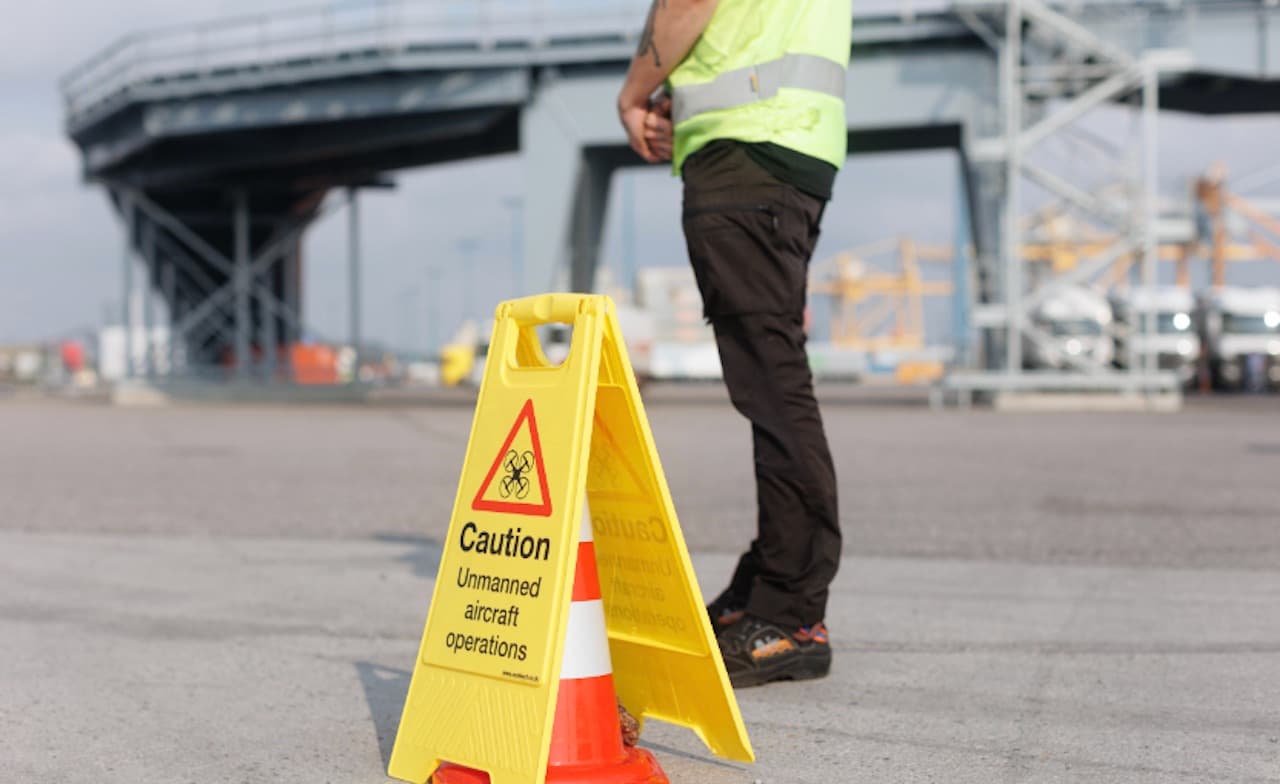
The 2026 FIFA World Cup in the United States has become a high-profile testing ground for airspace security measures. According to the Transportation Security Administration (TSA), over 300 drones have been seized for operating illegally near stadiums, underscoring the escalating challenge of integrating unmanned aircraft into controlled airspace.
**Strict Temporary Flight Restrictions (TFRs)**
On match days, the FAA imposes a no-fly zone extending 3 nautical miles (about 5.5 km) around each stadium, up to 3,000 feet (900 meters) AGL. Fan zones are similarly restricted, with a 1 nautical mile (1.85 km) radius up to 1,000 feet (300 meters). Any aircraft—including drones—must obtain explicit ATC clearance to enter these zones. In Florida alone, the FBI issued 49 citations and confiscated 54 drones. The FAA warns that violators face fines up to $100,000, criminal prosecution, and seizure of their equipment.
**Counter-Drone Technology Deployment**
Multiple federal agencies have deployed specialized teams equipped with detection, tracking, and neutralization systems. These counter-UAS (Unmanned Aircraft Systems) capabilities are part of a broader strategy to secure US airspace, following a presidential executive order signed by Donald Trump to enhance anti-drone measures. Similar systems have been installed along parts of the US-Mexico border.
**Broader Implications for Aviation Safety**
Beyond the World Cup, drones represent a persistent threat to manned aviation. Recent incidents include illegal overflights during NFL playoffs and the Boston Marathon. The FAA emphasizes that even a small drone can cause significant damage to an aircraft or endanger people on the ground. For ATPL and ATC students, this case study illustrates the real-world application of TFRs, the importance of airspace classification, and the operational challenges of managing drone incursions—a topic increasingly tested in exams and encountered in practice.