**United Airlines returns to Venezuela after nearly nine years**
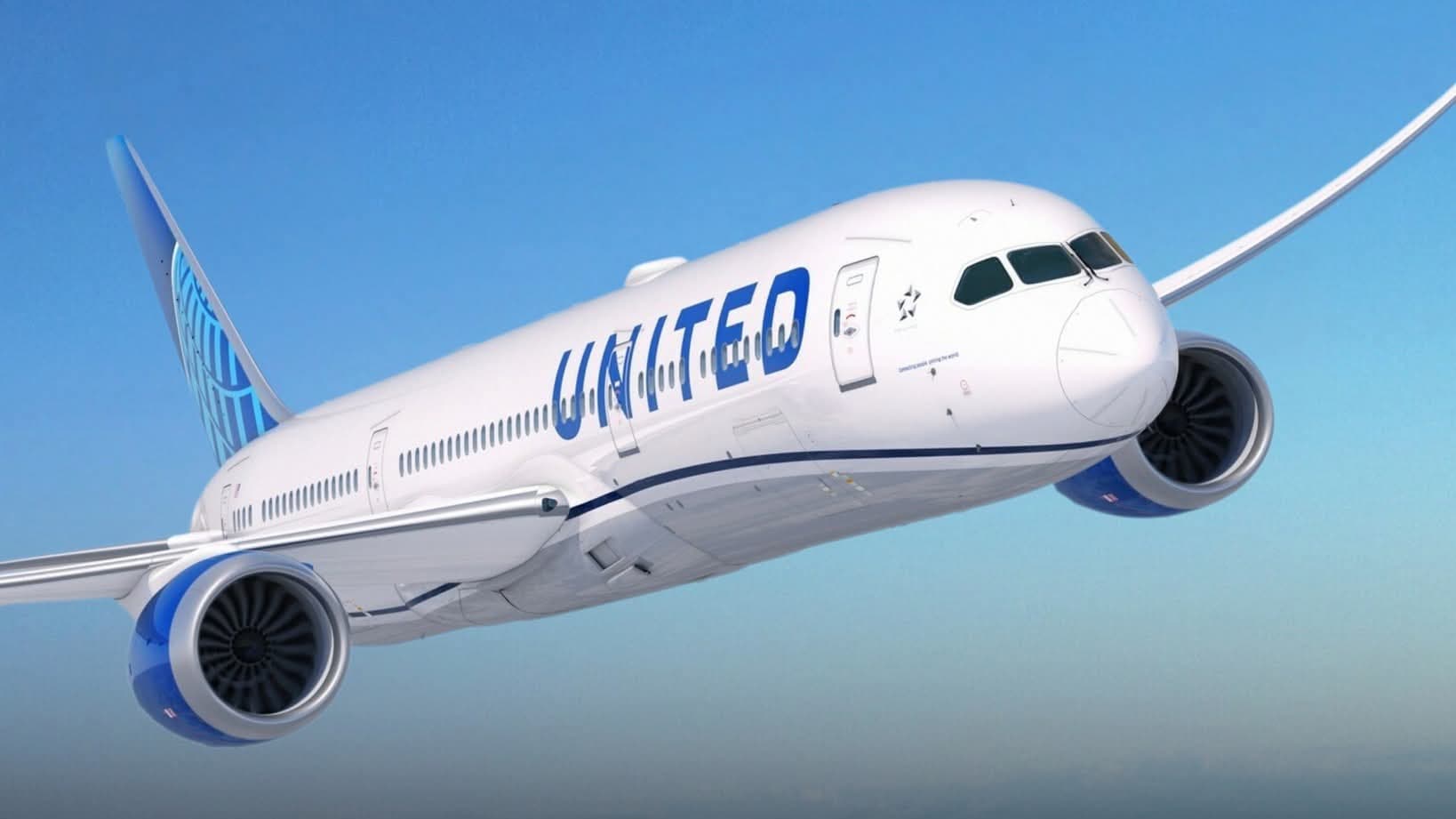
United Airlines has announced the resumption of daily nonstop flights between its Houston–George Bush Intercontinental (IAH) hub and Caracas' Simón Bolívar International Airport (CCS), starting August 11, 2026, pending final government approvals. The carrier had suspended its Venezuelan operations in June 2017 after more than two decades of service, amid political, economic, and security crises. The flights will be operated with Boeing 737 MAX 8 aircraft, featuring individual seatback entertainment, Bluetooth connectivity, and eventually Starlink high-speed Wi‑Fi, along with optimized overhead bin space for carry-on luggage.
For ATPL and ATC students, this route reopening is a textbook case of how geopolitical shifts and energy policies directly reshape airline networks. The decision is not purely commercial: it is tightly linked to U.S. efforts to expand energy sources and support Venezuelan oil production recovery. The U.S. Department of Transportation explicitly frames these flights as a tool to transport energy sector workers and strengthen bilateral ties. This illustrates how aviation is never isolated from international relations — a key lesson for future pilots and controllers who must understand the broader context of the routes they fly or manage.
**A strategic addition to United's Latin American network**
The Caracas service is part of United's broader strategy to reinforce its Latin American hub at Houston, from which it now operates up to 100 daily flights to over 50 destinations in Latin America and the Caribbean. From IAH, passengers can connect to more than 180 destinations worldwide, cementing the hub's role as an intercontinental gateway. United also highlights its $2 billion Terminal B transformation project at Houston, set to open later this year with 22 new gates and the largest United Club in the network.
For ATC trainees, this expansion means increased traffic complexity at one of the busiest U.S. hubs. Managing arrivals and departures from a major energy-industry hub like Houston requires understanding of both commercial and business aviation flows, as well as coordination with international airspace. The route also underscores the importance of hub-and-spoke network design, a core concept in ATPL studies. Students should note how United leverages its Houston hub to funnel traffic from across the U.S. and beyond into a single Latin American destination, optimizing aircraft utilization and passenger connectivity.
**American Airlines paved the way**
United becomes the second U.S. carrier to restore regular service to Venezuela, following American Airlines' return on the Miami–Caracas route on April 30, 2026, operated by Envoy Air using Embraer 175 aircraft. This followed the lifting of the federal ban on direct commercial flights between the two countries, imposed in 2019. For Venezuelan passengers, the reopening of these two major gateways — Houston for United, Miami for American — provides direct access to two of the largest U.S. hubs, with onward connections to North America, Europe, and Asia.
From an operational standpoint, this dual restoration offers a real-world example of how airlines react to regulatory changes. ATPL students studying air law and regulations can analyze the sequence of events: the 2019 ban, its gradual relaxation in 2024–2025, and the subsequent route announcements. ATC students can consider the airspace coordination challenges involved in reintroducing flights to a country that had been largely isolated from U.S. commercial aviation for years, including potential NOTAM updates, overflight permissions, and security protocols.
**Geopolitical and energy dimensions**
Beyond commercial considerations, the resumption of U.S. flights to Venezuela is heavily influenced by Washington. The Department of Transportation stated that this reopening aligns with President Donald Trump's agenda to "expand U.S. energy sources to lower costs for consumers." Transportation Secretary Sean P. Duffy called it a "thrilling new development in the relationship between our two countries," emphasizing that the flights will be "crucial for transporting energy sector workers."
For aviation students, this is a powerful reminder that airline route networks are not static maps but dynamic systems shaped by politics, economics, and security. Understanding these forces is essential for career planning — whether as a pilot negotiating international routes or a controller managing cross-border traffic. The Caracas–Houston link also highlights the role of aviation in supporting key industries like oil and gas, a sector that often employs pilots for corporate shuttle flights and charter operations.
**What this means for ATPL and ATC students**
This news directly impacts ATPL students studying network planning, air law, and operational decision-making. It demonstrates how airlines evaluate route viability based on demand (business travelers, diaspora, VFR), regulatory environment, and geopolitical risk. ATC students can learn about the complexities of reopening airspace after a prolonged closure, including coordination with Venezuelan authorities, updating flight plans, and ensuring safety protocols. The use of Boeing 737 MAX 8 aircraft also ties into aircraft performance and systems knowledge required for ATPL exams.
In summary, the United Airlines Houston–Caracas resumption is more than a simple route addition — it is a case study in aviation geopolitics, network strategy, and operational resilience. MyATPS encourages students to follow such developments closely, as they provide real-world context for the theoretical knowledge tested in ATPL and ATC exams.