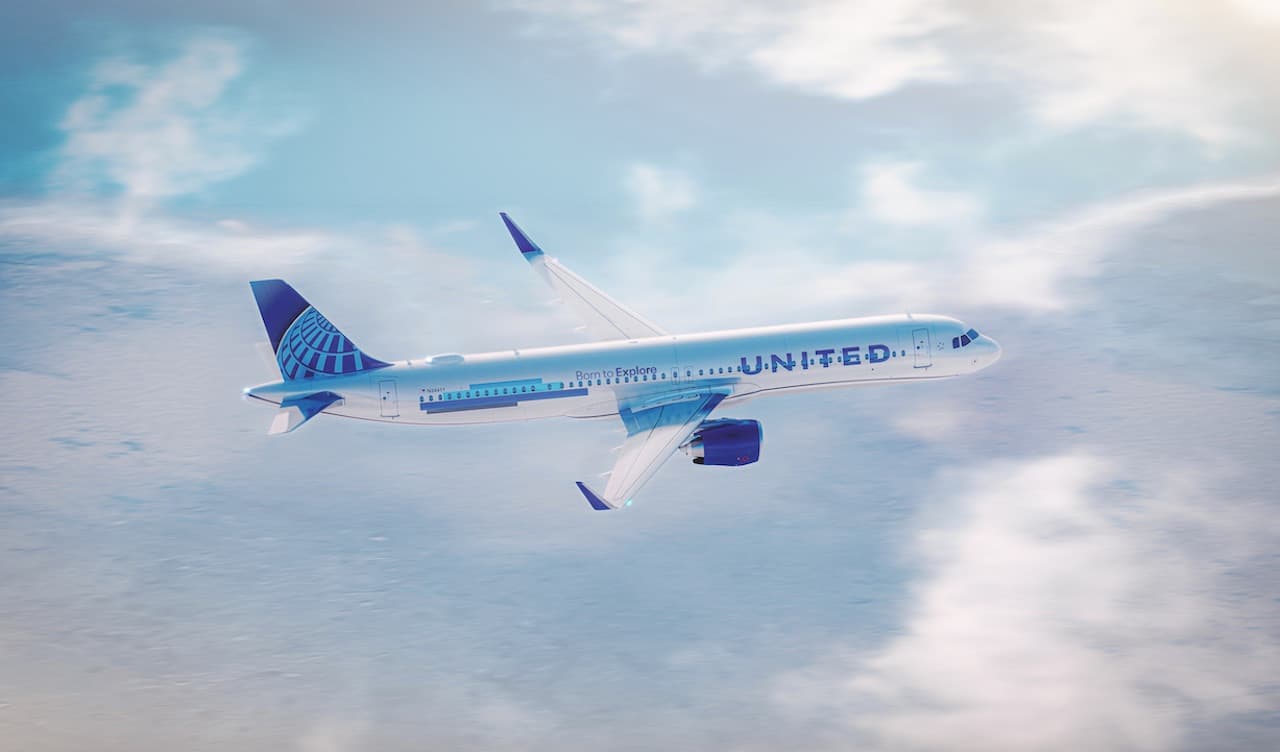
United Airlines is pushing the boundaries of economy class comfort with a novel configuration on its upcoming Airbus A321XLR fleet. The airline announced that a specific row of Economy Plus seats will feature the removal of the middle seat, replaced by a large, rigid shared table. This table, covered in a soft leather-like material and equipped with cup holders, extends between the aisle and window seats, providing passengers with significantly more personal space on long-haul narrowbody operations.
This design is a first for a U.S. carrier and comes as United prepares to deploy the A321XLR on transatlantic routes, gradually replacing its Boeing 757s. The airline has ordered 50 of these aircraft, which it aims to make "the most premium narrowbody in its fleet." The Economy Plus enhancement is part of a broader strategy to elevate the entire cabin experience, including 32 premium seats (Polaris and Premium Plus), Polaris suites with doors and direct aisle access, 4K OLED screens up to 19 inches, Bluetooth connectivity, and a self-service snack bar at the rear.
According to Andrew Nocella, United's Chief Commercial Officer, the airline is "investing across the entire fleet, from front to back, to offer customers more choice and value in every cabin." The new Economy Plus row is expected to bridge the gap between standard economy and premium economy, a segment increasingly critical for airlines. United has also introduced the "Relax Row" concept on Boeing 787 and 777 aircraft, featuring rows that convert into horizontal resting surfaces, set to debut in 2027.
The new Economy Plus configuration will go on sale by the end of 2026, with service entry shortly after. United plans to equip all its A321XLRs with this layout and may extend it to other aircraft types. The first domestic A321XLR flights are expected in fall 2026, followed by international routes in early 2027. United claims it will be "the only U.S. airline to offer this configuration."
For ATPL and ATC students, this development highlights how cabin design innovations can impact aircraft weight and balance, passenger loading procedures, and emergency evacuation considerations. The removal of a seat row changes the aircraft's center of gravity and may require updated load sheets and crew training. Additionally, understanding such product differentiations is valuable for future pilots and controllers who may interact with airline operations or work for carriers adopting similar strategies.