**Incident Overview**
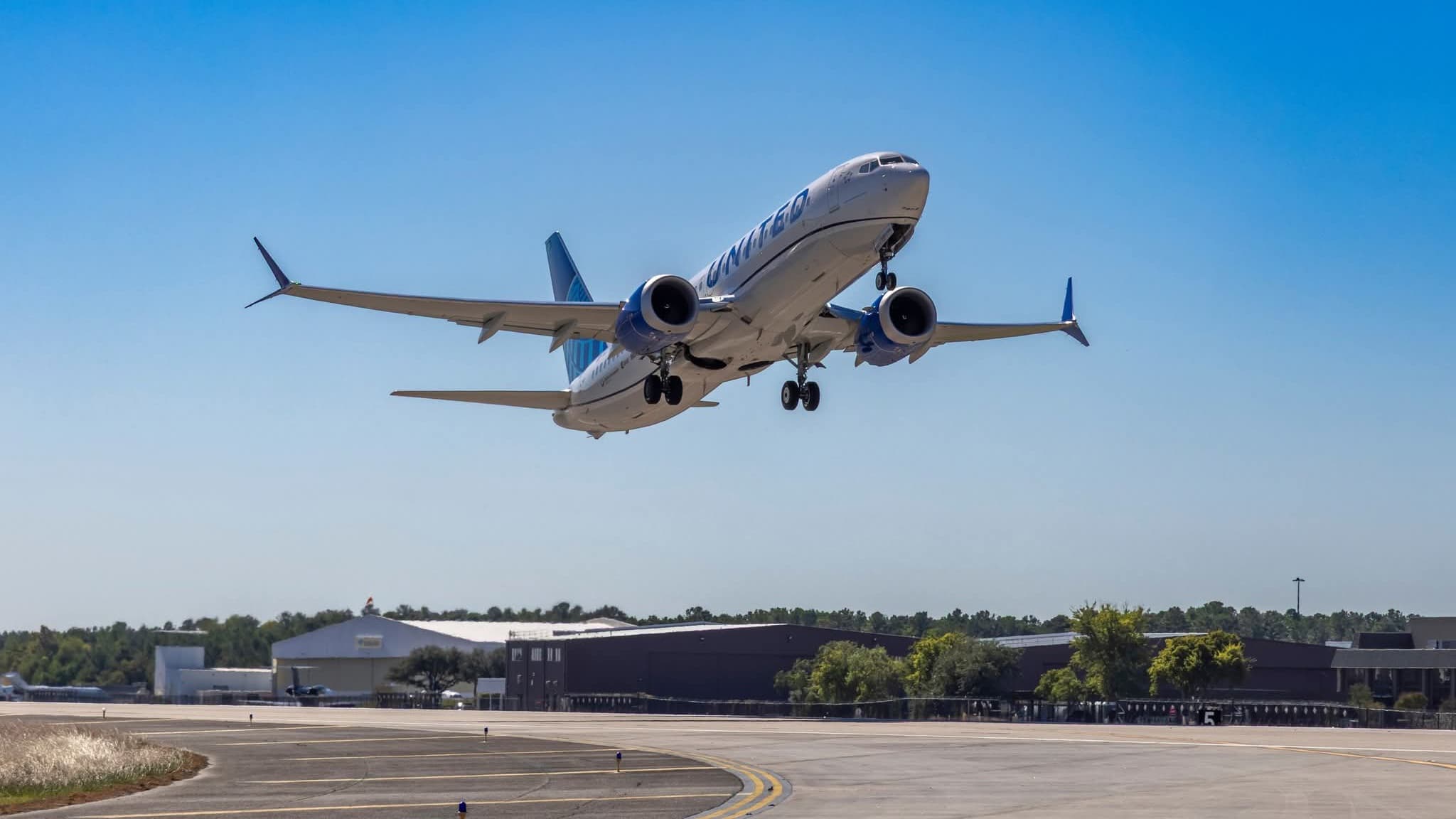
On Thursday evening, United Airlines flight UA1551, a Boeing 737 MAX 8 (registration N37278), was en route from Newark Liberty International Airport to Guatemala City with 145 passengers and six crew members when a passenger attempted to open the left rear (2L) door at approximately 36,000 feet (11,000 meters). The captain reported to air traffic control that the individual also physically assaulted another passenger. The crew decided to divert to Washington Dulles International Airport, where the aircraft landed safely at 20:38 local time. Law enforcement, including FBI agents, met the aircraft and took the passenger into custody. No injuries were reported, and passengers were accommodated overnight before a new flight was arranged the next morning.
**Why This Matters for ATPL and ATC Students**
This event is a textbook case for several critical topics covered in ATPL and ATC training. First, it demonstrates the physical impossibility of opening an aircraft door at high altitude due to cabin pressurization. At 36,000 feet, the pressure differential between the pressurized cabin and the outside atmosphere exerts a force of several tons on the door, keeping it securely sealed. Understanding this principle is essential for ATPL students studying aircraft systems and pressurization, as well as for ATC students who may need to explain such facts to pilots or passengers during an emergency.
Second, the incident underscores the importance of managing unruly passengers—a growing problem in aviation. According to the FAA, thousands of such incidents are reported annually in the United States, ranging from non-compliance to physical violence. For ATPL candidates, crew resource management (CRM) training includes de-escalation techniques and decision-making under pressure. For ATC students, this scenario highlights the need for clear communication with flight crews during diversions and coordination with ground authorities.
**Operational and Regulatory Implications**
The diversion to Washington Dulles required coordination between the flight crew, ATC, and airport emergency services. ATC students can learn from this example how to prioritize and manage an unscheduled landing, including issuing clearances, coordinating with approach control, and notifying ground handlers. For ATPL students, the event reinforces the importance of standard operating procedures (SOPs) for handling disruptive passengers and the legal obligations of the pilot-in-command to ensure safety.
Finally, this incident serves as a reminder that while physical door opening is impossible, the psychological impact on passengers and crew can be significant. Training programs increasingly focus on non-technical skills such as situational awareness, communication, and leadership—all of which were tested in this real-world scenario.