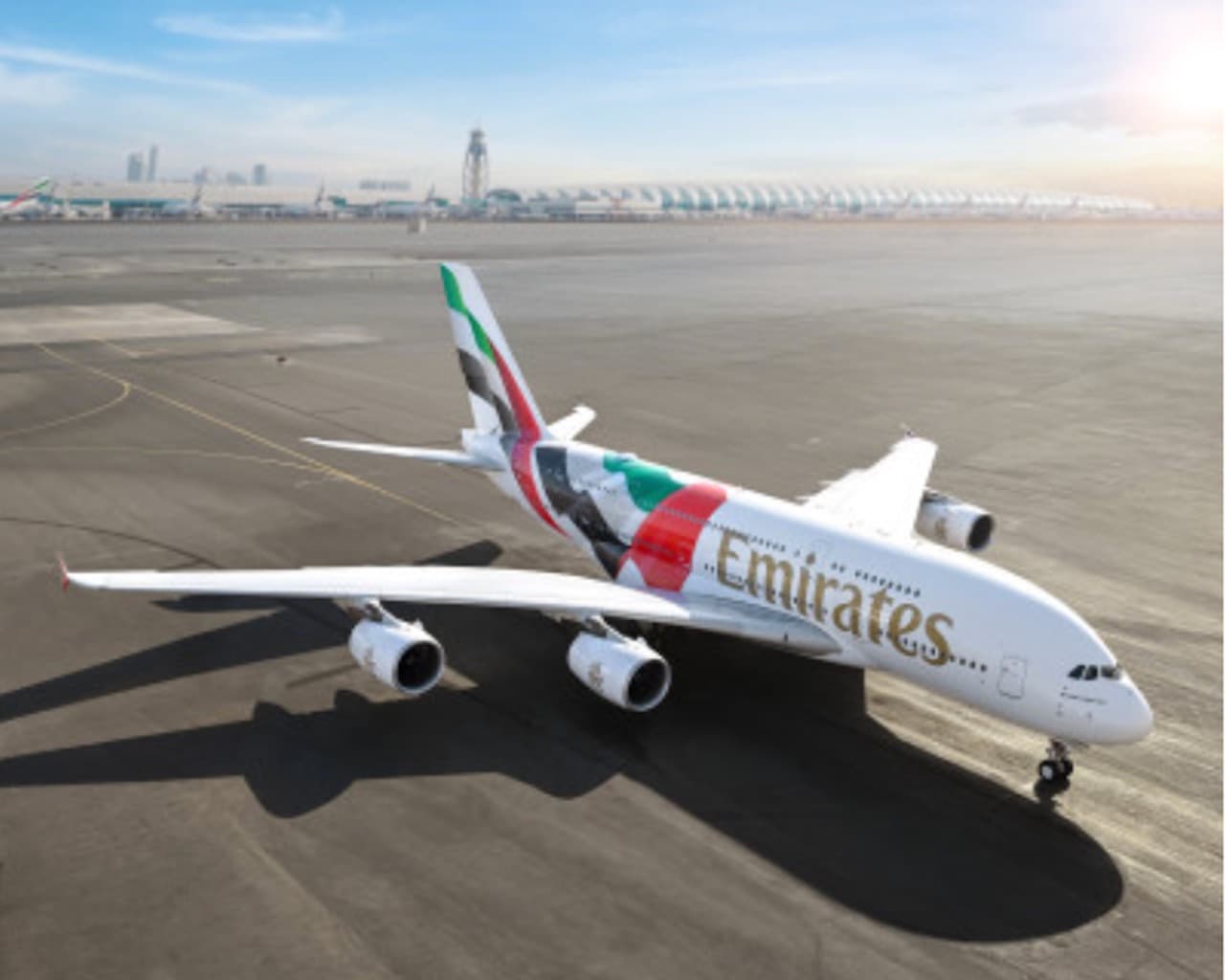
Emirates Airlines has made a surprising and substantial reduction to its flight schedule for June 2026, slashing nearly 16% of its planned flights from Dubai in just one week. This decision reflects the growing uncertainties surrounding long-haul air travel, especially in the Gulf region. According to the latest planning data, Emirates has decreased its scheduled flights from 7,116 to 6,007, resulting in a reduction of over 1,100 monthly rotations. This translates to approximately 37 fewer flights each day, leading to the removal of nearly 480,000 seats from the commercial offering in just a few days. When broken down daily, this equates to about 16,000 seats taken out of service each day, a significant figure for an airline that exclusively operates wide-body aircraft.
The impact of these cuts is not limited to just a few routes; a total of 47 destinations within the Emirates network are experiencing frequency reductions of at least 17%. This includes all continents, with notable reductions in Europe, Asia-Pacific, Africa, North America, and the Middle East. Some routes are seeing their frequencies cut by half, with the Kuwait route being particularly striking. Initially served up to five times a day, it is now expected to resume with only one daily flight in June, and remains suspended at this stage. The European market is also affected, with London Heathrow, Emirates' top destination by frequency, losing one of its six daily flights. Plans for increased capacity to London Gatwick and London Stansted have also been postponed until at least July.
The ramifications of these cuts are amplified by Emirates' exclusive operation of long-haul aircraft, including the Airbus A380, Boeing 777-300ER, 777-200LR, and the newly introduced Airbus A350-900. Each flight cancellation results in the loss of several hundred seats, further intensifying the overall impact on capacity. Industry data indicates that this is one of the most significant capacity revisions observed recently for a long-haul carrier as the summer season approaches.
This reduction occurs in a contrasting context for Gulf airlines. While Emirates is scaling back, Etihad Airways is planning an 8% increase in flights for June 2026, whereas Qatar Airways is forecasting a 19% decrease during the same period. These discrepancies reflect differing strategies in response to an uncertain environment characterized by fluctuating demand, ongoing operational constraints, and fleet adjustments. Analysts anticipate further schedule modifications as early as July 2026, as Middle Eastern airlines continue to fine-tune their offerings in response to less predictable demand in certain long-haul markets.