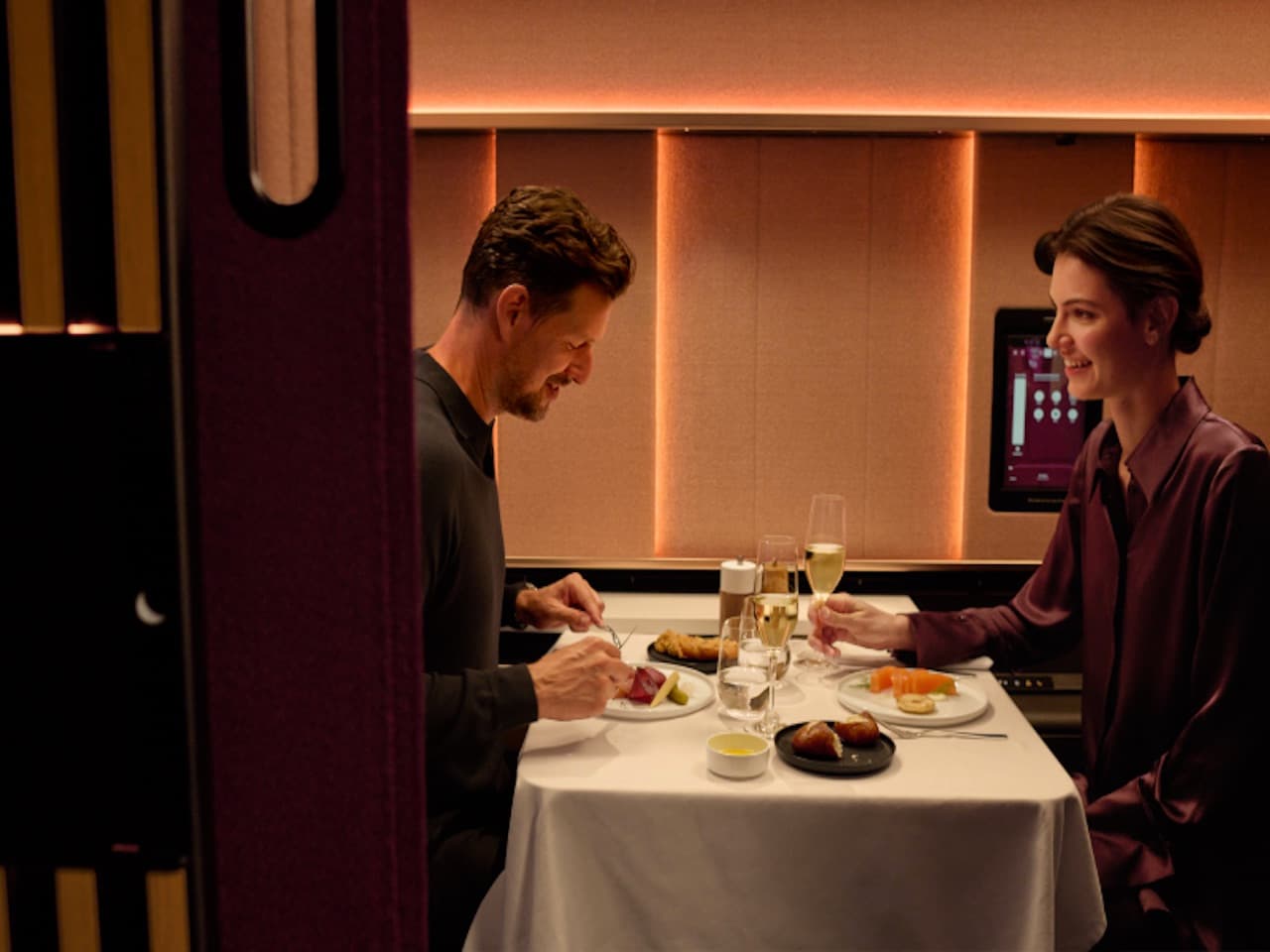
**The First Class revival: a strategic shift in airline product strategy**
After a period where many carriers reduced or eliminated their ultra-premium offerings in favor of enhanced Business Class cabins, a new wave of investment is sweeping through the industry. Delta Air Lines, for example, will deploy up to seven Airbus A321neo aircraft from May 2026 with an impressive 44 First Class seats each—a temporary configuration while full flat-bed suites are delayed by certification issues. This move responds to strong premium demand on transcontinental routes from Atlanta to Los Angeles, San Francisco, San Diego, and Seattle. While temporary, it signals a clear resurgence of interest in high-end cabins even on domestic US markets.
**Why this matters for aviation training**
For ATPL and ATC students, understanding airline product strategy is not just about passenger comfort—it directly impacts fleet planning, route profitability, and operational complexity. The return of First Class on narrowbody aircraft introduces new challenges in weight and balance calculations, cabin crew training, and emergency procedures for different cabin layouts. Moreover, the trend reflects post-pandemic shifts in passenger behavior: a surge in demand for exclusive experiences, the profitability of loyalty programs, and the need for differentiation in a competitive market. As Philippe Taïeb, head of business travel agency Jancarthier, notes, "98% of business travel tickets are not in First Class—it remains an elitist product for top executives, celebrities, and very premium clients." Yet for airlines like Air France, it's a prestige statement: "It shows we can compete on the high end, even if the luxury race raises ecological questions."
**European carriers lead the luxury charge**
British Airways has made a symbolic return by reintroducing First Class on its London Heathrow–Mumbai route from October 2025, ending nearly five years without the premium cabin on that route. The airline unveiled a new First seat in November 2024, featuring ultra-wide seats (36.5 inches), a 79-inch bed, and enhanced privacy, to be installed during the retrofit of its Airbus A380 fleet. Air France launched its new La Première cabin in April 2025 on Boeing 777-300ERs, with only four suites per aircraft, each offering nearly 3.5 square meters of space, five windows per passenger, and a floor-to-ceiling curtain for total privacy. CEO Ben Smith described it as "as close to a private jet experience as possible." Lufthansa's Allegris First Class, deployed on Airbus A350s since 2025, features closed suites with sliding doors and a "Suite Plus" convertible into a double bed for couples. Its subsidiary SWISS introduced "SWISS Senses" First Class with lockable sliding doors, individual wardrobes, heated/cooled seats, and a dedicated modern lavatory. Emirates is pushing boundaries further, with President Tim Clark announcing in April 2026 that the airline is working on private bathrooms integrated into First Class suites.
**Implications for ATPL and ATC students**
This luxury trend has concrete implications for future aviation professionals. ATPL students should note how cabin configuration affects aircraft performance—more premium seats mean higher weight per passenger, different center of gravity limits, and altered fuel planning. ATC students may see changes in airport slot allocation as airlines prioritize premium-heavy routes. Additionally, the environmental debate around ultra-luxury cabins (private bathrooms, larger suites) ties into sustainability topics that appear in ATPL exams and ATC training. Understanding these dynamics helps students grasp the business side of aviation, which is increasingly integrated into modern training syllabi.
**Conclusion**
The return of First Class is not a simple nostalgia trip—it is a calculated business response to market demand and competitive pressure. For those training to become pilots or controllers, staying informed about such trends provides valuable context for operational decisions and industry awareness. Whether it's Delta's temporary narrowbody First Class or Emirates' future private bathrooms, the sky is once again becoming a playground for ultra-luxury, and aviation professionals need to understand why.