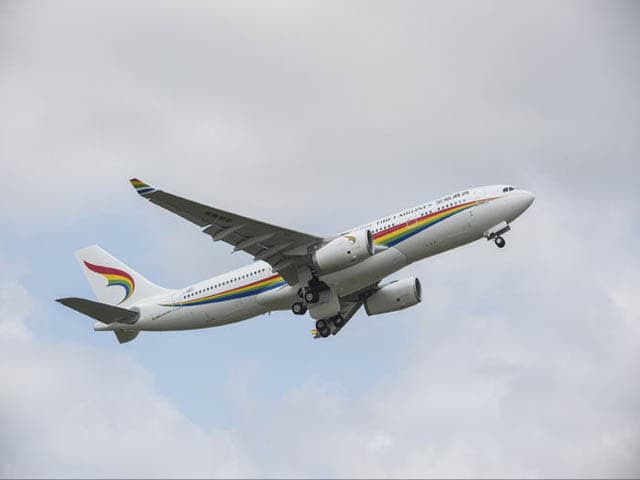
In February 2025, Tibet Airlines officially changed its English name to Xizang Airlines, a move that reflects broader political and linguistic shifts in China. For aviation professionals, this rebranding is more than a cosmetic update—it signals how geopolitical factors can influence airline operations, route planning, and even aircraft procurement. As ATPL and ATC students, understanding these dynamics is crucial for navigating the global aviation landscape.
**Operational Context and Fleet Evolution**
Xizang Airlines, based at Lhasa Gonggar Airport, operates a fleet of around 50 Airbus A319, A320, and A321 aircraft, making it the dominant carrier in the Tibet Autonomous Region. The airline plays a vital role in connecting this high-altitude region to major Chinese hubs like Chengdu, Chongqing, Xi'an, Beijing, and Shanghai. For ATPL students, this highlights the challenges of high-altitude operations—aircraft performance, engine efficiency, and crew training are critical when flying from airports at over 3,500 meters (11,500 feet) above sea level. ATC students should note the unique airspace management required in mountainous terrain, where weather patterns can change rapidly and navigation aids may be limited.
**A New Livery and National Ambitions**
On May 17, 2025, the airline unveiled a special livery on an Airbus A319, named "Lhasa, City of Sacred Snow." The design features the Potala Palace, snow-capped peaks, and plateau lakes, serving as a flying cultural ambassador. This is part of a broader trend in China where airlines use themed aircraft to promote tourism and regional identity. For future pilots and controllers, this underscores the importance of understanding cultural and political sensitivities in aviation marketing and operations.
**Fleet Diversification and the C919**
Xizang Airlines has also ordered 40 COMAC C919 aircraft, signaling a shift toward domestically produced planes. This is significant for ATPL students because the C919 represents China's ambition to challenge Airbus and Boeing in the single-aisle market. Pilots will need to familiarize themselves with new cockpit systems and handling characteristics, while ATCs may see changes in traffic patterns as Chinese carriers expand their fleets.
**Regulatory and Terminology Implications**
The name change aligns with Beijing's push to standardize place names, replacing the historical exonym "Tibet" with the pinyin "Xizang." This affects airline databases, reservation systems, and international communications. For aviation professionals, this is a reminder that regulatory and political decisions can have practical consequences—from updating flight plans to ensuring correct terminology in NOTAMs and aeronautical charts.
**Conclusion**
While the rebranding of Tibet Airlines to Xizang Airlines may seem like a minor administrative change, it reflects deeper currents in geopolitics, national identity, and aviation strategy. For ATPL and ATC students, this case study illustrates how airlines adapt to political pressures while maintaining operational efficiency. Understanding these factors will help future aviation professionals anticipate changes in route networks, fleet composition, and regulatory compliance.