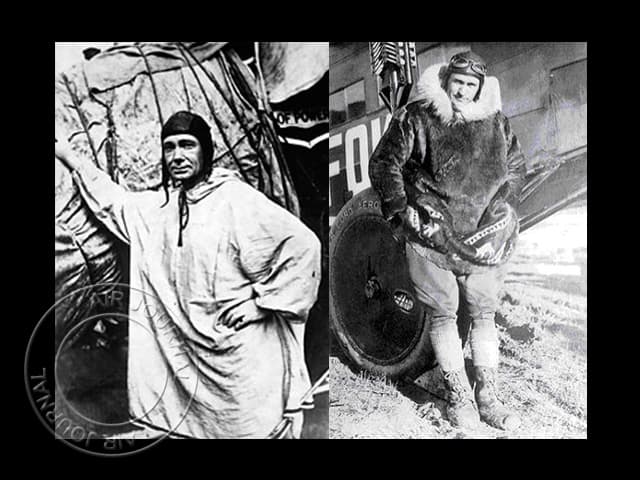
On April 21, 1928, aviation history was marked by a remarkable achievement: Australian pilot George Wilkins and Alaskan pilot Carl Ben Eielson successfully completed a non-stop flight over the North Pole, covering approximately 3,500 kilometers from Barrow, Alaska, to Spitsbergen, Norway, in 20.5 hours at an average speed of 170 km/h. This daring expedition, conducted in the hostile Arctic environment where engine failure could have been fatal, demonstrated extraordinary human courage and technical skill for its time. It followed earlier pioneering efforts by Roald Amundsen in 1925 and Americans Byrd and Bennett in 1926, who also braved the icy wilderness, but Wilkins and Eielson's flight stood out for its non-stop nature and precision navigation.
From an industry context, this event is more than just a historical footnote; it represents a pivotal moment in the evolution of long-distance aviation and polar navigation. In the 1920s, aviation was still in its infancy, with limited technology and unreliable aircraft. Flights over remote, icy regions like the Arctic posed immense risks due to harsh weather, navigation challenges without modern aids like GPS, and the constant threat of mechanical failure. Wilkins and Eielson's success showcased the potential of aviation to conquer previously inaccessible areas, paving the way for future exploration and commercial routes. It also underscored the importance of meticulous planning, endurance, and adaptability—qualities that remain essential for pilots today.
For ATPL and ATC students, this historical flight offers valuable lessons in navigation, risk management, and operational resilience. In an era before advanced avionics, Wilkins and Eielson relied on basic instruments, celestial navigation, and dead reckoning to traverse the featureless Arctic landscape. This highlights the foundational skills that modern pilots must still master, such as understanding magnetic variation, plotting courses over long distances, and preparing for emergencies in remote areas. Additionally, the flight emphasizes the critical role of weather awareness and survival strategies in extreme conditions, topics covered in ATPL training modules on meteorology and human factors. For ATC students, it illustrates the challenges of managing flights in uncontrolled airspace and the importance of coordination in supporting adventurous operations.
At MyATPS, we connect such historical milestones to contemporary aviation training by emphasizing how past experiences shape today's standards and practices. The 1928 Arctic flight reminds us that aviation progress is built on incremental achievements and learning from both successes and failures. As students prepare for careers in a highly regulated industry, understanding this history fosters a deeper appreciation for safety protocols, technological advancements, and the human element in aviation. It also encourages a mindset of continuous learning and adaptability, crucial for navigating the complexities of modern air travel. By studying events like this, ATPL and ATC trainees can gain insights into the perseverance and innovation that drive aviation forward, inspiring them to uphold these values in their future roles.