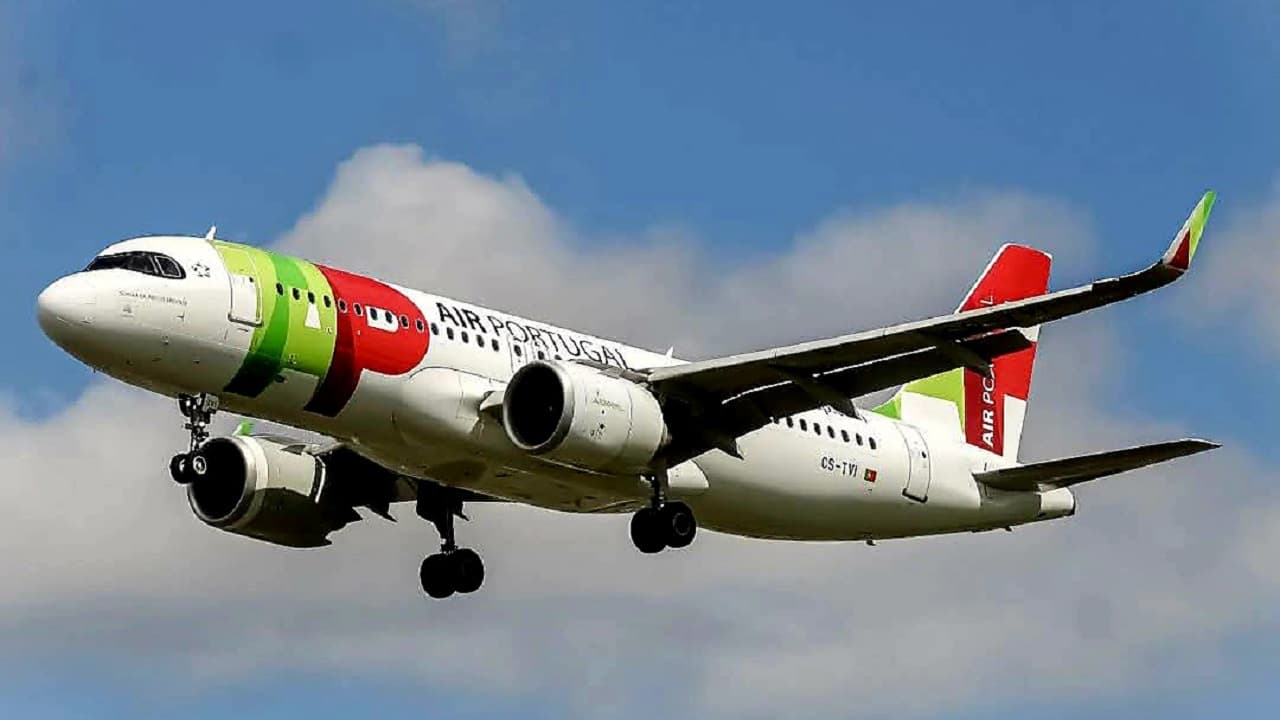
**TAP Air Portugal's Q1 2026 results: a case study in airline turnaround**
TAP Air Portugal has reported a significant improvement in its first-quarter 2026 financial performance, with operating revenues reaching €914.4 million — an 11% increase year-on-year — driven primarily by passenger revenue and a 6.2% rise in unit revenue (PRASK). The airline carried 3.7 million passengers (+6.4%) across 27,300 flights (+1.5%), achieving a load factor of 83.5%, up 4.8 percentage points. This is notably high for a traditionally weak first quarter, reflecting strong demand management and capacity discipline.
**Operational and financial highlights**
The carrier posted a recurring EBITDA of €95.5 million and a recurring EBIT of -€36.1 million, improvements of €92.6 million and €83.1 million respectively compared to Q1 2025. Net loss narrowed to €39.9 million from €108.2 million, a 63.1% reduction. Passenger revenue rose about 10% to €810 million, while third-party maintenance revenue surged 32%. Operating costs were contained at around €954 million, with fuel costs down 16% to €196 million, though personnel costs increased 9% to €252 million.
**Transatlantic focus and network strategy**
The results underscore TAP's strategic reliance on its Lisbon hub as a gateway between Europe and the Americas, particularly South America and North America. CEO Luís Rodrigues highlighted that these markets were the main contributors to traffic and revenue growth, aligning with the airline's role as a bridge to Portuguese-speaking countries and major North American cities. For ATPL and ATC students, this illustrates how a hub-and-spoke model can be leveraged to optimize load factors and revenue, especially during off-peak seasons.
**Restructuring and asset sales**
TAP continues to execute its European Commission-approved restructuring plan, which includes divesting non-core assets. In Q1 2026, it progressed on selling Cateringpor to Swiss group Gate Gourmet and its remaining 49.9% stake in ground handler SPdH (formerly Groundforce) to Menzies Aviation Portugal. These moves simplify the group's structure and reduce risk exposure, a key lesson in corporate strategy for aviation professionals.
**Outlook and fleet modernization**
Looking ahead, TAP reports solid booking trends and expects to maintain high load factors. However, rising fuel prices due to Middle East tensions may pressure costs, partially offset by capacity management and fuel surcharges. The airline's fleet modernization plan aims to improve operational efficiency and environmental footprint, directly relevant to ATPL students studying aircraft performance and fuel management. The Q1 2026 results demonstrate how disciplined execution, network optimization, and cost control can drive recovery in a competitive industry.