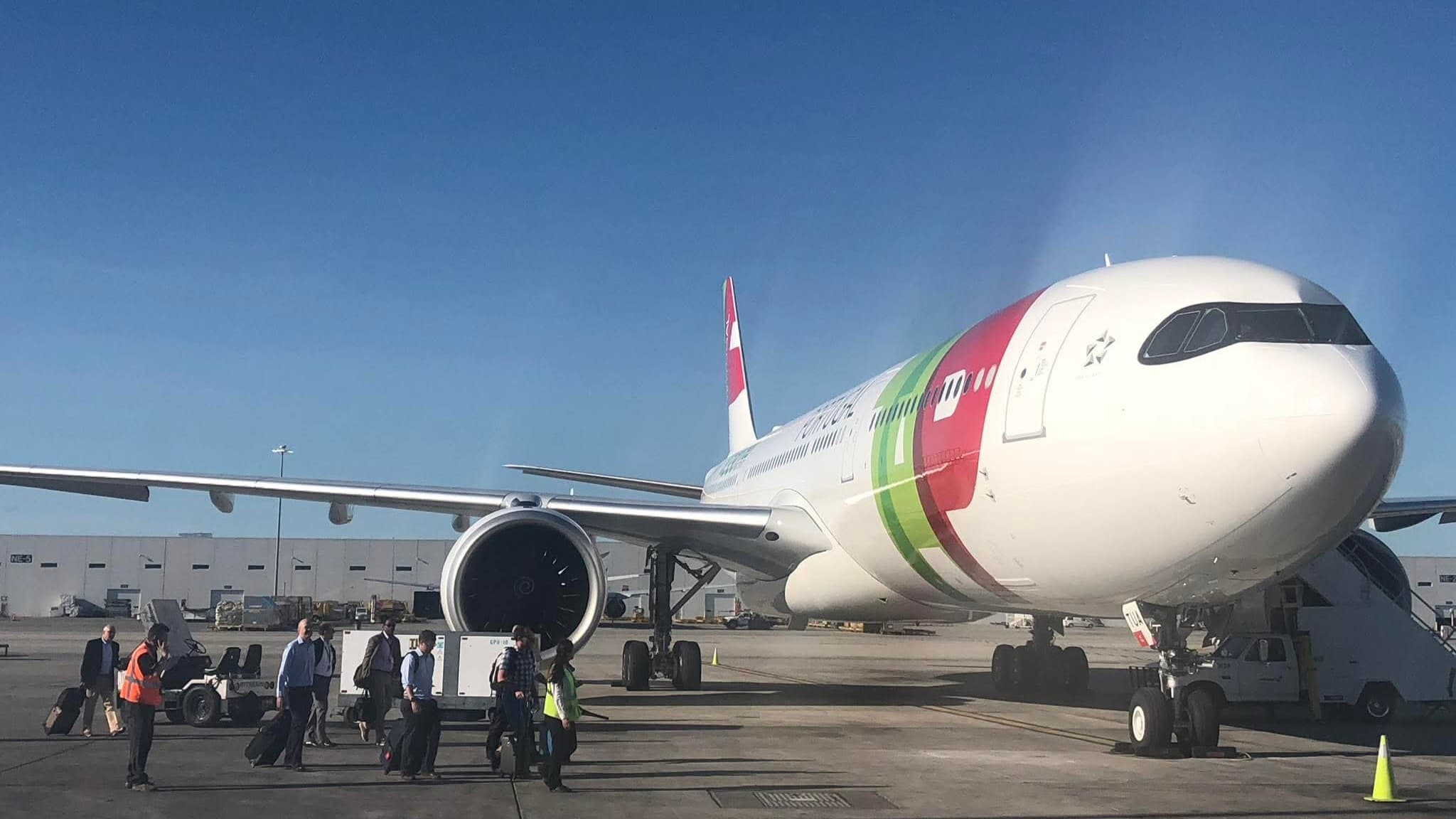
TAP Air Portugal is set to celebrate 60 years of flights between Portugal and Brazil in 2026, a market that has become a cornerstone of its long-haul strategy. With a target of 2.1 million passengers across the Atlantic this year and the launch of new routes, the airline is consolidating its status as the leading European carrier to the South American giant.
For six decades, TAP has linked Portugal—and by extension Europe—to Brazil, making the Brazilian market one of the most important in its network. In 2026, the airline plans to carry 2.1 million passengers between the two sides of the Atlantic, a volume that underscores the strategic weight of this aerial "highway" for the Portuguese carrier. "Brazil has served the company very well over the past 60 years and will continue to serve it even better in the next 60," says Luís Rodrigues, CEO of TAP Air Portugal, highlighting the growth potential of this market and its role as a pillar of the long-haul strategy. The executive insists: "The country has enormous growth potential and remains a key market for TAP."
With the addition of new routes to Curitiba and São Luís do Maranhão, TAP will connect Portugal to 15 Brazilian destinations in 2026 via Lisbon and Porto, making it the European airline with the most routes to the country. The airline already served major cities such as São Paulo, Rio de Janeiro, Brasília, Recife, Salvador, Fortaleza, Belém, Belo Horizonte, Natal/Maceió, Porto Alegre, Florianópolis, and Manaus, with over 90 weekly flights in summer 2024. The future Lisbon–Curitiba service, operated three times a week from July 2, 2026, on an Airbus A330-200 on a Lisbon–Curitiba–Rio de Janeiro–Lisbon routing, will further strengthen this presence. TAP also resumed flights to Porto Alegre in 2025 after weather-related suspensions in 2024, with three weekly frequencies on the A330-900neo. "Brazil is a key player and probably one of TAP's greatest assets at this stage," Rodrigues adds, citing "the opportunities that still exist to bring Brazilians and Europeans closer together."
In TAP's strategy, Lisbon and, to a lesser extent, Porto serve as natural hubs between South America and Europe. Brazilian passengers can connect there to dozens of destinations in Europe, Africa, and North America, making the airline a major player in triangular flows between these three continents. In summer 2024, TAP operated 96 weekly flights between Portugal and Brazil, 16 more than the previous season, with targeted frequency increases on Recife, Fortaleza, Rio de Janeiro, Belém, Brasília, Natal/Maceió, Porto Alegre, Salvador, and São Paulo. This expansion is driven by sustained demand from tourism, economic exchanges, and a large Lusophone diaspora, which the airline seeks to capture through optimized schedules and a dense network of connections.
The relationship between TAP and Brazil dates back to the early days of European commercial aviation to South America. The airline operated its first direct jet flight between Lisbon and Rio de Janeiro on June 17, 1966, with a Boeing 707 registered CS-TBA, named "Santa Cruz" in homage to the historic crossing by Sacadura Cabral and Gago Coutinho, the first aerial crossing of the South Atlantic in 1922. That flight, carrying about 80 passengers, inaugurated regular jet services between Portugal and Brazil and laid the foundation for an air bridge that would grow denser over time. TAP had tested the Brazilian market as early as 1960 with the "Friendship Flight," operated in partnership with Panair, before launching a Lisbon–Sal–Recife–Rio route with its own aircraft in 1965. The introduction of the direct, non-stop Lisbon–Rio service in 1966 marked a true turning point, with Rio becoming the company's first major foothold in Brazil. Over the decades, TAP modernized its long-haul fleet, transitioning from the Boeing 707 to the Airbus A310 and A330, and now to the current A330-200 and A330-900neo, which handle most of its transatlantic flights.
Rio de Janeiro holds a special place in TAP's history, both as the first major Brazilian destination and as an emblematic hub for Lusophone diaspora and tourism. The airline has built a traffic mix of leisure travelers, affinity passengers, and business clients, all attracted by direct flights to Europe and a well-established connection network from Lisbon and Porto. Beyond Rio, TAP has progressively woven a network across Brazil, adding São Paulo and other regional capitals to create a unique national coverage for a European carrier. The 60th anniversary celebration allows the airline to highlight a symbolic heritage—that of the "Santa Cruz" and the South Atlantic pioneers—while projecting its image into the future with more fuel-efficient aircraft and an offer geared toward a growing international clientele.
Economically, Brazil stands as one of the main contributors to TAP's results, which posted a net profit for the fourth consecutive year in 2025. The density of the Brazilian network, combined with a strong hub operation in Lisbon, provides a robust foundation for the airline's long-term profitability. For ATPL and ATC students, this case study illustrates how a medium-sized European carrier leverages a specific geographic and cultural link to build a sustainable long-haul network, offering lessons in route planning, hub connectivity, and fleet management.