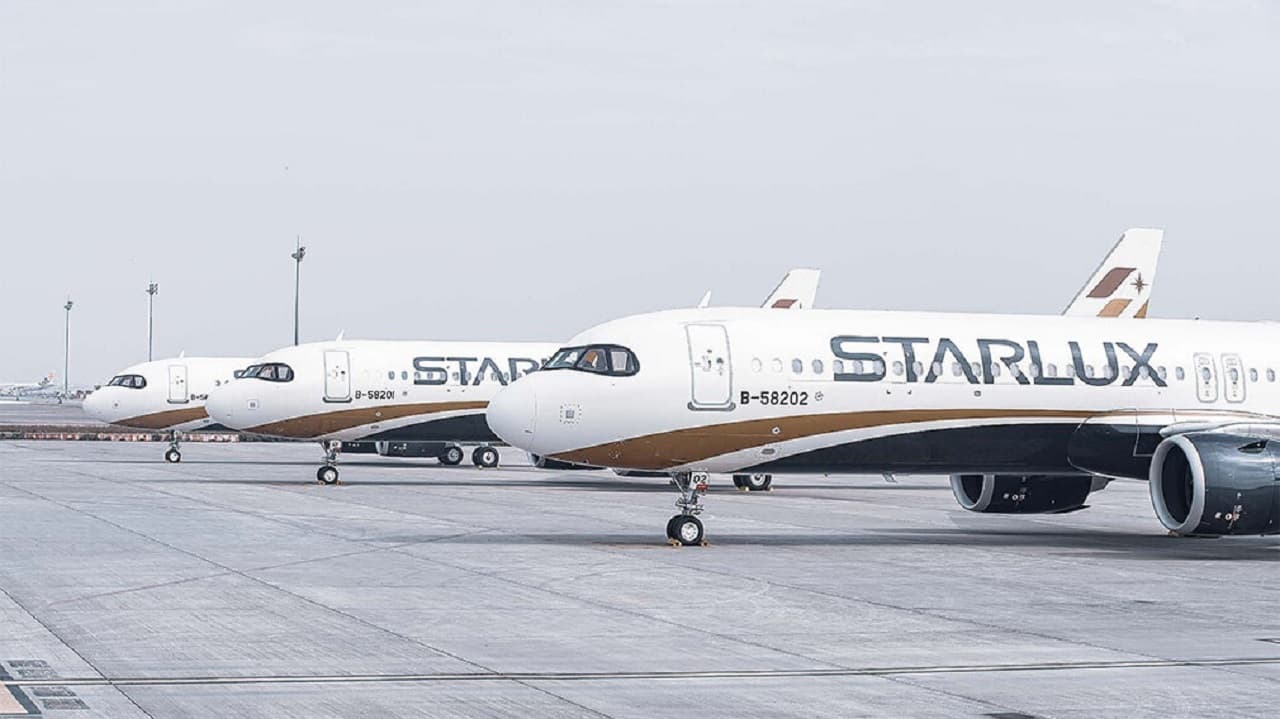
Despite jet fuel prices soaring past $200 per barrel, Taiwan's three major carriers—EVA Air, Starlux Airlines, and China Airlines—have decided to freeze passenger fuel surcharges for May 2026. This move, reported by Focus Taiwan, maintains the levels set in early April: $45 for short-haul routes (including Hong Kong) and $117 for long-haul flights, for all international departures from Taiwan.
The decision comes as the average jet fuel price hit $208.78 per barrel in early May, according to CPC Corp., Taiwan's state-owned oil company. This is more than five times the $40 reference threshold used by the Civil Aviation Administration (CAA) to trigger and calibrate surcharges. The CAA has previously stated that fuel surcharges are designed as a buffer, not a full pass-through of cost increases.
EVA Air estimates its fuel cost overrun per passenger at $797.82 on long-haul routes and $133.50 on short-haul routes. After applying the approved surcharges, the airline absorbs about 85% of the extra cost on long-haul and 66% on short-haul, up slightly from 65% in April. Starlux faces a different cost profile but similar pressure: a fuel cost overrun of $271.14 per passenger on long-haul and $61.58 on short-haul, with the airline absorbing 66% and 43% respectively, also slightly higher than the previous month.
These figures highlight a critical reality for aviation students: fuel surcharges are no longer a simple add-on but a partial tool to mitigate energy shocks. The CAA's mechanism, which allows adjustments based on a fuel price index, was revised sharply on April 1, 2026, with a 157% increase in surcharges—from $27.50 to $45 for short-haul and from $71.50 to $117 for long-haul—effective April 7. This followed a period of volatility, including a reduction in January 2026 when oil prices temporarily dipped.
China Airlines, Taiwan's largest carrier by fleet size and network, has aligned with its competitors, confirming it will maintain the current surcharges in May. The airline stated it will continue to monitor global crude oil prices while applying the CAA's pricing mechanism. This alignment reduces competitive distortion in the Taiwanese market but leaves the door open for future adjustments depending on fuel price trends. Additionally, cargo fuel surcharges have been raised significantly for routes to the US, Europe, and Asia starting in May, providing another lever to absorb the energy shock.
For ATPL and ATC students, this case illustrates the complex interplay between fuel costs, regulatory frameworks, and airline pricing strategies—a key theme in airline management and operational economics.