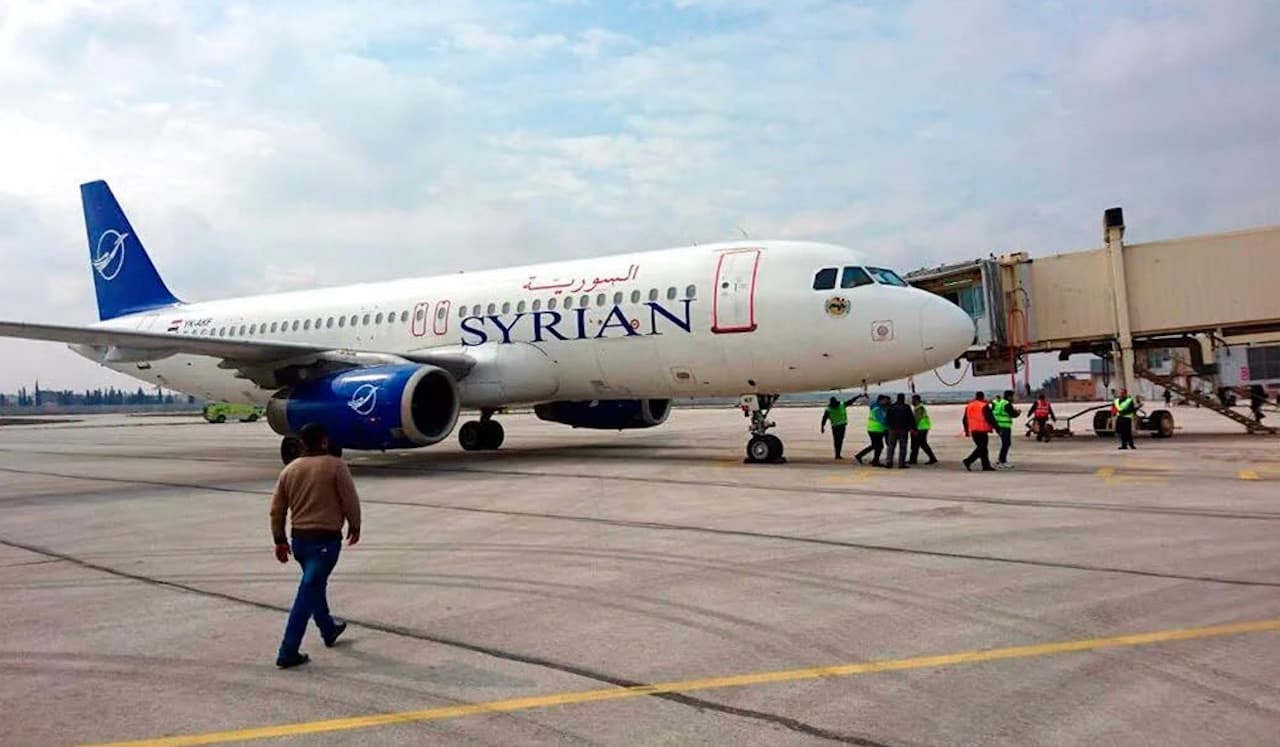
**Syrian Airlines Eyes Eight Airbus Jets After EU Sanctions Ease**
In a significant development for Middle Eastern aviation, Syrian President Ahmad al-Sharaa confirmed that Syrian Airlines is preparing to order eight Airbus aircraft. The announcement came during French President Emmanuel Macron's visit to Damascus on July 6, 2026, and signals a major step in the carrier's fleet modernization, backed by Qatari capital. While the exact models and financial details remain undisclosed, the order likely includes narrow-body and wide-body types such as the A320neo or A330neo, which would replace aging A320-200s and A340-300s currently in service.
**Why This Matters for ATPL and ATC Students**
For ATPL students, this order highlights the importance of understanding fleet planning and the operational impact of sanctions relief. Syrian Airlines currently operates a mixed fleet of Airbus and Boeing aircraft, including nine A320-200s, two A340-300s, and one Boeing 737-500, many of which are older models with high maintenance demands. The introduction of newer-generation Airbus jets would require pilots to undergo type rating training, likely at regional centers like Jordan Airline Training & Simulation (JATS) in Amman, which already trains crews for Syrian carriers. ATC students should note that increased traffic from Syrian Airlines and new entrants like flynas Syria will strain Damascus International Airport's capacity, which handled 148,000 passengers in May 2026—a figure that is expected to grow as 12 airlines now operate to and from Syria.
**Regional Competition and Training Opportunities**
The easing of EU sanctions in February 2025 has opened the door for Syrian Airlines to expand its network to Europe, the Gulf, and Turkey. This creates demand for pilots and controllers familiar with both Western and regional procedures. The Qatari investment also underscores the role of state-backed carriers in post-conflict reconstruction, a trend that ATPL students should monitor for future career opportunities. For ATC trainees, the integration of new aircraft types and increased frequency of flights will require updated procedures and coordination with neighboring airspace authorities.
**Conclusion**
Syrian Airlines' Airbus order is more than a commercial deal—it is a bellwether for the revival of Syrian aviation. For aviation students, it offers a real-world case study in how geopolitical shifts, regulatory changes, and fleet decisions intersect. Understanding these dynamics will be crucial for those entering the industry, whether as pilots or controllers.