**Fleet simplification is reshaping Lufthansa Group.**
SWISS has signaled that its nine Airbus A220-100s may not return to service in the medium or long term, according to reports from German aviation media Aero.de. Initially grounded temporarily in autumn 2025 for an estimated 18 months, the aircraft are now facing a more permanent retirement. The decision stems from persistent problems with Pratt & Whitney GTF engines, specifically the PW1500G variant powering the A220. SWISS operates 30 A220s: nine -100s and 21 -300s. The -100, configured with 125 seats, has a range of 2,850 km, while the -300, with 145 seats, has become the backbone of SWISS's European network. The airline now prioritizes keeping the -300s flying, as they offer more seats and better economic potential per rotation.
**The GTF crisis is the catalyst.**
Pratt & Whitney's Geared Turbofan engines have faced durability issues, requiring early inspections and component replacements. In 2025, between four and six SWISS A220s were simultaneously out of service due to these problems. To manage the situation, SWISS has begun cannibalizing two A220-100s (HB-JBC and HB-JBD) parked at Toulouse-Francazal, stripping them for engines and parts to support the -300 fleet. These two aircraft will not return to passenger service. This move secures short-term availability for the larger variant but underscores the -100's diminishing operational value for the airline. SWISS will need to carefully manage capacity on routes that were better suited to a 125-seat aircraft.
**Lufthansa CityLine's CRJ-900s face an uncertain future.**
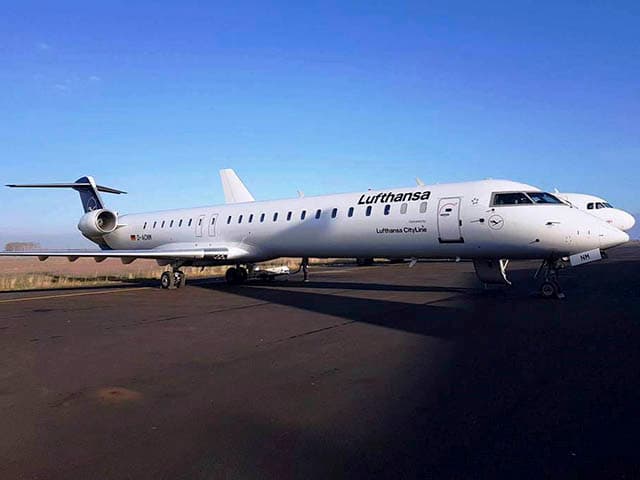
In a parallel move, Lufthansa Group is exploring the sale of its CRJ-900 regional jets from the now-defunct Lufthansa CityLine. The subsidiary was shut down on April 16, 2026, with 27 aircraft retired immediately to stem losses. Lufthansa cited the CRJ's aging technical capability and high operating costs as reasons. Of the 23 CRJ-900s remaining, only 12 were in service shortly before the shutdown; several are now parked in Munich. A Lufthansa spokesperson confirmed to Aero.de that the group is "examining the sale of the CRJ aircraft," but emphasized the process is not yet complete. This is an examination, not a concluded transaction.
**A common logic of simplification.**
Though the two cases differ technically—one driven by engine reliability, the other by aging regional jets—both reflect Lufthansa Group's broader strategy to cut costs, reduce sub-fleet numbers, and concentrate capacity on the most productive aircraft. For aviation students, this illustrates how operational challenges and economic pressures drive fleet decisions, even for relatively young aircraft like the A220-100.