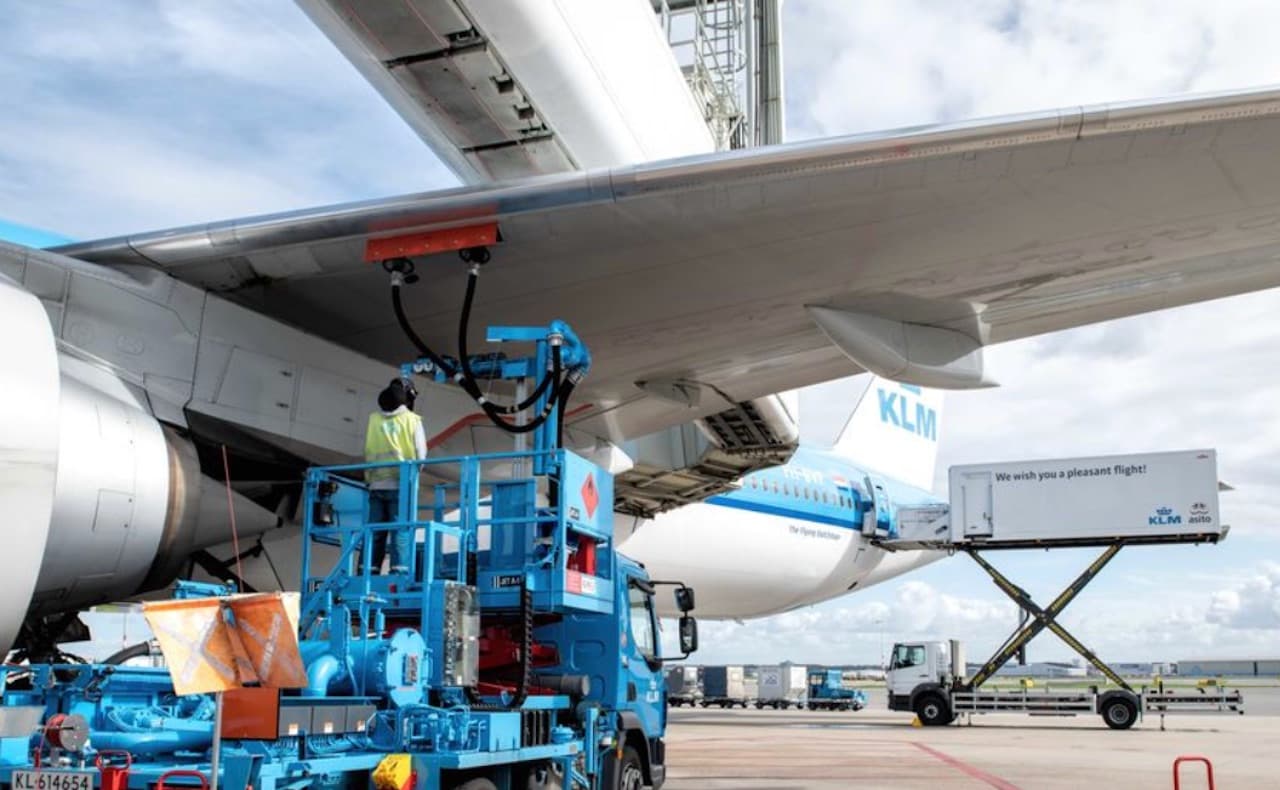
**A Critical Fuel Squeeze for European Aviation**
The closure of the Strait of Hormuz by Iran, amid renewed conflict with the United States, has triggered an unprecedented fuel crisis for European aviation. According to data from Energy Aspects cited by Reuters, Europe's kerosene stocks stood at roughly 38 million barrels in early June—compared to 99 million in the United States. This represents less than 30 days of demand coverage, the most critical level among major kerosene markets. Analysts at Goldman Sachs confirm that commercial stocks now cover only about 30 days of supply for air transport in Europe.
**Why This Matters for ATPL and ATC Students**
For future pilots and air traffic controllers, this is not just a geopolitical headline—it is a real-world scenario that affects flight operations, fuel planning, and airspace capacity. When fuel becomes scarce, airlines must recalculate payload-range limits, divert to alternate airports with sufficient fuel, and potentially cancel or consolidate flights. ATC must manage reduced traffic flows, coordinate fuel-saving routings, and handle increased requests for priority handling. Understanding the strategic fuel reserve requirements and the operational impact of supply disruptions is essential for both ATPL exam preparation and real-world decision-making.
**Operational Consequences Already Visible**
European airlines are already revising schedules, with some carriers planning further cancellations to conserve fuel. Regional airports, far from major hubs, are particularly vulnerable. The European Commission has presented an emergency plan, including the release of strategic reserves and joint purchasing mechanisms for jet fuel. However, experts from Rystad Energy warn of a supply deficit of nearly 600,000 barrels per day in the third quarter, with tensions expected to persist through August.
**A Wake-Up Call for Aviation Training**
This crisis underscores the importance of fuel management in ATPL training—from calculating fuel reserves under ETOPS regulations to understanding the impact of geopolitical events on fuel availability. For ATC students, it highlights the need to manage airspace efficiently during disruptions, including rerouting traffic and coordinating with airlines on fuel-saving procedures. The Strait of Hormuz closure is a stark reminder that aviation is deeply interconnected with global energy markets, and that operational resilience depends on proactive planning.
**Looking Ahead**
While the United States and Asia-Pacific currently show surpluses, Europe's vulnerability is clear. Normalization of kerosene flows is unlikely until the Strait of Hormuz reopens. For aviation professionals in training, this case study offers valuable lessons in risk assessment, contingency planning, and the critical role of fuel in every flight.