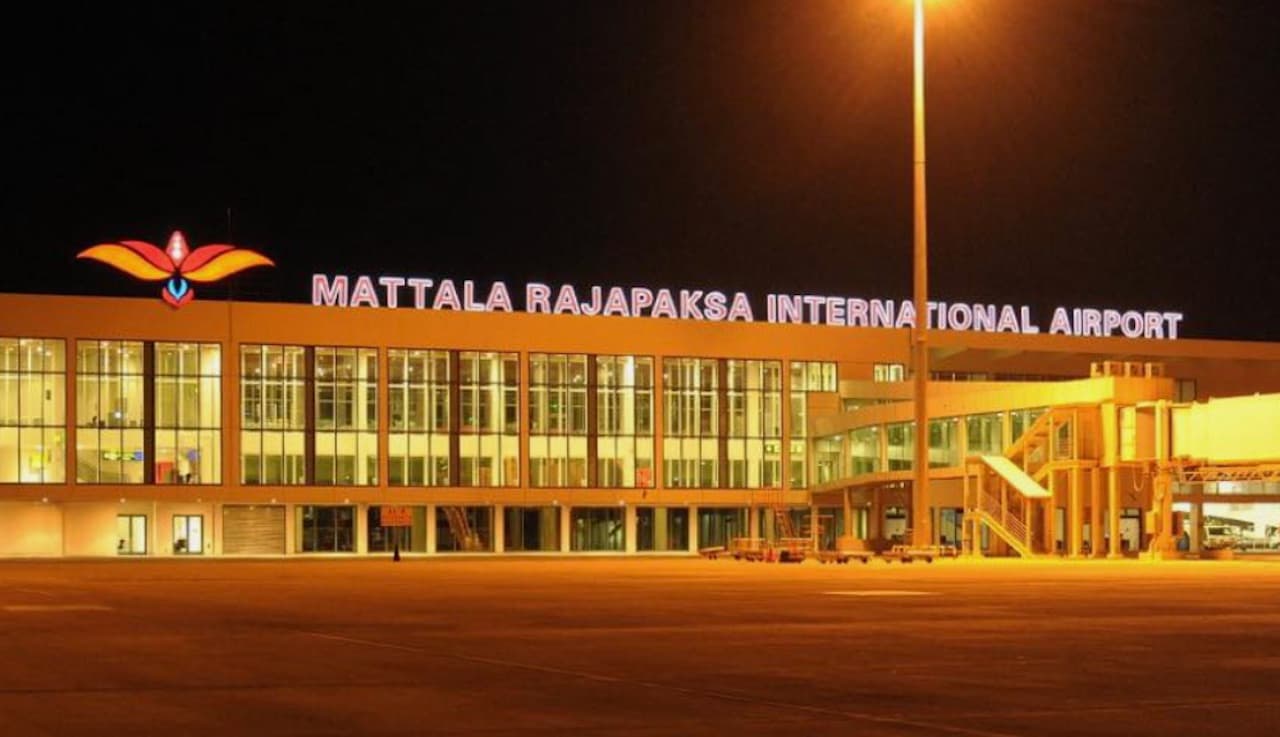
The Sri Lankan government has launched a new call for expressions of interest to attract international investors to Mattala Rajapaksa International Airport (HRI), a severely underutilized facility that has accumulated financial losses since its inauguration in 2013. This initiative follows the failure of a 30-year concession project with an Indo-Russian consortium, amid a broader restructuring of loss-making public assets imposed by the International Monetary Fund.
Built near Hambantota in southern Sri Lanka with $200 million in Chinese financing, Mattala Rajapaksa Airport has become a symbol of the mega-infrastructure projects that precipitated the country's debt crisis. Since opening thirteen years ago, the facility has hosted no regular commercial flights and generates revenues so low they do not even cover electricity bills. Only sporadic cargo operations and charter flights maintain minimal activity at the site, often called "the world's emptiest airport."
The Ministry of Ports and Civil Aviation, through Airport and Aviation Services (Sri Lanka) Ltd, published a call for proposals on April 26, 2026, covering airport operations, cargo services, logistics, and tourism development. Authorities present the infrastructure as offering "untapped potential for exotic tourism development and strategic investment," despite its catastrophic track record.
This new privatization attempt follows the collapse in 2024 of a 30-year concession agreement with a consortium formed by India's Shaurya Aeronautics and Russia's Airports of Regions Management Company. The Sri Lankan cabinet approved the project in April 2024, but it never progressed beyond initial phases. Sources indicate that the United States informed Colombo of sanctions targeting a key shareholder of the Russian company, complicating the partnership.
Earlier this year, in March 2026, the government also initiated preliminary discussions with Emirates and Qatar Airways to propose Mattala as an alternative hub amid geopolitical tensions in the Middle East. According to civil aviation authorities, both airlines "expressed strong interest" in repositioning some operations to this southern airport. The infrastructure features a 3,500-meter runway capable of accommodating Airbus A380s, making it the only Sri Lankan airport equipped to handle the world's largest passenger aircraft.
Beyond the lack of commercial traffic, the airport faces operational complications due to its proximity to wildlife areas. Bird strikes and animal intrusions on the runways have disrupted air activity, forcing authorities to deploy security personnel to manage wildlife risks. Nevertheless, the facility serves as a diversion airport when adverse weather affects Bandaranaike International Airport (CMB) in Colombo, which remains the country's main gateway with traffic expected to reach 10 million annual passengers in 2024.
Mattala Airport is part of a vast infrastructure program launched under President Mahinda Rajapaksa, largely financed by Chinese loans. The accumulation of debt contributed to a severe economic crisis that culminated in 2022 with a sovereign default on approximately $46 billion in external debt. China accounts for at least 10% of Sri Lanka's total debt, or up to 20% of its public debt according to some estimates.