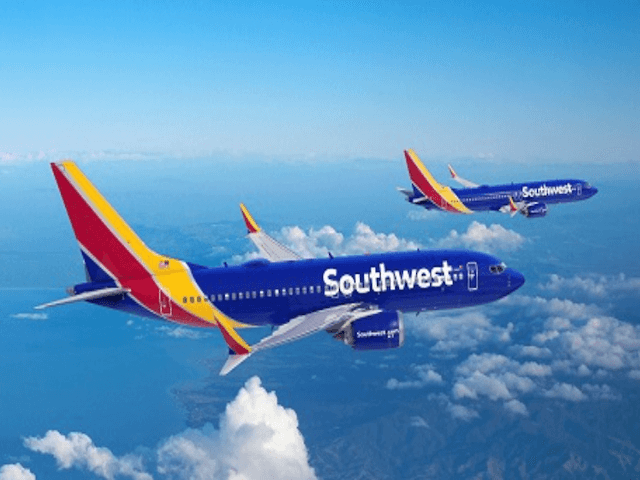
The legal battle between Southwest Airlines pilots and Boeing has taken a significant turn as Texas courts have allowed the pilots to pursue a civil case against the aircraft manufacturer. The Southwest Airlines Pilots Association (SWAPA), representing around 10,000 pilots, accuses Boeing of fraudulent misrepresentation and negligence regarding the safety of the 737 MAX. The pilots claim that they were misled into flying an aircraft that was ultimately grounded for twenty months, resulting in millions of dollars in lost wages. The lawsuit, initiated in 2019, seeks over $100 million in lost income and union dues due to the global grounding of the 737 MAX from March 2019 until late 2020.
SWAPA asserts that the pilots agreed to the integration of the 737 MAX into their collective bargaining agreement based on repeated assurances from Boeing that the aircraft was safe and comparable to the existing 737 models in their fleet. The union's statement highlights that the pilots trusted Boeing's claims about the aircraft's reliability, which they now argue were false. This legal action comes at a time when Southwest has successfully dismissed a class action lawsuit from passengers who claimed they were overcharged for flights operated by the 737 MAX without adequate risk disclosure.
The pilots contend that Boeing misrepresented the 737 MAX as a mere evolution of the 737 NG family, avoiding the need for simulator training or new type ratings. They argue that Boeing downplayed the aerodynamic implications of the larger LEAP-1B engines mounted on the wings, which altered the aircraft's center of thrust and increased the risk of pitch instability, leading to the introduction of the Maneuvering Characteristics Augmentation System (MCAS). According to SWAPA, Boeing failed to transparently disclose critical information to regulators and misled pilots and the public regarding the actual extent of design modifications to the 737 MAX.
The MCAS, designed to automatically push the aircraft's nose down when the angle of attack becomes too high, has been central to investigations into two fatal accidents, which claimed 346 lives. The reliance on a single angle-of-attack sensor for such a critical system has drawn significant criticism, as has the initial lack of detailed information about its operation in pilot manuals and training.
The dispute between Southwest, its pilots, and Boeing dates back to the MAX's launch in 2011. At that time, the pilots were still covered by a 2006 collective bargaining agreement, leading to debates about whether they were obligated to fly the new variant. SWAPA argued that a new agreement was necessary, viewing the MAX as a distinct aircraft, while the airline relied on Boeing's assertion that it was merely a derivative of the 737. Tensions escalated in 2016 when nearly 800 Southwest pilots protested during the company's shareholder meeting against the negotiation conditions and the introduction of the MAX without sufficient guarantees.
Currently, Boeing is attempting to dismiss the case, claiming it falls under federal labor law and collective bargaining dispute resolution mechanisms. However, the Texas Supreme Court ruled in 2025 that the complaint could be examined by state courts, paving the way for a trial focused on the manufacturer's liability rather than the interpretation of the labor agreement with Southwest. In February 2026, the U.S. Supreme Court declined to hear Boeing's appeal, leaving the Texas decision intact and allowing pilots to pursue their claims for lost wages and flight hours due to the MAX's grounding.