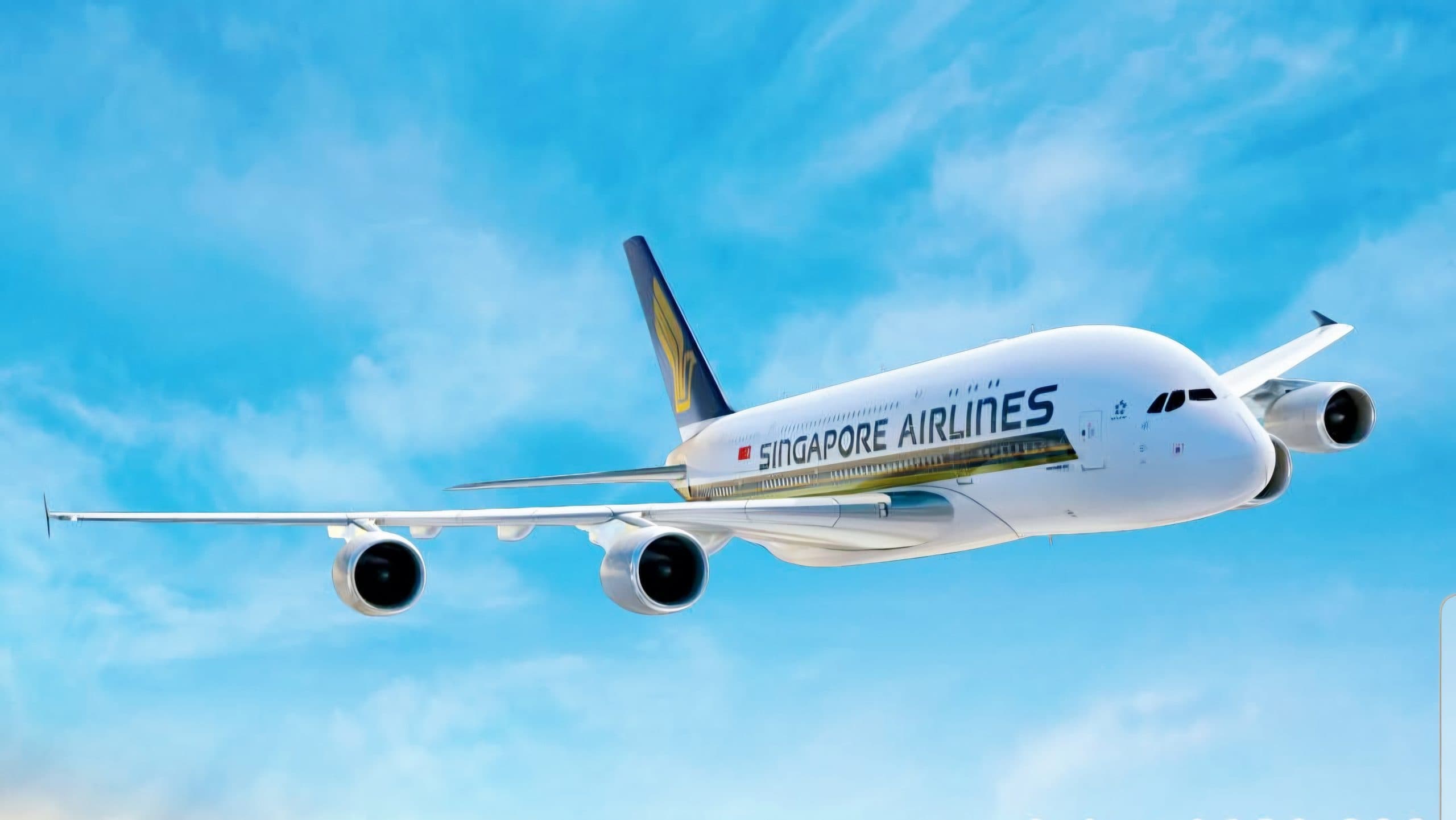
Singapore Airlines (SIA) has released its annual results for the 2025/26 financial year, revealing a sharp contrast between operational strength and bottom-line weakness. Operating profit surged 39% to $2.375 billion, driven by strong demand and higher yields, while revenue hit a record $20.5 billion. However, net profit dropped 57.4% to $1.184 billion, mainly because last year's exceptional gain from the Air India-Vistara merger was not repeated, and because of SIA's share of losses from Air India.
For ATPL and ATC students, this case study is a goldmine. It shows how airlines must navigate multiple pressures simultaneously: fuel costs, capacity management, network expansion, and geopolitical instability. SIA carried a record 42.4 million passengers (+7.7%) with a load factor of 87.7%, while capacity grew only 3.4% – slower than traffic growth of 4.7%. This imbalance helped margins but also signals potential congestion at hubs like Changi, something ATC students should note when studying slot coordination and airspace capacity.
Cargo revenue fell 2.1% to $2.17 billion, with yields down 3.6% despite higher volumes. Fuel costs dropped 6.7% thanks to lower prices and hedging, but non-fuel expenses rose 5.4% due to inflation and capacity increases. Crucially, the recent surge in jet fuel prices linked to Middle East tensions is only partially reflected in these results. SIA warns that the full impact will hit in the 2026/27 financial year, as fuel bills are calculated with a lag. This is a classic example of how fuel hedging and cost pass-through mechanisms work – essential knowledge for ATPL candidates studying airline economics.
SIA's fleet now stands at 218 aircraft (average age 7 years 9 months), including 155 mainline jets and 63 at Scoot. Recent deliveries include Boeing 787-9, 787-10, and 737-8s, plus an order for 11 more A320neos for Scoot. The network covers 134 destinations in 35 countries, with Scoot serving 57 exclusive points. New routes include Scoot to Chiang Rai, Palembang, Medan, and Tokyo Haneda, plus increased frequencies to London (up to 6 daily flights) and Manchester. Madrid will launch via Barcelona in October 2026, and Hangzhou in China is also planned. Some routes remain suspended due to geopolitics, such as Dubai and Jeddah.
Partnerships are expanding, especially with Air India (25.1% stake), with codeshares covering 82 destinations. Cooperation with Malaysia Airlines, Vietnam Airlines, ANA, and Garuda Indonesia is deepening. SIA is also investing in new long-haul cabins due by end of 2026, an upgraded KrisWorld entertainment system, and Starlink Wi-Fi from 2027. For ATC students, the network expansion and fleet renewal illustrate how airlines adapt to demand shifts and slot constraints – a key topic in air transport management modules.
Looking ahead, SIA is cautious. The doubling of jet fuel prices since the start of the Middle East conflict is a major risk. While the airline has raised fares across its network, these adjustments do not fully offset the fuel cost increase. The group's low debt ratio (0.62) and flexible network – combining full-service SIA with low-cost Scoot – provide some buffer. For ATPL and ATC students, this real-world example shows how airlines use fleet mix, network planning, and financial hedging to survive volatility. Understanding these dynamics is crucial for anyone aiming to work in airline operations or air traffic management.