**Singapore Airlines Reconnects Madrid via Barcelona, Boosts European Frequencies**
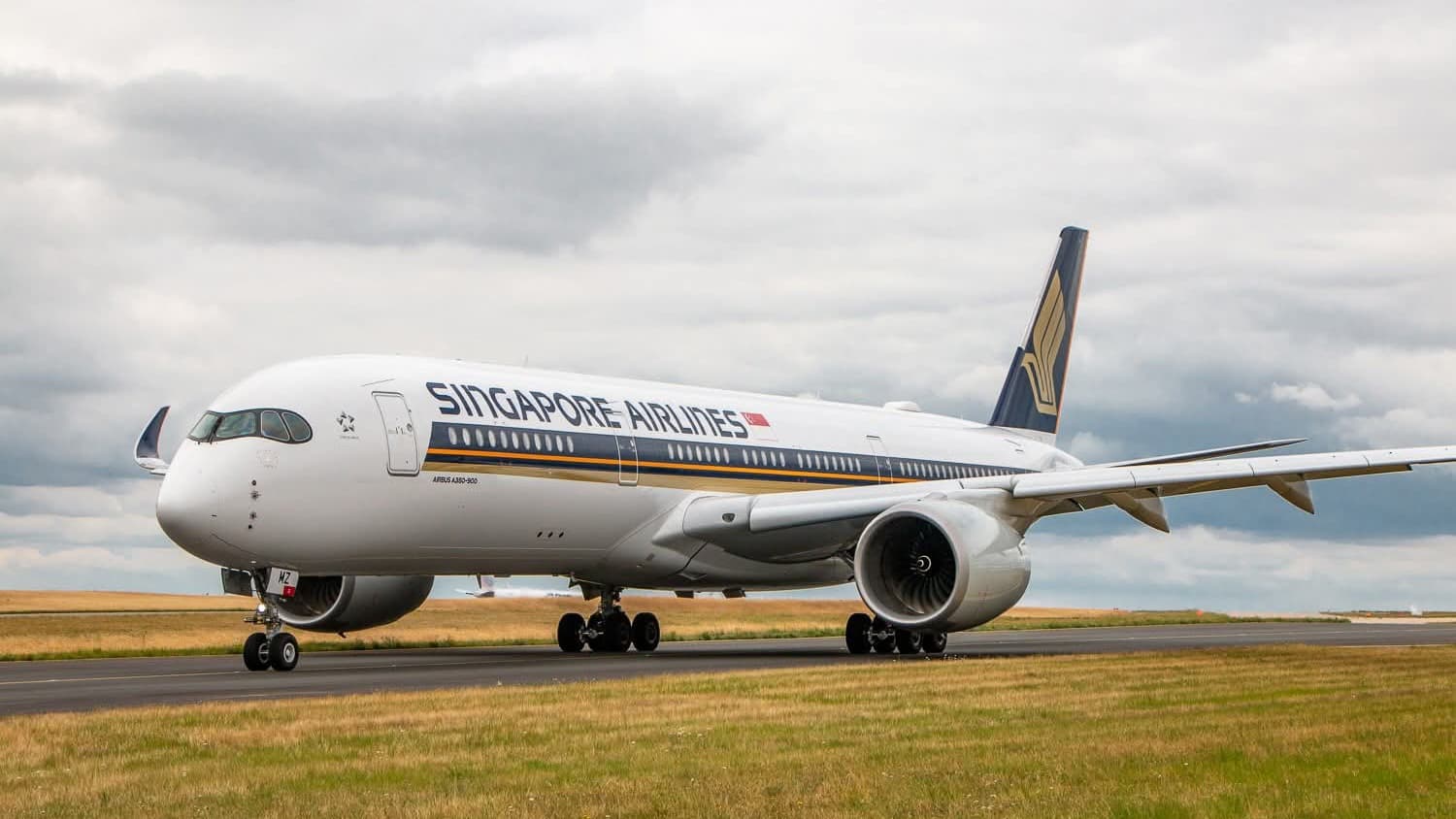
Singapore Airlines (SIA) has announced a significant expansion of its European network, including a new five-times-weekly service from Singapore to Madrid via Barcelona, starting October 26, 2026. The airline will deploy an Airbus A350-900 on this route, configured with 42 business, 24 premium economy, and 187 economy seats. This marks Madrid as SIA's 15th European destination and its second in Spain, alongside Barcelona. The move comes as SIA also increases frequencies to Manchester, Milan, Munich, and London-Gatwick, responding to strong demand across the continent.
For ATPL and ATC students, this news is a practical example of how airlines balance capacity, demand, and operational constraints. The triangular routing Singapore–Barcelona–Madrid replaces the existing Singapore–Milan–Barcelona service, illustrating how network planners optimize aircraft utilization and slot coordination. The A350-900, a fuel-efficient long-haul aircraft, is a key asset in SIA's fleet, and understanding its performance characteristics—range, payload, and cabin configuration—is essential for future pilots and controllers who will manage such flights.
The schedule details are particularly instructive: the outbound flight SQ388 departs Singapore at 23:30 local time, arrives in Barcelona at 06:40, then continues to Madrid at 07:40, landing at 08:50. The return leg SQ387 leaves Madrid at 10:00, stops in Barcelona at 11:15, and departs at 12:35, arriving in Singapore at 08:25 the next day. These timings allow for morning connections in both Spanish cities and a wide range of onward links across Asia and Oceania via Changi. ATC students can analyze the slot management and airspace coordination required for such multi-sector flights, while ATPL candidates can study the impact of time zones, curfews, and crew duty limits on schedule planning.
Beyond the Madrid route, SIA is upgrading Manchester to daily flights from July 2026, London-Gatwick to daily from October 2026, and Milan-Malpensa to daily from October 2026. A new three-times-weekly Singapore–Munich service also launches on October 26, 2026. These changes demonstrate how airlines respond to market trends—leisure and business travel recovery post-pandemic—and how they leverage hub-and-spoke models to maximize connectivity. For students, this is a textbook case of network economics, code-sharing opportunities within Star Alliance, and the strategic importance of secondary hubs like Barcelona and Madrid for linking Europe with Latin America.
In summary, this expansion offers rich material for aviation training: from fleet planning and route profitability to air traffic flow management and airport slot coordination. ATPL and ATC students should pay attention to how SIA's decisions reflect broader industry dynamics, including competition on the Europe-Asia corridor and the role of fuel-efficient aircraft in enabling new routes.