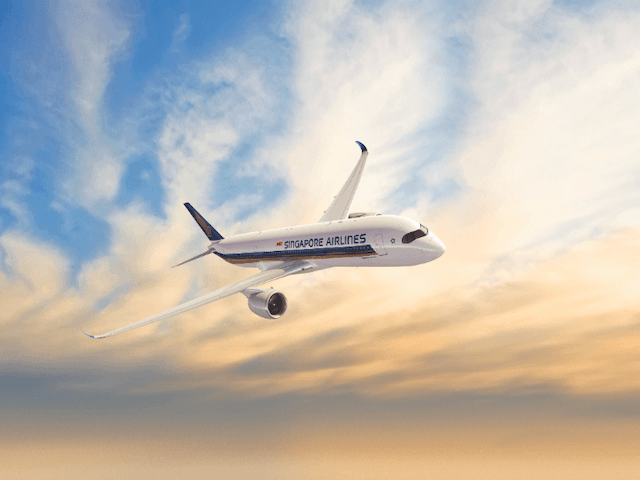
Singapore Airlines has confirmed a one-year delay in its ambitious cabin retrofit program for 41 Airbus A350-900 aircraft, pushing the first retrofitted long-haul aircraft entry into service from Q2 2026 to Q1 2027. The SGD 1.1 billion (approx. USD 870 million) program, announced in late 2024, covers 34 long-haul A350-900s and 7 ultra-long-range (ULR) variants, with completion targeted by 2030. The delay is attributed to a global shortage of premium seats and increasingly stringent certification requirements from EASA and FAA.
For ATPL and ATC students, this case study is a goldmine of operational and regulatory insights. The retrofit involves installing 42 business class seats, 24 premium economy seats, and 192 economy seats per long-haul aircraft, alongside a next-generation in-flight entertainment system and Starlink high-speed Wi-Fi. The synchronization of Starlink installation with cabin retrofit—both starting in early 2027—demonstrates how airlines optimize aircraft downtime during heavy maintenance windows. This is a classic example of integrated fleet management, a topic often covered in ATPL modules on aircraft performance and planning.
The supply chain bottleneck is particularly instructive. A single premium seat can contain up to 3,000 parts from 50 suppliers across 15 countries. Safran, a major seat manufacturer, delivered only 2,600 business class seats in 2025—just 150 more than in 2024. This fragility has real consequences: Lufthansa stored two new A350-900s at Teruel due to missing seats, while Iberia accepted A350-900s with temporary economy seats in place of business class. For ATC students, such delays can impact slot coordination and parking availability at major hubs.
Certification challenges are equally relevant. EASA and FAA have tightened rules for premium seats, especially regarding fire safety, crashworthiness, and emergency evacuation. With only about 200 certification engineers worldwide, bottlenecks are inevitable. ATPL students studying aircraft systems and airworthiness will recognize this as a real-world constraint that can delay entry into service—a factor often underestimated in theoretical training.
Finally, the competitive context matters. Singapore Airlines originally planned these cabins for its Boeing 777-9s, but repeated delays in the 777X program forced a pivot to retrofitting existing A350s. This illustrates how fleet planning must adapt to manufacturer delays—a key lesson for future airline managers and dispatchers. The new cabins, expected to feature sliding doors, 4K screens, and optimized storage, aim to match or exceed rivals like Qatar Airways and ANA. For students, this underscores the importance of passenger experience in airline strategy, a topic that intersects with cabin crew training and operational efficiency.