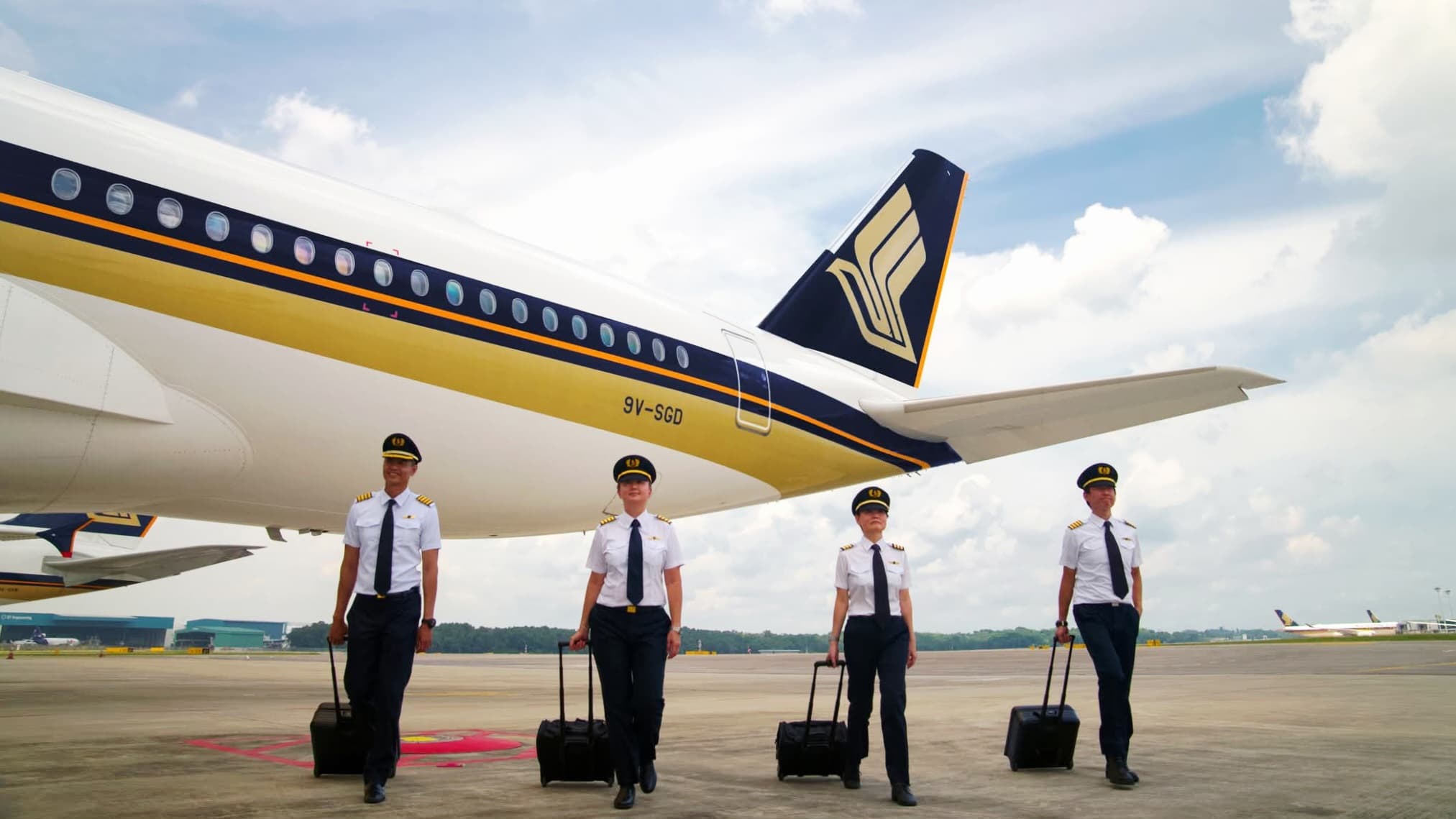
Singapore Airlines (SIA) has announced a significant increase in its Amsterdam-Schiphol service for summer 2026, raising frequencies from seven to ten weekly flights between August 1 and October 22, subject to regulatory approvals. This move is part of a broader European network expansion driven by sustained demand between Asia-Pacific and Europe. The additional rotations will operate on Tuesdays, Thursdays, and Saturdays, with flight SQ334 departing Singapore at 11:10 local time and return flight SQ333 leaving Amsterdam at 20:35 local time.
For ATPL students, this development offers a real-world case study in airline network planning and capacity management. Understanding why airlines add frequencies—rather than just larger aircraft—is key to grasping yield management and route profitability. The Amsterdam route is strategically important for SIA because it connects through Changi, one of Asia's most efficient hubs, funneling passengers from Southeast Asia, Australia, and New Zealand. This hub-and-spoke model is a core concept in ATPL syllabus topics like airline economics and operational planning.
For ATC trainees, the frequency increase means more slot coordination at Schiphol, a busy European airport with complex airspace. The three extra weekly flights will require careful integration into existing schedules, especially during peak hours. ATC students can analyze how such expansions affect runway capacity, holding patterns, and approach sequencing. Additionally, the geopolitical context—European carriers avoiding Russian airspace while Asian airlines like SIA can overfly Russia—gives SIA a competitive edge, a factor that influences route planning and fuel efficiency calculations.
The broader European expansion includes new services to Madrid (five weekly via Barcelona), daily flights to Manchester and Milan, ten weekly to Munich, and doubled frequencies to London-Gatwick. This trend highlights the shifting dynamics of long-haul aviation, where Asian carriers are capturing a growing share of Europe-Asia traffic. For students, this is a reminder that route networks are fluid, shaped by demand, geopolitics, and operational advantages. The extra capacity may be extended beyond October 2026 if demand holds, offering a live example of how airlines adapt to market signals.
In summary, this news is not just about one airline's schedule—it reflects broader industry trends that directly impact aviation training. From network economics to airspace management, the Amsterdam frequency increase provides concrete material for ATPL and ATC students to connect theory with practice.