**Scoot Expands A320neo Fleet, Phases Out Older Models**
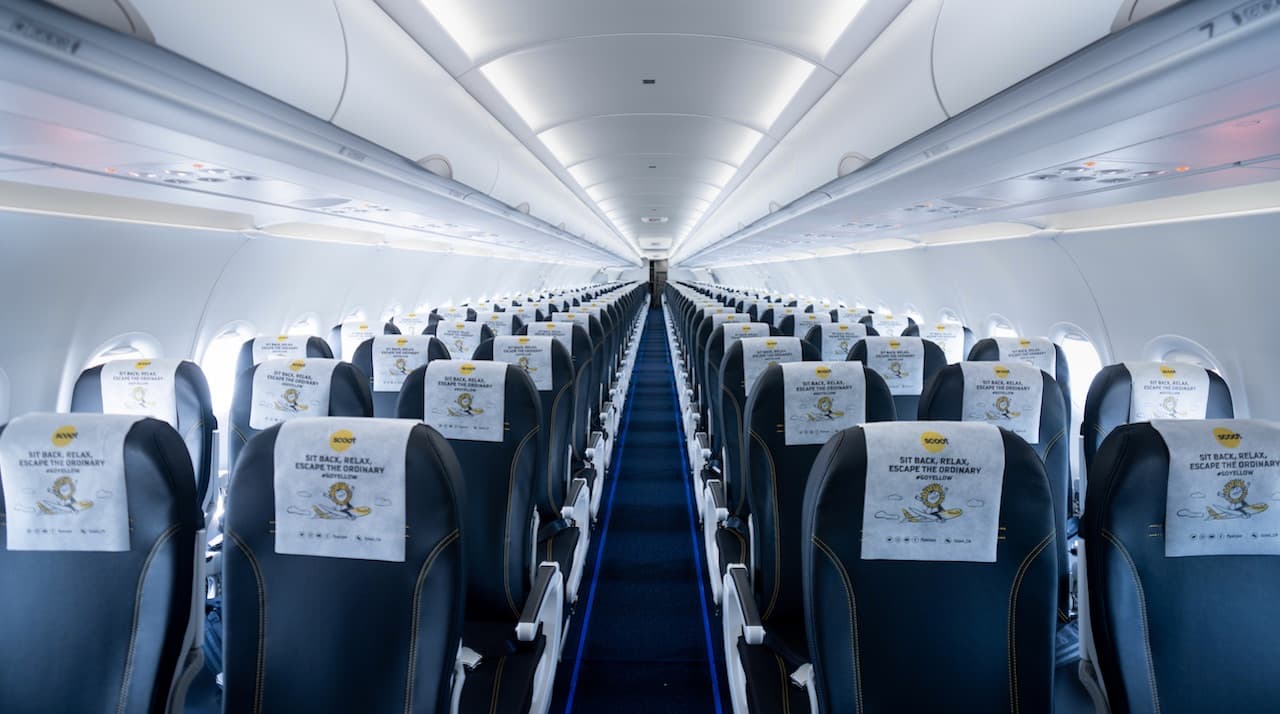
Scoot, the low-cost carrier (LCC) arm of Singapore Airlines (SIA), has announced a firm order for 11 additional Airbus A320neo family aircraft, comprising five A320neo and six A321neo (converted from options). This brings Scoot's total A320neo family order book to 20 units, complementing the 24 already in service. The aircraft, powered by Pratt & Whitney GTF engines, will be delivered from 2028 and configured in all-economy layouts: 186 seats on the A320neo and 236 on the A321neo. The order is part of Scoot's fleet renewal strategy, which includes retiring its six remaining A320ceo by 2028.
**Strategic Role in the SIA Group Network**
With a range of five to six hours from Singapore's Changi hub, these narrowbodies will serve a wide arc from the Indian subcontinent to Northeast Asia, including secondary cities in China and Southeast Asia. Scoot acts as a feeder for SIA's long-haul network, channeling passengers from markets that would be uneconomical for widebody operations. CEO Leslie Thng emphasized that the A320neo's combination of range and capacity allows Scoot to expand connectivity while offering seamless travel options. The carrier currently operates 63 aircraft: 24 Boeing 787 Dreamliners, 30 A320 family jets (including 6 A320ceo, 12 A320neo, 12 A321neo), and 9 Embraer E190-E2s. This diverse fleet enables Scoot to match capacity to demand across short, medium, and long-haul routes.
**Impact on Regional Connectivity and Training Relevance**
Since the 2022/2023 financial year, Scoot has added 25 new destinations to the SIA group network, including non-metropolitan cities like Chiang Rai (Thailand) and Phu Quoc (Vietnam), as well as longer routes such as Vienna (Austria). By June 2026, Scoot plans to serve 85 destinations, representing about half of all cities linked to Changi. Of these, 37 routes will be operated exclusively by Scoot, highlighting the LCC model's ability to unlock niche markets. For ATPL and ATC students, this case study illustrates fleet planning dynamics, the role of LCCs in hub-and-spoke systems, and the operational considerations of transitioning between aircraft generations. The phase-out of A320ceo and introduction of A320neo also underscore the importance of type ratings and maintenance planning in a mixed fleet environment.