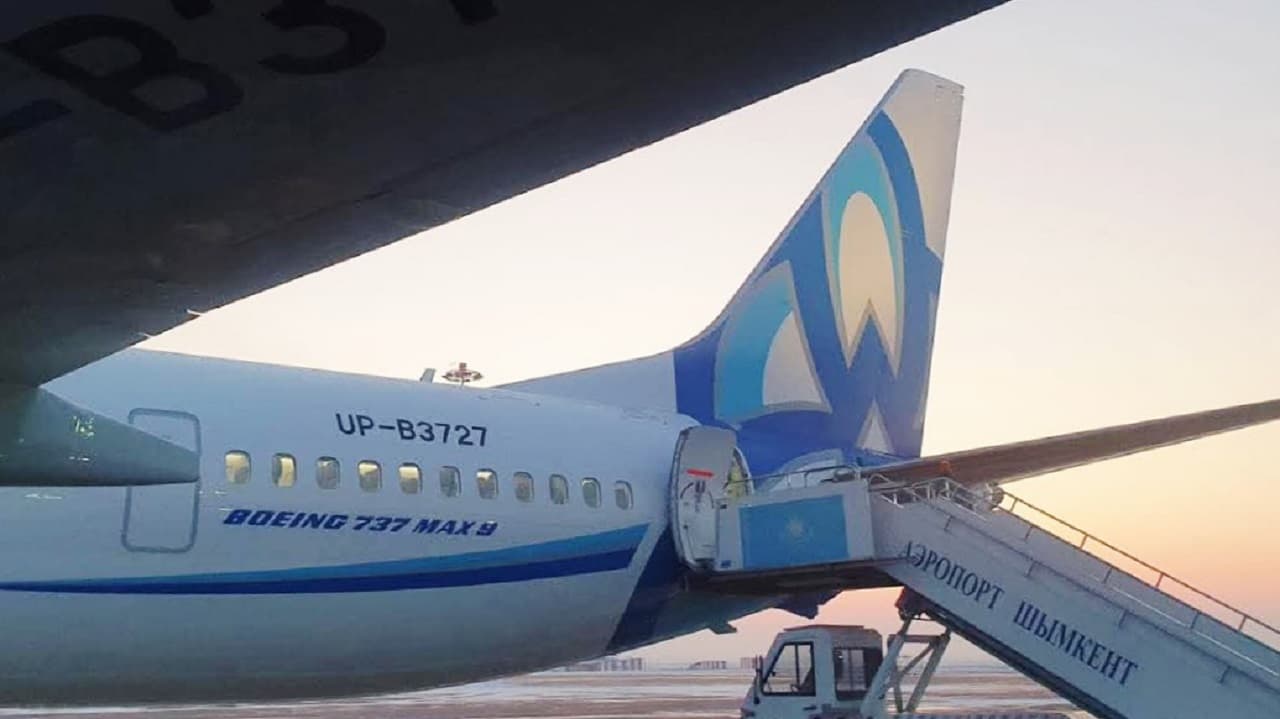
SCAT Airlines, Kazakhstan's second-largest carrier, has placed a firm order for five additional Boeing 737 MAX 9 aircraft and converted five existing 737-8 orders to the 737-9 variant, Boeing and SCAT announced on April 29, 2026. This brings the total number of 737-9 aircraft added to SCAT's order book to ten. The airline, based in Shymkent, already operates nine 737-8 and five 737-9 aircraft, with the latter configured at approximately 213 seats in a single-class layout.
The decision underscores SCAT's strategy to modernize its fleet and expand its international network, particularly on medium- and long-haul routes connecting Central Asia with Europe and China. The 737-9, with a range of up to 6,110 km (3,300 nm) and capacity for up to 220 passengers, offers a compelling combination of range and seat count for transcontinental operations. According to Boeing, the 737 MAX family delivers approximately 20% lower fuel consumption compared to the single-aisle aircraft it replaces, a critical factor for carriers in Central Asia seeking to control costs on long-distance flights.
SCAT Airlines is leveraging the 737-9's capabilities to develop so-called "seventh freedom" routes, where flights operate between two foreign countries without touching the airline's home country. The carrier already operates a weekly Prague–Sanya service via a technical stop in Bishkek, using a 213-seat 737 MAX 9 for the approximately 14-hour journey connecting the Czech Republic to the Chinese port of Sanya in Hainan province. This flexibility allows SCAT to tap into new markets without the need for widebody aircraft.
For ATPL and ATC students, this case study illustrates key operational and regulatory concepts. The 737-9's range and capacity make it suitable for long, thin routes that would otherwise require a widebody, impacting flight planning, fuel calculations, and performance considerations. The seventh freedom operation introduces complex airspace and overflight rights issues, as well as the need for crew duty time management on extended sectors. Additionally, the fleet modernization highlights the economic drivers behind aircraft selection, including fuel efficiency and seat-mile costs, which are central to airline business models.
SCAT's move also reflects broader trends in the aviation industry: the recovery of the 737 MAX program in emerging markets, the shift toward larger single-aisle aircraft for long-haul operations, and the growing importance of Central Asia as a transit region. For students, understanding these dynamics is essential for anticipating future network developments and regulatory challenges.