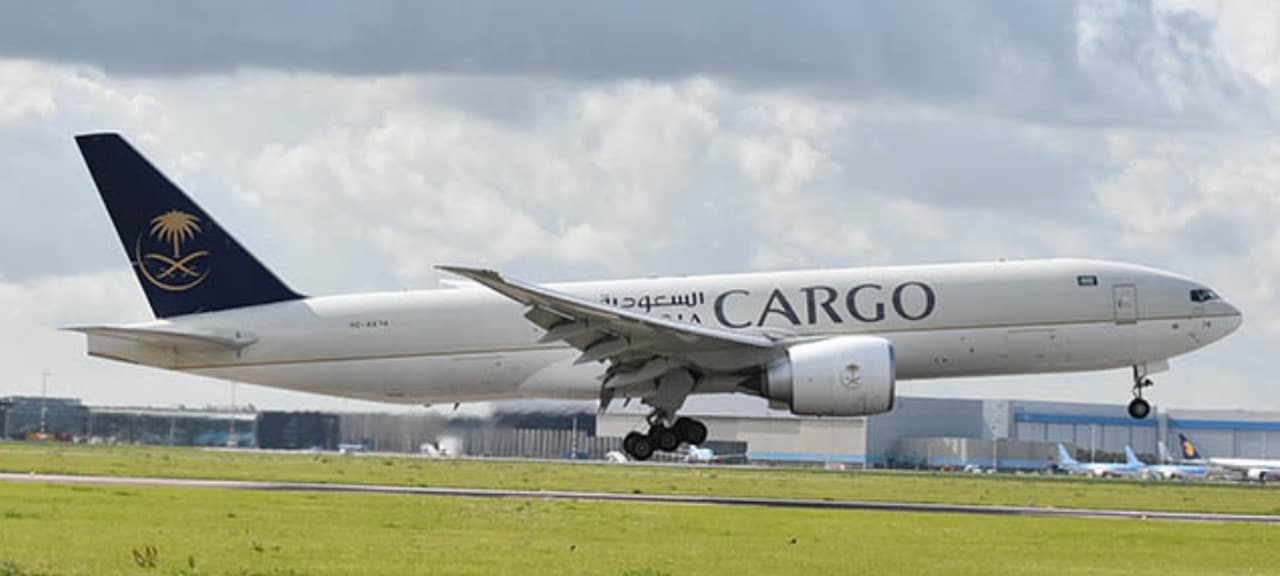
**Saudia Cargo’s Fleet Expansion: A Strategic Move for Vision 2030**
Saudia Cargo has confirmed an order for four new Boeing 777 Freighters, with deliveries scheduled through 2027. This investment is part of a broader plan to double the airline's all-cargo fleet and expand its network, aligning with Saudi Arabia's Vision 2030 and the National Transport and Logistics Strategy (NTLS). The goal is to handle 4.5 million tonnes of air freight annually by 2030, positioning the Kingdom as a global logistics hub.
**Current Fleet and Growth Trajectory**
Saudia Cargo currently operates four Boeing 777Fs, along with four Boeing 747-400Fs (two of which are passenger-to-freighter conversions). The addition of four more 777Fs will bring the total to at least eight of these modern, long-range freighters. The airline is also diversifying its capacity with Airbus A330-300P2F conversions. A strategic agreement with ASL Aviation, signed last year, covers the lease of two A330-300P2Fs, delivered in February and April of this year and operated by ASL Airlines Ireland for Saudia Cargo. This dual approach—adding new-build 777Fs and converted A330s—reflects a flexible strategy to meet growing demand.
**Why This Matters for ATPL and ATC Students**
For aspiring pilots and air traffic controllers, this expansion illustrates the increasing importance of dedicated cargo operations in modern aviation. Cargo flights often operate outside peak passenger hours, requiring specialized handling and routing. Understanding the operational characteristics of aircraft like the 777F—its range, payload capacity (over 100 tonnes), and fuel efficiency—is crucial for flight planning and performance calculations. ATC students should note that cargo hubs like Riyadh and Jeddah may see increased freighter movements, affecting slot coordination and airspace management. The Vision 2030 initiative also means new airport infrastructure and logistics zones, which could impact approach procedures and ground operations.
**Broader Industry Context**
This order is part of a wider trend in the Middle East, where carriers like Emirates and Qatar Airways are also investing in next-generation twin-engine freighters. The 777F is a market leader for intercontinental cargo, offering lower operating costs compared to older four-engine types. For Boeing, this deal reinforces a 75-year partnership with the Saudia group. The strategic location of Saudi Arabia—at the crossroads of Europe, Asia, and Africa—makes it a natural competitor to established hubs like Dubai and Doha. As the Kingdom builds its logistics capabilities, aviation professionals will need to adapt to new routes, procedures, and operational demands.
**Conclusion**
Saudia Cargo's fleet expansion is not just a corporate milestone; it is a signal of shifting global trade patterns and the growing role of air freight in national economic strategies. For those in aviation training, staying informed about such developments is essential for understanding the dynamic environment they will work in.