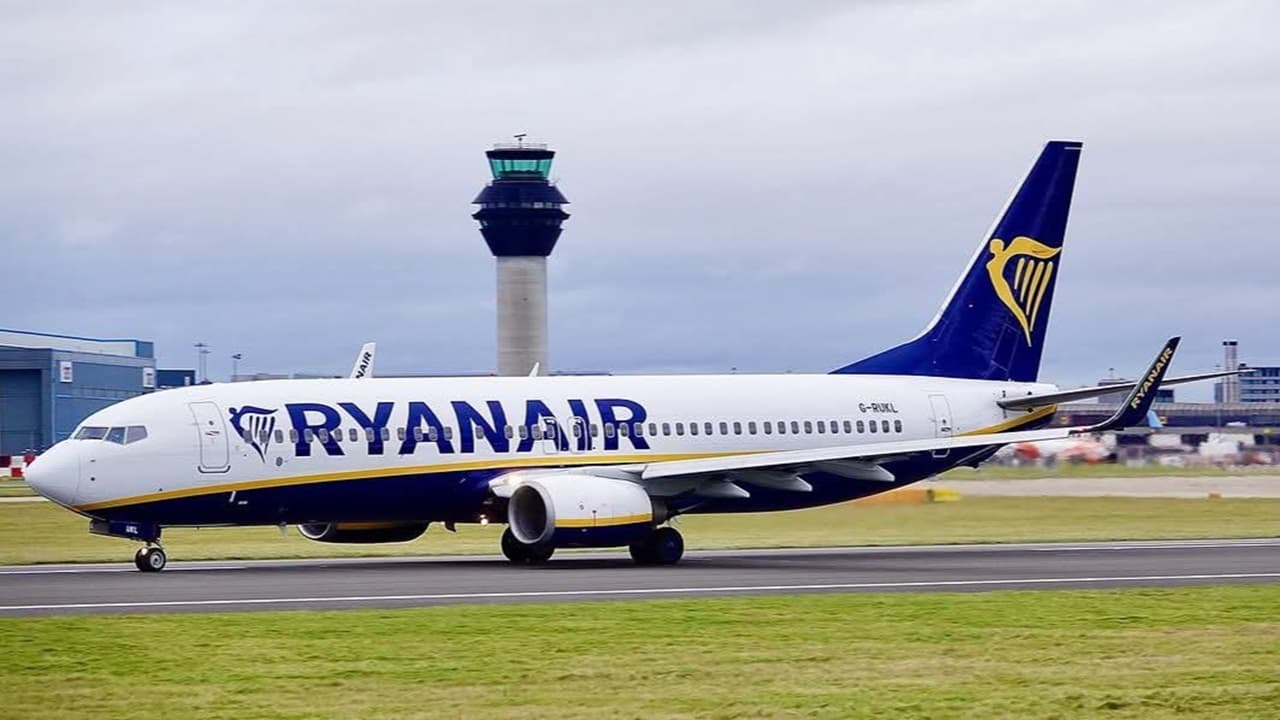
Ryanair has set a new monthly passenger record, carrying 22.2 million travelers in July 2026. This marks a 7% increase compared to July 2025, when the airline transported 20.8 million passengers. The summer peak, driven by strong demand to Mediterranean leisure destinations such as Spain, Portugal, Italy, and Greece, pushed the airline's load factor to 96%, matching the previous year's performance. The airline operated more than 120,800 flights during the month, averaging nearly 3,900 daily departures.
This record surpasses the previous high set just a month earlier, when Ryanair carried 21.2 million passengers in June 2026, with 116,800 flights and a 95% load factor. The consecutive monthly records indicate not only seasonal strength but also the airline's continued capacity expansion, despite earlier delivery delays of Boeing aircraft that had impacted its fleet growth in the previous fiscal year.
Over the trailing twelve months ending July 2026, Ryanair has transported 213.2 million passengers, a 5% increase year-on-year, with an average load factor of 94%. The group closed its 2025-2026 fiscal year on March 31 with 208.4 million passengers (+4%) and a fleet of 647 aircraft, including 210 Boeing 737-8200 'Gamechanger' aircraft. These high-density aircraft are central to Ryanair's business model, increasing capacity per flight while improving fuel efficiency per seat.
For aviation students, this news highlights the operational scale of Europe's largest low-cost carrier. The airline's reliance on point-to-point routes and secondary airports, combined with high load factors, demonstrates the importance of efficient fleet utilization and network planning in the low-cost model. Understanding these dynamics is crucial for future pilots and air traffic controllers, as they will operate within such high-density environments, where punctuality and slot coordination are critical.
Ryanair's record also underscores the resilience of European air travel demand, even amid industrial challenges. For ATPL students, this reinforces the need to master performance calculations and fuel management, as high-density operations like Ryanair's demand precise planning to maintain profitability and safety.