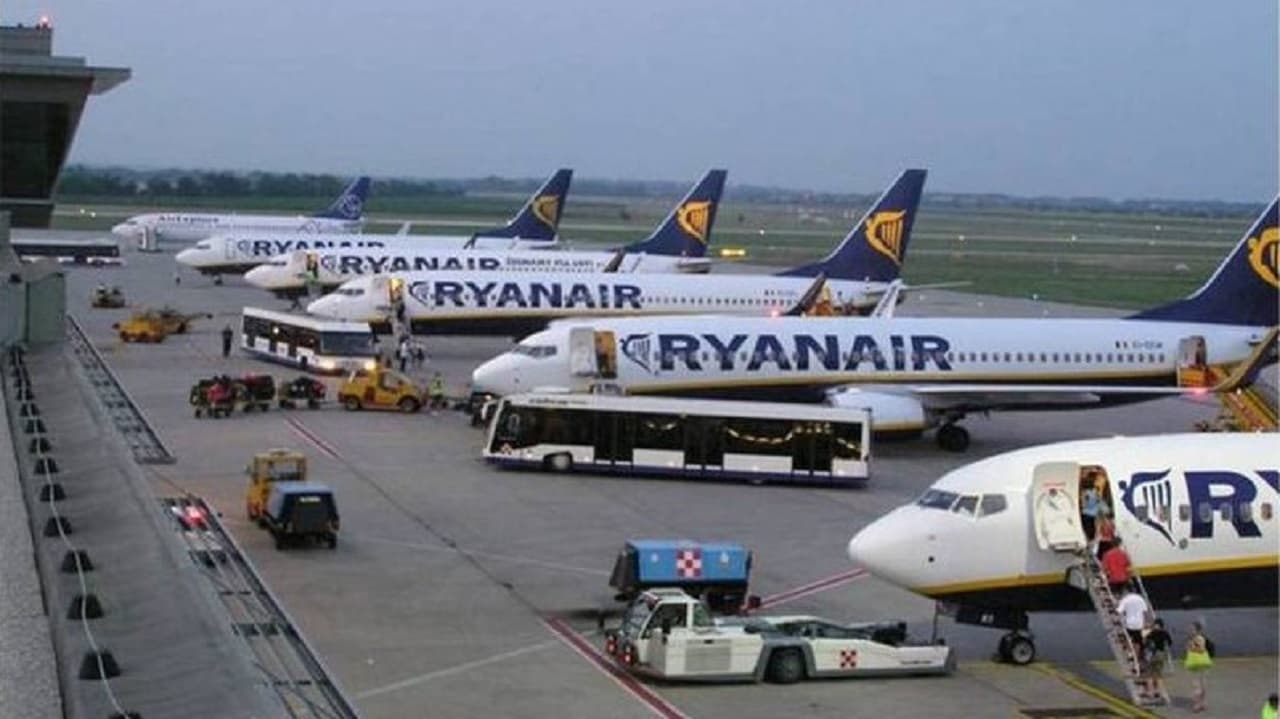
**A Ryanair flight from Athens to London Luton departed with over 20 passengers still stuck in border control queues. This incident highlights critical operational challenges for pilots and controllers managing non-Schengen departures.**
On a busy summer day at Athens International Airport (ATH), a Ryanair flight bound for London Luton (LTN) pushed back with an unusually low passenger count. Over 20 registered passengers were left behind, unable to clear border control in time. The aircraft left with about an hour's delay, after ground crews removed the luggage of the missing travelers—a standard safety procedure. Witnesses described chaotic scenes in the terminal, with queues stretching dozens of meters in temperatures exceeding 30°C. Some passengers reached the gate just minutes before closure, while others were stuck far upstream.
**Why this matters for aviation training**
For ATPL and ATC students, this incident is a textbook case of operational risk management. Non-Schengen departures require mandatory border police checks, which are often bottlenecked at seasonal hubs like Athens. The new European Entry/Exit System (EES), which will add biometric registration for non-EU travelers, is expected to worsen these delays. Pilots must anticipate that passenger boarding may be incomplete due to security queues, and ATC must factor in potential last-minute gate changes or delays. The incident also underscores the importance of crew resource management (CRM) when dealing with frustrated passengers and tight turnaround times.
**Broader industry context**
Airlines and airports have long warned that the EES, once fully implemented, could increase processing times by up to 30% at peak hours. For Ryanair, a low-cost carrier with tight schedules, even minor delays can cascade into network-wide disruptions. The Athens incident is a reminder that operational resilience depends not just on aircraft performance, but on the entire passenger journey—from check-in to boarding. For ATC, managing flow into non-Schengen gates requires coordination with airport authorities to avoid congestion that could impact departure sequences.
**What ATPL/ATC students should take away**
This event is a practical example of how external factors—like border control capacity—can affect flight operations. Students should study how airlines and airports collaborate to mitigate such risks, and how the EES will reshape procedures. Understanding these dynamics is essential for the ATPL syllabus on operational procedures and for ATC training on airport capacity management.