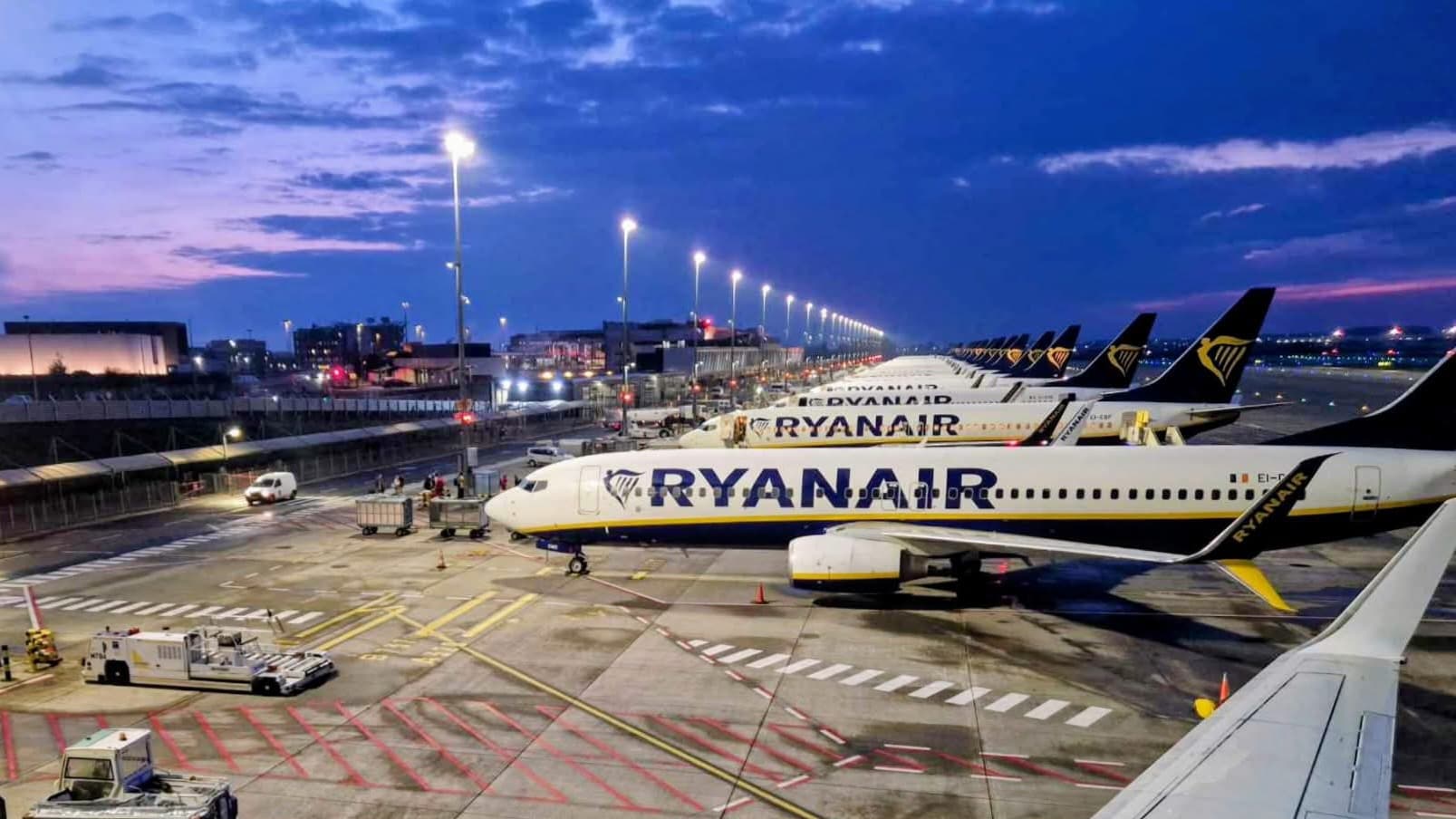
Ryanair has announced a major reduction in its Belgian operations, cutting traffic by 22% and converting 20 year-round routes to purely seasonal summer services. The Irish low-cost carrier directly blames Belgium's federal air travel tax, which it calls "punitive" and which is scheduled to increase further. The affected routes, currently operated year-round from Brussels South Charleroi Airport and Brussels Airport (Brussels-National), will be suspended during the winter 2026-2027 season.
This restructuring is part of a broader plan that includes the withdrawal of five Boeing 737-800 or 737 MAX 8-200 aircraft based at Charleroi, reducing the local fleet from 18 to 14 units. As a result, Ryanair will remove approximately one million seats from the Belgian market for winter 2026-2027, representing a 22% drop in passenger traffic. The airline warns that if the fiscal environment does not improve, the reduction could exceed two million seats over two years. Christophe Segaert, CEO of BSCA (the operator of Charleroi airport), confirmed to Mobilithib that "the forecasts we have received from Ryanair for this winter are not good at all."
At the heart of the decision is Belgium's federal embarkation tax, introduced in 2022 and set to rise further. Currently, each ticket for a flight departing from a Belgian airport is subject to a surcharge ranging from €2 to €10 depending on distance, with the highest rate applied to flights under 500 km. A budget agreement plans to raise this tax to €10 for all flights from 2027, with additional increases for short-haul routes in subsequent years. Ryanair states that "following this second increase in just five months, Ryanair has been forced to reduce its traffic in Brussels by 22% and remove 5 aircraft based at Charleroi."
Ryanair CEO Michael O'Leary has denounced these "stupid taxes" that "harm Belgium's competitiveness" compared to other European markets. He argues that the levies make tickets from Belgium more expensive than those from neighboring countries, to the detriment of passengers and local airports. During a press conference in Brussels, he warned that the airline "will continue to reduce" capacity as long as these taxes remain, and did not rule out further cuts if airports or cities add their own passenger charges on top of the federal tax.
The Belgian federal government defends the air travel tax as both a budgetary and environmental tool, aiming to make aviation contribute more and to encourage low-carbon alternatives for short trips. The Constitutional Court has already upheld the tax's principle, rejecting appeals from airlines. Belgian airports are now concerned about their attractiveness, as Ryanair remains a major player at Charleroi and a significant contributor to low-cost traffic at Brussels. The seasonalization of 20 routes and the removal of over a million seats from winter 2026-2027 are expected to weigh on traffic, local employment, and airport revenues.