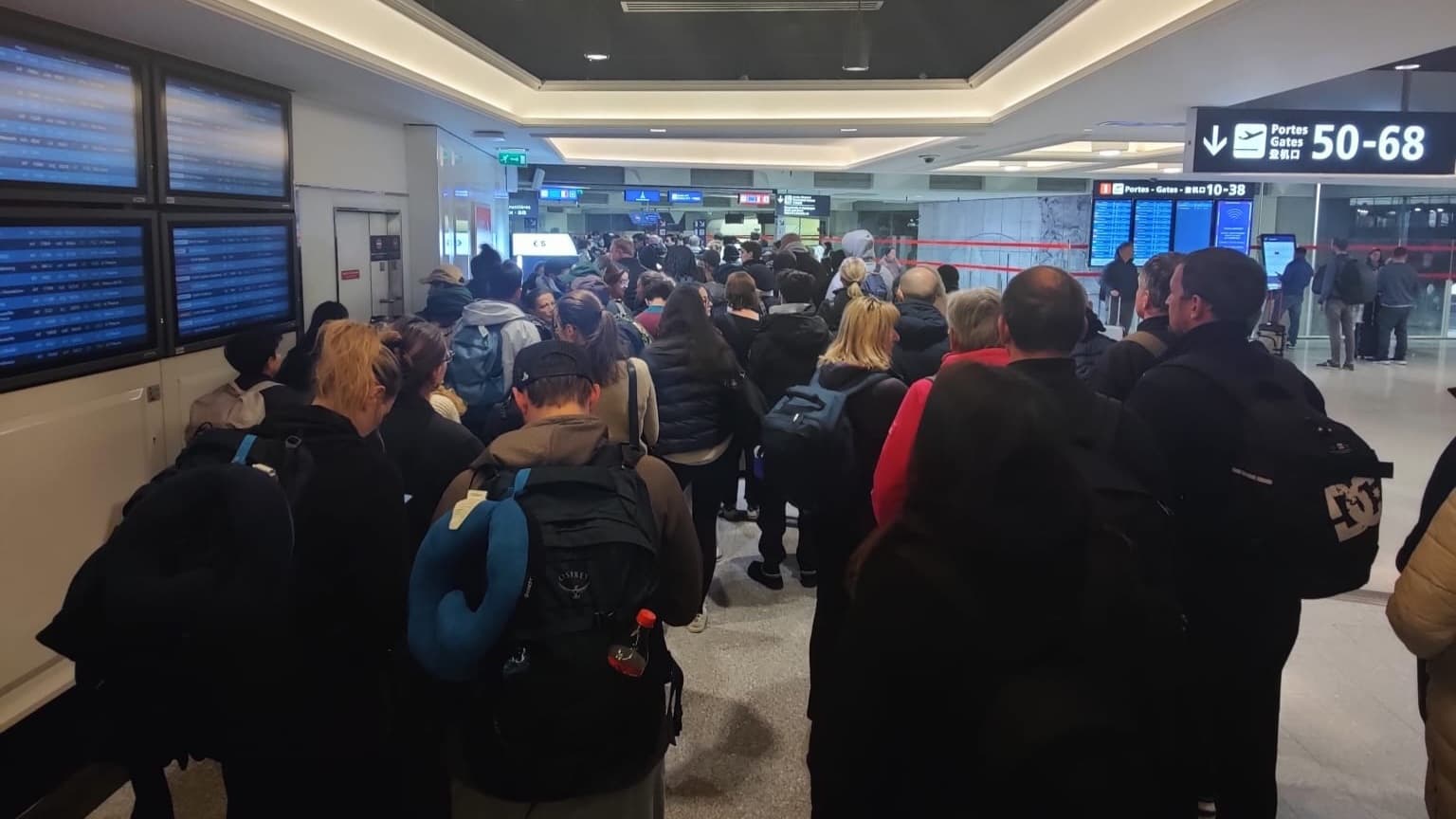
**Ryanair has formally requested that France suspend the new biometric checks imposed on non-EU passengers arriving at its airports, at least until September.** The low-cost carrier warns that the European Entry/Exit System (EES), which became fully operational in mid-April 2026, is still in a shakedown phase and risks creating "summer chaos" at major hubs. In a letter to French Interior Minister Laurent Nuñez, Ryanair proposes a temporary return to manual passport stamping, arguing that border police are better equipped to handle the traditional method during peak travel season.
**The airline reports that queues of one to two hours have already been observed at several French airports, with peaks of three to four hours at Paris-Beauvais, Marseille-Provence, and Nantes-Atlantique.** Ryanair's Chief Operations Officer, Neal McMahon, stated that "governments are trying to deploy a half-baked IT system at the busiest time of the year, and it is passengers – including many families with young children – who are paying the price." The carrier has sent similar letters to all 29 countries participating in the EES, citing Greece as an example that has already postponed full deployment until after the summer to protect its tourism sector.
**The EES requires non-EU travellers to provide fingerprints, a photograph, and other biometric data upon entry into the Schengen area.** While designed to enhance security and traceability, the system has drawn sharp criticism from the aviation industry. ACI Europe and Airlines for Europe confirm that the first days of full operation were marked by "disruptions, missed flights, and excessive waiting times." French authorities acknowledge a 90-day grace period that allows local adjustments, but airlines insist on chronic understaffing at border police and limited system reliability during the summer rush.
**For ATPL and ATC students, this situation illustrates the real-world tension between security regulations and operational fluidity.** Understanding the EES and its impact on turnaround times, passenger flow, and slot coordination is crucial. Controllers must anticipate delays caused by immigration bottlenecks, while pilots need to manage crew duty times and passenger connections. The debate also highlights how regulatory changes can ripple through airport operations, affecting everything from ground handling to air traffic flow management. As future aviation professionals, students should consider how such systems might evolve and what contingency measures could be implemented to maintain efficiency without compromising security.