**A milestone for Russia’s homegrown airliner**
Yakovlev, a subsidiary of the United Aircraft Corporation (UAC), announced on 23 June that the MC-21-310—the fully “russified” version of its medium-haul jet—has completed a series of flight tests validating both its operational range and critical takeoff performance under engine failure. The aircraft achieved a range exceeding 3,800 km with a payload equivalent to 175 passengers in a two-class configuration, while maintaining mandatory fuel reserves for commercial operations. These tests were conducted under a flight profile representative of standard airline use, including margins for diversion to an alternate airport.
**Engine-out takeoff: a certification cornerstone**
In parallel, Yakovlev confirmed that the MC-21-310 successfully demonstrated the ability to continue a takeoff after a simulated engine failure at the most critical moment—a key certification requirement for transport-category aircraft. “The aircraft must be able to continue the takeoff on a single engine and reach a safe altitude. For a twin-engine jet, this is the most dimensioning parameter for maximum takeoff weight,” explained Pavel Sokut, head of flight tests for civil aviation at Yakovlev. The collected data on takeoff distance and climb rate matched theoretical predictions, paving the way for formal certification trials.
**Sanctions-driven transformation**
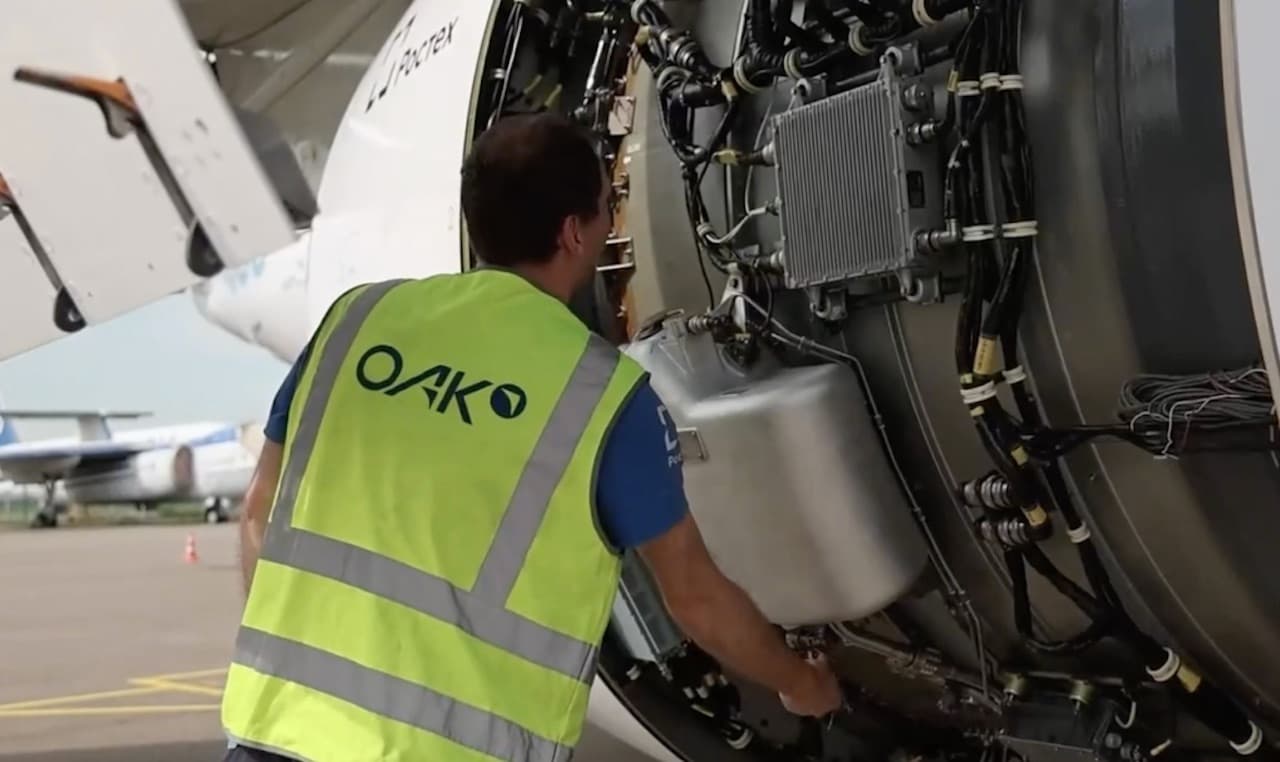
The MC-21 program was originally designed to compete with the Airbus A320neo and Boeing 737 MAX, relying heavily on Western components, including Pratt & Whitney PW1400G engines. Following the 2022 invasion of Ukraine and subsequent sanctions, Russia was forced to pursue an “import substitution” strategy, replacing engines, avionics, composite materials, and critical systems with domestic alternatives. The MC-21-310 now uses the Aviadvigatel PD-14 turbofan, a cornerstone of Russia’s quest for technological independence in this segment.
**Broader industry rebuild**
Beyond the MC-21, Russia’s entire civil aviation sector is undergoing a similar transformation. The PD-8 engine, destined for the SJ-100 (a modernized Sukhoi Superjet), reportedly received type certification in early June 2026. The UEC-Saturn engine manufacturer highlighted the role of the Voronezh Aircraft Plant (VASO), which developed complex composite components—including nacelles and engine cowlings—in under a year.
**What this means for ATPL and ATC students**
For ATPL candidates, this case study illustrates how certification requirements—such as engine-out takeoff performance and range with reserves—are tested in real-world programs. It also underscores the impact of geopolitical factors on aircraft design, supply chains, and operational certification. ATC students can note how performance parameters like climb rate and alternate airport margins directly influence airspace management and emergency procedures. Understanding these dynamics prepares future aviation professionals for a rapidly evolving industry where regulatory and industrial shifts are becoming the norm.