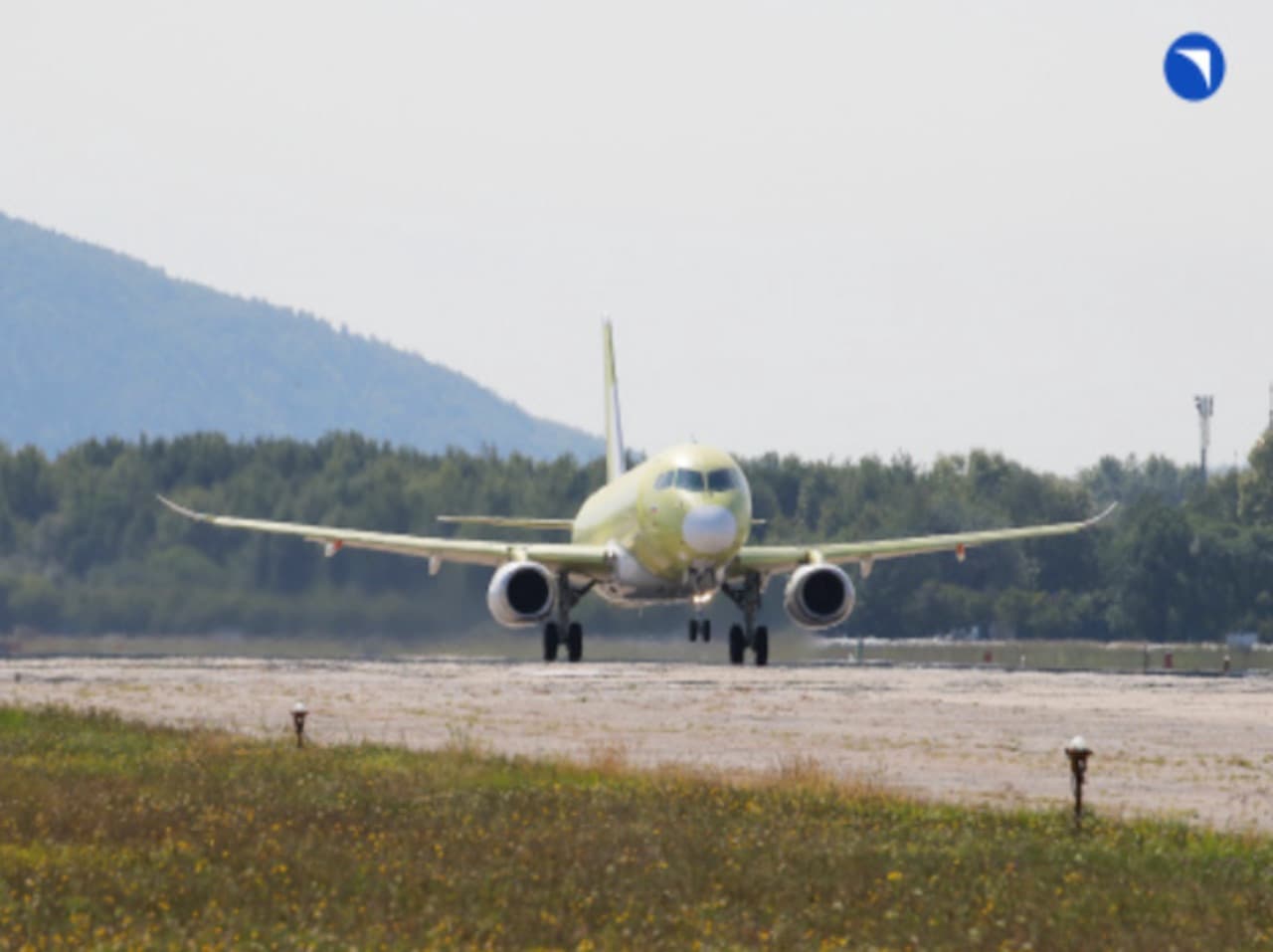
**Russia's aviation industry took a significant step forward with the delivery of the first two production PD-8 engines**, destined for the Yakovlev SJ-100. The announcement, made on August 12 by UEC-Saturn's CEO Ilya Konyukhov, signals the start of serial production for this critical powerplant. The PD-8, which received its type certificate from Rosaviatsia on June 5, is the cornerstone of Russia's efforts to replace the SaM146 engine previously supplied by PowerJet, a joint venture with Safran. Following the 2022 invasion of Ukraine and subsequent sanctions, Safran withdrew from the program, forcing Russia to develop its own engine to keep the Superjet program alive.
The PD-8 is not just a new engine; it represents a broader strategy of import substitution. The SJ-100, as the modernized Superjet is now called, incorporates Russian-made systems, avionics, and components to reduce dependence on foreign suppliers. This includes not only the engine but also assembly tools and junction stations used in production. UEC-Saturn, the industrial lead, highlights that the PD-8 is entirely developed and manufactured in Russia, with a thrust of about 8 tonnes at takeoff. The development involved 25 new materials and technological solutions, 17 of which were created specifically for this program.
**The certification process was rigorous, involving over 6,500 hours of bench and flight testing.** This included tests for icing conditions, bird strikes, hail, and water ingestion, as well as structural tests on the fan. The engine features a twin-spool architecture without a gearbox, derived from the larger PD-14 used on the MC-21. It has a bypass ratio of 4.4 and a Russian-made FADEC system. According to Rostec, the engine has demonstrated "high reliability and safety, including in critical conditions," though these claims are based on the manufacturer's own data.
**Despite the engine's certification, the SJ-100 itself is not yet fully certified.** The first serial-built SJ-100, powered by PD-8 engines, made its maiden flight on September 5, 2025, from Komsomolsk-on-Amur, lasting one hour with three crew members. However, FlightGlobal noted that the aircraft's certification is still ongoing, relying on multiple prototypes with different configurations. The newly delivered engines are expected to be installed on a production aircraft for further testing in the Khabarovsk region.
**The PD-8 program is a test of Russia's ability to rebuild its civil aviation supply chain without Western support.** Beyond the SJ-100, the engine is planned for the Beriev Be-200 amphibious firefighting aircraft, positioning it as a multi-program platform. For aviation students, this development underscores the complexities of engine certification and the geopolitical factors that can reshape aircraft programs. It also highlights the importance of understanding alternative propulsion systems and the challenges of integrating new engines into existing airframes.