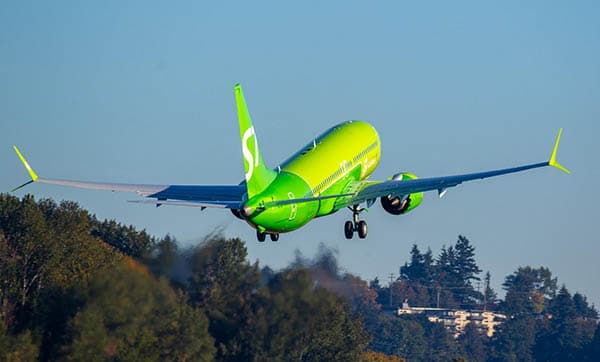
Russian airlines have reportedly received instructions to prevent their flight crews from taking and disseminating photos or videos taken from an aircraft in flight. This new directive, part of a broader tightening of security around Moscow in response to the drone threat, specifically targets images of the airspace and events observed from the cockpit. The days of Russian pilots posting sunrise shots above the clouds, cross-traffic views, or spectacular approaches on social media may soon be numbered.
According to the specialized Telegram channel Aviatorshchina, Russian airlines have begun informing their flight personnel of a ban on photographing or filming during flight operations, as well as publishing such content online. The measure is said to have been decided following a mid-July meeting chaired by Vladimir Poteshkin, Russia's Deputy Transport Minister for Aviation. Airlines have been instructed to organize additional briefings for their crews, reminding them that it is forbidden to capture, in photo or video, "objects in the airspace and events occurring from the side of an aircraft," and then to distribute these images online. This information, also reported by the regional Russian media Amur.life, has not yet been accompanied by the publication of an official decree or circular detailing its scope, possible exceptions, or applicable disciplinary sanctions.
This measure sits at the intersection of security and flight safety. In the aviation world, taking images from a cockpit is never a trivial matter. It can involve operational discipline—avoiding distraction—confidentiality of procedures, or security considerations. Critical phases of flight are already subject to the "sterile cockpit" principle, where pilots must focus exclusively on flying the aircraft and operational communications. In Russia, S7 Airlines had already announced in February a ban on its crews taking photos or videos during taxi, takeoff, and landing, while prohibiting entertainment content during work. A precedent also marked the sector in late 2024: S7 opened an investigation after a photo surfaced showing a pilot watching a Formula 1 race in the cockpit of an Airbus A321. The airline reminded that sterile cockpit rules applied up to 3,000 meters altitude, with a ban on activities unrelated to flight conduct during the most sensitive phases.
The new instruction reported seems to go further. It no longer targets only the risk of distraction in the cockpit, but also the capture of elements visible outside the aircraft—air traffic, defense systems, unusual activity in the airspace or on the ground—and their public dissemination. This initiative comes amid unusual restrictions in the Moscow region, where Russia's war against Ukraine has made the airspace a heightened security issue. Russian authorities regularly report Ukrainian drone attacks and periodically suspend operations at capital airports. The ban on filming from the cockpit does not, in itself, change piloting procedures or official air surveillance means, but it reflects a desire to better control images circulating publicly about movements and events observable from airliners.