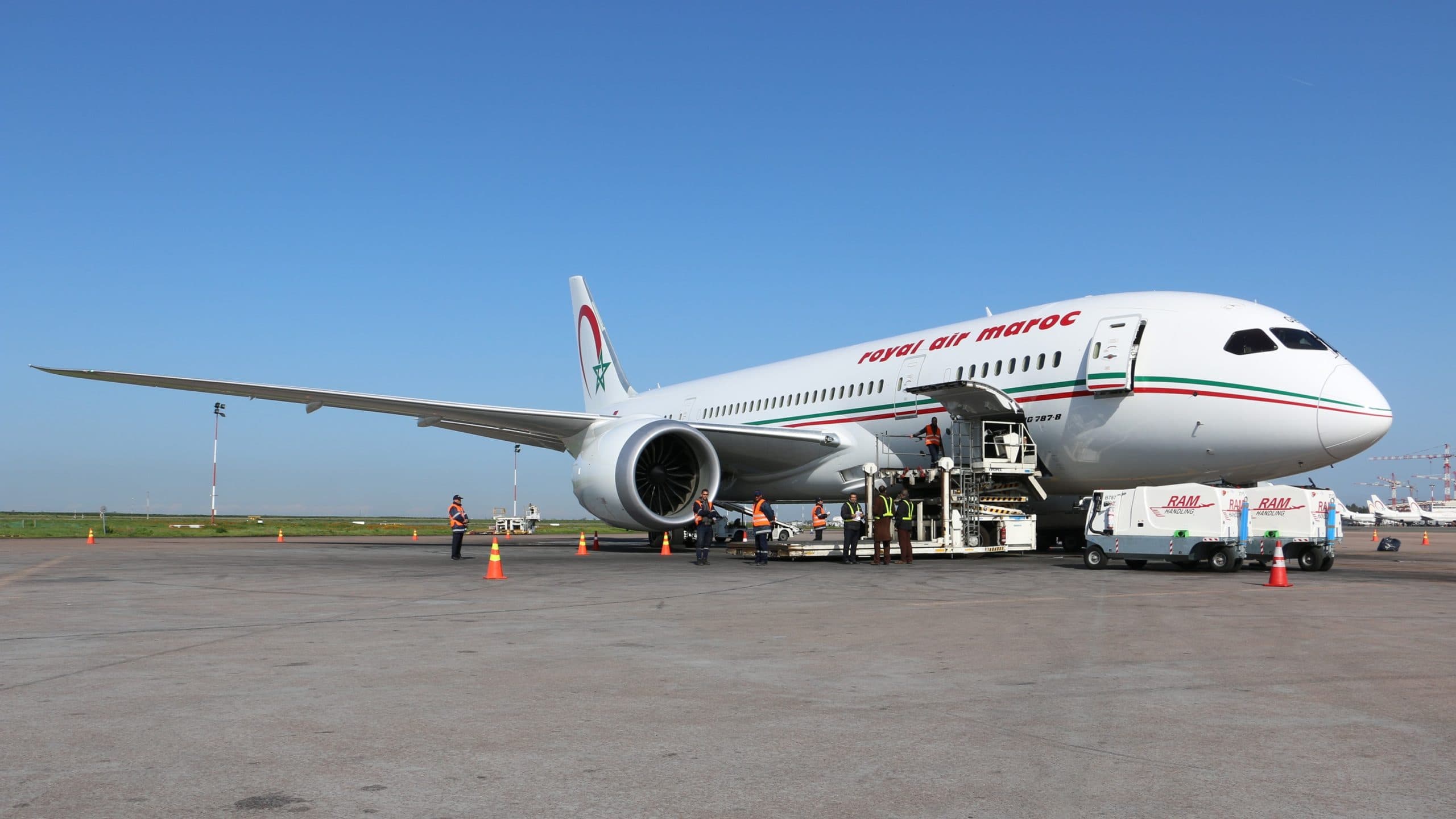
**Royal Air Maroc (RAM) has announced an exceptional program of 32 special flights to the United States for the 2026 FIFA World Cup, deploying over 8,800 seats from Casablanca to New York, Boston, and Atlanta.** The flag carrier is offering a fixed round-trip fare of 10,000 Moroccan dirhams (approx. €940) for economy class, with non-refundable, fixed-date tickets. This initiative, detailed in a press release from Casablanca on May 19, 2026, is designed to transport Moroccan supporters to follow the Atlas Lions during the group stage from June 13 to 24, 2026.
**For ATPL and ATC students, this real-world operation offers a rich case study in airline capacity planning and operational logistics.** RAM is adding 12 extra flights to New York (over 3,300 seats) on June 11–13 for departures and June 14–15 for returns, supplementing its two daily regular services. Boston receives 12 special flights (June 17–19 outbound, June 20–22 inbound), while Atlanta—a new destination for RAM—gets 8 flights (June 22–24 outbound, June 25–27 inbound). The airline is using widebody aircraft, primarily Boeing 787 Dreamliners, known for their long-range capability and passenger comfort. This surge in capacity requires meticulous coordination with US airports for slots, ground handling, and customs clearance—a scenario that mirrors the complexities ATCs manage during major events.
**The strategic rationale behind this move is twofold.** First, RAM reinforces its brand as the national carrier, leveraging the World Cup to strengthen ties with the Moroccan diaspora in the US. Second, it tests new markets like Atlanta, a major hub that could become a regular destination if demand proves sustainable. For ATPL students, this illustrates how airlines use mega-events to validate route viability—a concept known as "capacity-driven market entry." The fixed fare structure, while non-refundable, also demonstrates yield management principles: RAM accepts lower margins per seat in exchange for high load factors and brand loyalty.
**From an ATC perspective, the concentration of flights over a short period (June 11–27) poses significant challenges.** New York’s JFK and Boston Logan will see a spike in arrivals from Casablanca, requiring careful sequencing to avoid delays. RAM’s experience from the 2018 Russia and 2022 Qatar World Cups, where similar charter programs were deployed, provides a template for managing such surges. The airline’s emphasis on "technical, human, and operational resources" underscores the need for robust crew scheduling, maintenance planning, and real-time disruption management—skills directly relevant to ATPL candidates studying flight operations and dispatch.
**In conclusion, this is not just a feel-good story about football fandom; it is a textbook example of how airlines adapt capacity to demand spikes.** For students, it highlights the interplay between commercial strategy, fleet management, and operational execution. Whether you are studying for your ATPL or preparing for an ATC rating, understanding the logistics behind such charters will sharpen your grasp of real-world aviation dynamics.