**The EU's Biometric Border System Faces a Summer Stress Test**
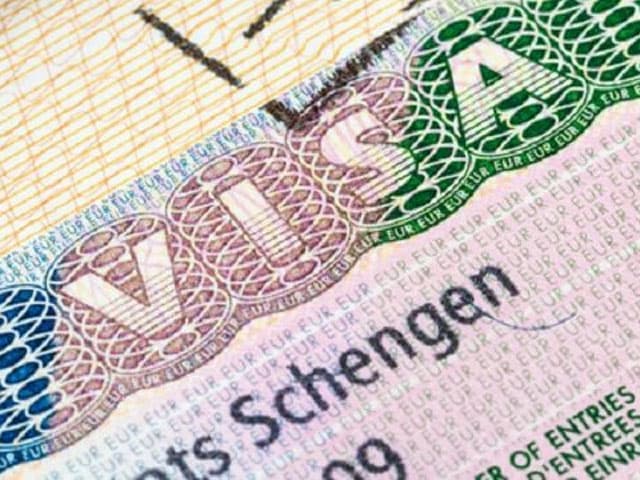
As the summer travel season approaches, airports across Europe are bracing for what could be a record-breaking surge in passenger traffic. But a new variable threatens to turn this boom into a logistical nightmare: the European Union's Entry/Exit System (EES), which replaced the traditional passport stamp with biometric registration (photo and fingerprints) for all non-Schengen travelers, including UK nationals. While the system officially rolled out in April, its real-world impact is now becoming painfully clear, and nowhere is the alarm louder than in Rome.
**Rome's Ultimatum: 'Open the Valve' or Face Chaos**
Marco Troncone, CEO of Aeroporti di Roma, which manages both Fiumicino and Ciampino airports, has publicly stated that processing 100% of passengers through the biometric system is "incompatible" with peak traffic flows. He describes his level of concern as "eight or nine out of ten" and warns that without a temporary suspension of certain steps—particularly fingerprinting—the airports will be forced to halt the procedure entirely to "avoid disasters." This rhetoric is not isolated; it reflects a growing consensus among airport operators that the EES, as currently implemented, is a systemic failure rather than a teething problem.
**Record Wait Times and Missed Flights Across Europe**
The data backs up the alarm. ACI Europe reports that the new biometric checks have increased border processing times by up to 70%, with queues stretching to three hours during peak periods. Extreme cases have already occurred: Lisbon airport suspended the EES entirely for three months after reported wait times of up to seven hours. At Milan Linate, an easyJet flight to Manchester boarded only 34 of its 156 passengers, leaving 122 travelers stranded after lengthy queues. The International Air Transport Association (IATA) warns that waits of up to six hours could become common in some European airports this summer.
**Industry-Wide Concern and Brussels' Measured Response**
The issue is not limited to Italy. ACI Europe and Airlines for Europe (A4E) issued a joint statement asserting that the full launch of the EES on April 10 was "marked by passenger disruptions, delays, and missed flights," confirming that their "main concerns are now a reality." Olivier Jankovec, Director General of ACI Europe, warns that the system's ramp-up "will inevitably lead to much more serious blockages and systemic breakdowns for airports." In response, the European Commission has pushed back the full implementation deadline from April 2026 to September, allowing member states to temporarily suspend the system during peak traffic. However, Brussels insists the system is "fully operational" and blames long queues on staff shortages, insufficient infrastructure, and flight schedule concentration rather than technical flaws.
**What This Means for ATPL and ATC Students**
For future pilots and air traffic controllers, this is a critical case study in how regulatory changes can cascade into operational chaos. Understanding the EES and its impact on turnaround times, passenger flow, and slot coordination is essential. ATC students should note that increased border processing times can lead to delayed pushbacks, missed departure slots, and cascading delays across the network. Pilots must be prepared for last-minute changes to boarding procedures and potential passenger offloading due to queues. This is not just a border issue—it is an aviation operations issue that will test the resilience of the entire system.