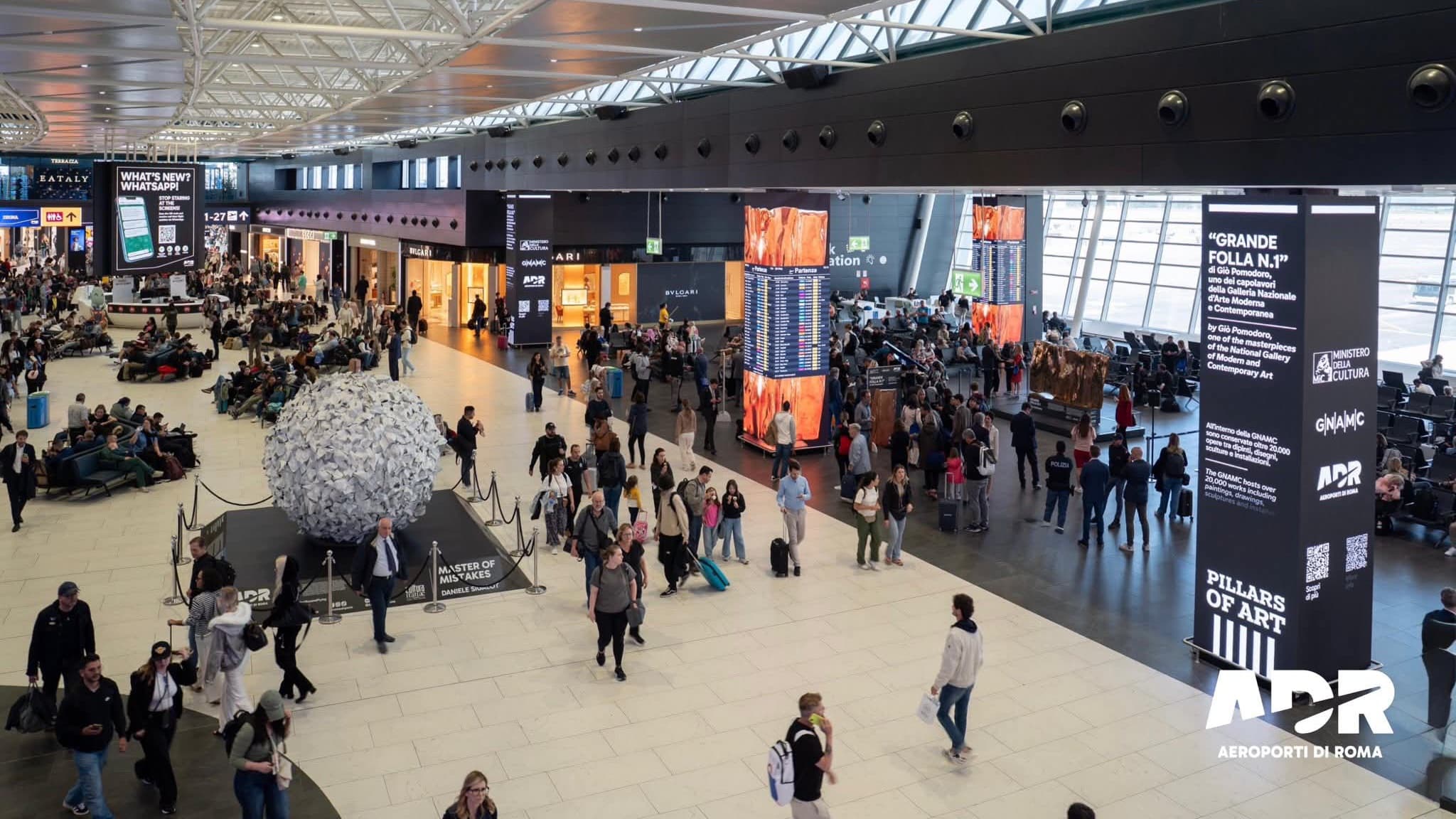
Rome-Fiumicino Airport (FCO) has once again been named 'Best Airport 2026' by ACI Europe in the category of hubs handling over 40 million passengers. This marks the eighth time since 2018 and the fifth consecutive year that the Italian hub has received this prestigious recognition. The award, announced during ACI Europe's annual congress in Prague, evaluates airports based on team excellence, digital transformation, and infrastructure sustainability, judged by an independent panel including representatives from the European Commission, EUROCONTROL, EASA, ECAC, and SESAR Joint Undertaking.
For ATPL and ATC students, this news is far more than a trophy case entry. Fiumicino's consistent top-tier performance highlights the real-world importance of operational efficiency and passenger experience—two pillars that directly affect flight planning, turnaround times, and air traffic flow management. The airport's adoption of advanced tools like A-CDM (Airport Collaborative Decision Making) and AI-based rotation time prediction models demonstrates how technology is reshaping ground operations. Understanding these systems is increasingly relevant for pilots who must coordinate with ground handlers and for controllers who manage sequencing and slot adherence.
Fiumicino's success is also rooted in its 'Fiumicino Model,' which integrates quality service, operational mastery, and environmental sustainability. The airport handled a record 51.3 million passengers in 2025, a 4% increase from 2024 and 18% above pre-pandemic 2019 levels. This growth is fueled by expanded long-haul routes to North America, Asia, and the Middle East, reinforcing Rome's role as a strategic intercontinental hub. For students, this illustrates how airport development drives route network expansion, which in turn creates demand for skilled pilots and controllers familiar with complex hub operations.
Looking ahead, Aeroporti di Roma has launched a €9 billion Sustainable Development Plan aimed at handling up to 100 million passengers by 2046. The plan includes terminal expansions, runway optimization, smart flow management, and carbon neutrality targets aligned with ACI Europe's 'Net Zero 2050' initiative. These investments underscore the growing emphasis on environmental performance in aviation—a topic that ATPL candidates will encounter in their ATPL theory exams and that ATC trainees will see reflected in noise abatement procedures and emissions-based slot coordination.
In summary, Fiumicino's repeated recognition is a case study in how operational excellence, digital innovation, and sustainability converge to create a world-class airport. For aviation students, it offers concrete examples of the systems and standards they will work with daily. Whether you are studying for your ATPL or preparing for an ATC rating, understanding the dynamics of a top-tier hub like FCO will give you a practical edge in your career.