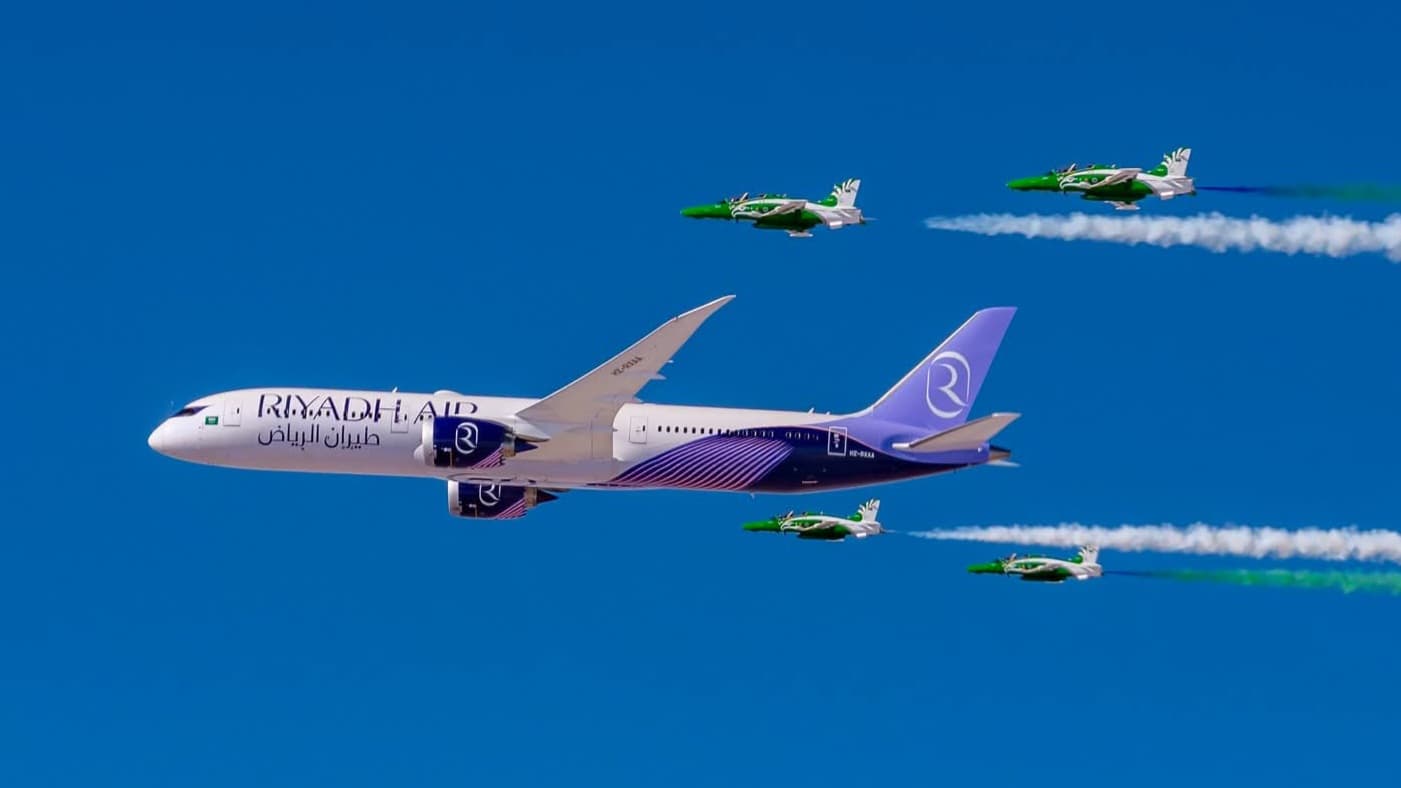
Riyadh Air, the ambitious Saudi carrier backed by the Public Investment Fund, has secured a critical regulatory approval from the US Department of Transportation (DoT). The foreign air carrier permit, issued on June 16, allows the airline to operate scheduled and charter services between Saudi Arabia and the United States. This is a textbook example of the bilateral aviation agreements and regulatory processes that ATPL and ATC students study in modules on international air law and airline operations.
For aviation trainees, this development illustrates the practical steps a new airline must take before entering a major market like the US. The DoT's decision followed a formal application in May, highlighting the importance of understanding the "foreign air carrier permit" process—a key topic in ATPL syllabus sections on air transport management and regulations. Riyadh Air's CEO Tony Douglas has emphasized the North Atlantic as a priority, meaning students can follow how a carrier builds a network from scratch, including route planning, slot coordination, and fleet allocation.
On the operational side, Riyadh Air is rapidly building its fleet around the Boeing 787-9 Dreamliner, with three aircraft delivered in early June and a target of one per month. The airline has firm orders for 39 787s plus options for 33 more, alongside commitments for up to 50 Airbus A350-1000s and 60 A321neos. This fleet mix is a perfect case study for ATPL students learning about aircraft performance, range capabilities, and fleet planning. ATC students can analyze how a new hub carrier like Riyadh Air will impact airspace management and traffic flows at King Khalid International Airport in Riyadh.
The airline launched its first commercial service on the Riyadh–London Heathrow route in early June, with plans to reach 22 destinations by early 2027 and over 100 by 2030. The US authorization now allows Riyadh Air to add American cities to its network, likely starting with East Coast hubs. For students, this expansion demonstrates the interplay between regulatory approvals, fleet delivery schedules, and market demand—a core theme in aviation business courses.
Finally, Riyadh Air is a flagship project of Saudi Arabia's Vision 2030, aiming to transform Riyadh into a global aviation hub connecting Asia, Africa, and Europe. This strategic context gives ATPL and ATC students insight into how geopolitical and economic factors shape airline development, from infrastructure investment to route network design. As the airline grows, it will provide ongoing real-world examples for classroom discussions on airline strategy, competition, and operational challenges.