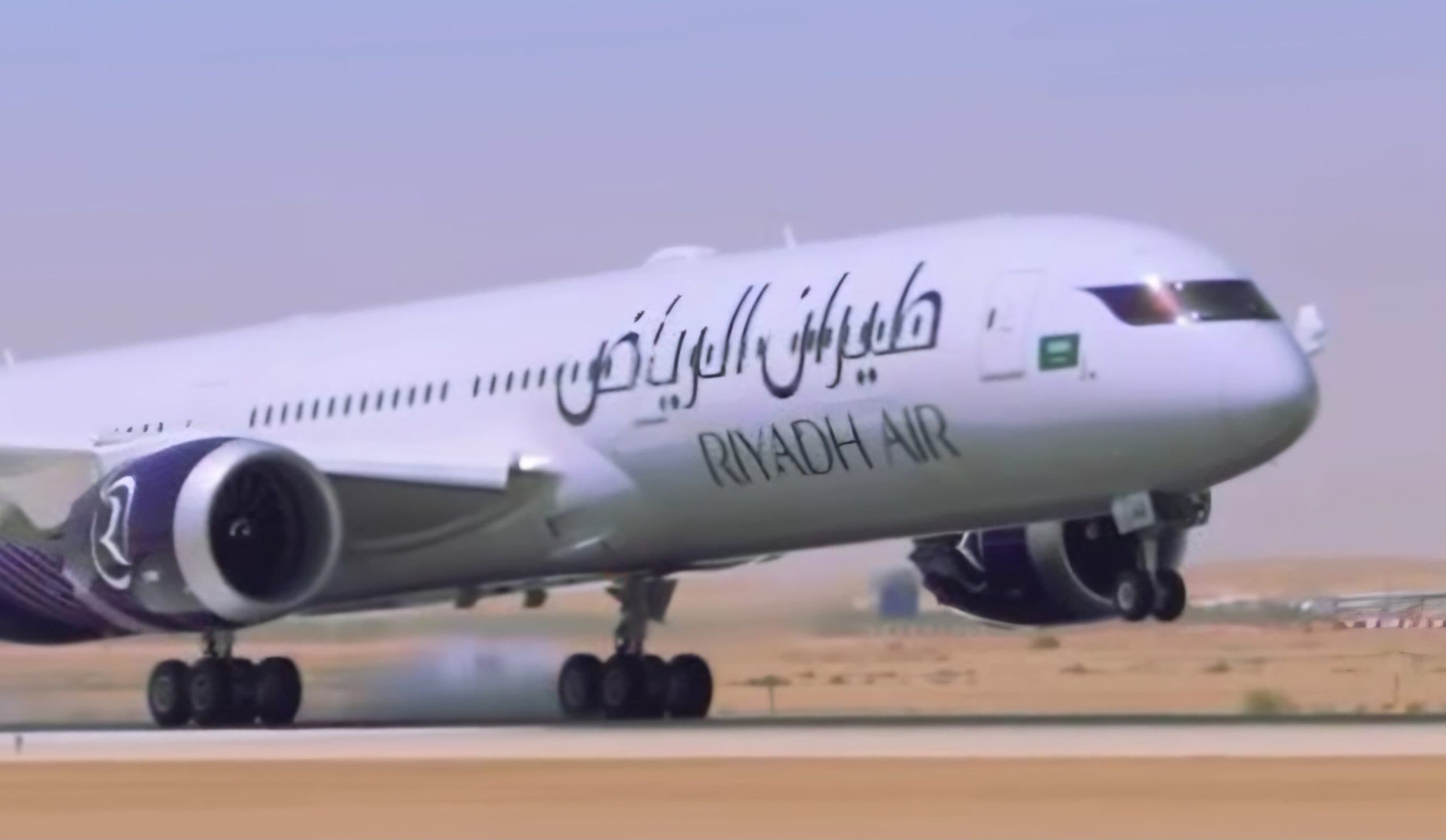
On June 14, 2026, Riyadh Air, Saudi Arabia's newest carrier, operated its first commercial domestic flight between Riyadh and Jeddah. The flight, a Boeing 787-9 Dreamliner (registration HZ-RXAC), departed King Khalid International Airport at 9:18 AM and landed at King Abdulaziz International Airport just before 10:20 AM. This aircraft is the third Dreamliner delivered to Riyadh Air, arriving on June 6 after a 14-hour ferry flight from Boeing's Everett facility.
The Riyadh–Jeddah route is one of the busiest in the Middle East, historically dominated by Saudia and Flynas. It connects the political and economic capital with the western hub, a gateway to the holy cities of Mecca and Medina. By launching domestic operations on this strategic axis, Riyadh Air signals its ambition to capture a significant share of the domestic market while feeding its future international network. The airline's dual objective is clear: leverage high-density domestic traffic to build a foundation for long-haul growth.
The inaugural flight was marked by an official ceremony attended by Abdulaziz Al-Duailej, President of the Saudi General Authority of Civil Aviation (GACA), and Raed Ismail, a board member of Riyadh Air. The airline stated on social media: "We have inaugurated our first domestic flight to Jeddah… at a pivotal stage that strengthens air connectivity between Saudi cities and supports the momentum of tourism and travel on one of the busiest routes in the world."
This domestic launch comes just days after Riyadh Air's first international flight to London-Heathrow on June 10, 2026, marking its entry onto the global stage. The airline is now pursuing an accelerated network expansion, currently operated exclusively with Boeing 787-9s. Upcoming destinations include Dubai (June 18, 2026), Cairo (June 25, 2026), Madrid (July 17, 2026), and Manchester (July 23, 2026). This rapid rollout reflects a strategy of combining high-density regional routes with major European destinations.
Backed by Saudi Arabia's Public Investment Fund (PIF), Riyadh Air is a cornerstone of the Vision 2030 strategy, which aims to diversify the economy and transform Riyadh into a global aviation hub. The airline plans to serve over 100 destinations by the end of the decade and carry tens of millions of passengers annually.
**For ATPL and ATC students**, this development illustrates the operational challenges of launching a new airline from scratch, including fleet integration, route planning, and coordination with air traffic control for slot allocation and airspace management. It also highlights the growing importance of the Middle East as an aviation hub, a region that will likely see increased traffic and new ATC procedures.